科研出版

Search documents
中国学者2025年度高引用量OA论文Top10丨生物科学与医学
生物世界· 2026-01-23 04:02
Core Viewpoint - Springer Nature has been a leader in the transition to Open Access (OA) for over 20 years, aiming to make peer-reviewed research freely available to everyone [2]. Group 1: Open Access Publishing - Springer Nature offers high-impact OA options through its various journal brands, including BMC, Nature Portfolio, Springer, Discover, and Palgrave Macmillan [2]. - The company is committed to enhancing collaboration between Chinese and global scientific communities, showcasing Chinese research achievements [4]. Group 2: Research Output and Impact - In 2025, over 30,000 OA papers authored by Chinese researchers were published in Springer Nature journals within the fields of biological sciences and medicine [4]. - The article highlights the top ten highly cited OA original research papers from Chinese authors, reflecting significant contributions to impactful research [4]. Group 3: Notable Research Papers - A paper titled "Global status and attributable risk factors of breast, cervical, ovarian, and uterine cancers from 1990 to 2021" was published on January 10, 2025, with 101 citations and 15,000 views [6]. - Another significant study, "The triglyceride–glucose index and its obesity-related derivatives as predictors of all-cause and cardiovascular mortality in hypertensive patients," was published on January 29, 2025, with 72 citations and 10,000 views [7][8]. - A systematic analysis on chronic kidney disease published on February 17, 2025, reported 66 citations and 22,000 views, indicating a growing burden of CKD globally [10]. Group 4: Research Trends and Insights - The research indicates a rising burden of chronic obstructive pulmonary disease (COPD) despite some improvements since 1990, emphasizing the need for targeted public health interventions [26]. - Studies on the triglyceride-glucose index reveal its significance as a predictor of cardiovascular mortality among hypertensive patients, suggesting a need for further research in diverse cohorts [22][16]. Group 5: Springer Nature Link Platform - The Springer Nature Link platform provides comprehensive access to a wide range of scientific, technical, and medical journals, books, and other resources, making it a preferred choice for researchers worldwide [34][35].


全球榜单!南昌排名跃升19位
Sou Hu Cai Jing· 2025-11-20 06:23
Core Insights - Nanchang has emerged as a notable player in the global research landscape, ranking 70th in the "2025 Nature Index - Research Cities" published by Springer Nature [1][3] Group 1: Global Research City Rankings - The "Nature Index - Research Cities" focuses on the latest research output changes in major global cities, tracking high-quality journal publications [3] - China now holds more than half of the top ten positions in the global research city rankings, increasing from five to six cities compared to 2023 [3] - The top ten global research cities include Beijing, Shanghai, New York City, Boston, Nanjing, Guangzhou, San Francisco Bay Area, Wuhan, Baltimore-Washington, and Hangzhou [3] Group 2: Nanchang's Progress - Nanchang has significantly improved its ranking, moving up 19 places from the previous year, now positioned at 70th [4][6] - Nanchang's ranking has consistently risen over the years: 168th in 2021, 141st in 2022, 106th in 2023, and 89th in 2024 [6] - The city has made substantial advancements in research capabilities, reflecting its vibrant development and potential [7] Group 3: Research and Innovation Initiatives - Nanchang has focused on technology leadership, achieving positive results in research investment, talent cultivation, and technological innovation [7] - The city's R&D intensity surpassed 2.0% in 2024, with major innovation platforms like Yaohu Science Island and Future Science City under construction [7] - Nanchang has established 24 national-level innovation platforms and over 500 provincial-level platforms, enhancing its innovation capacity [8]

国际报告:2022年以来中国已成全球可持续发展相关论文最大贡献国
Zhong Guo Xin Wen Wang· 2025-11-20 06:23
Core Insights - Since 2022, China has become the largest contributor to global sustainable development (SDG) related papers, playing an increasingly important role in global policy-making related to sustainability [1][2] - The report, released during the 30th UN Climate Change Conference (COP30), is the most comprehensive to date, analyzing over 12 million policy documents to reveal how academic research influences sustainable development policies [1][2] Summary by Sections Contribution to Sustainable Development - China’s research outputs are widely cited in sustainable development policy documents, with 25% of citations coming from intergovernmental organizations like the WHO and the UN, followed by the US (22%), the UK (8%), and the EU (7%) [1] - In global health and environmental policy, China plays a significant role, with 37% of its research citations related to SDG3 (Good Health and Well-being) and 13% related to SDG13 (Climate Action) [1] Research Impact and Policy Integration - Sustainable development policy documents tend to cite more research findings compared to non-sustainable development documents, indicating a connection between science and actions addressing global challenges such as health and climate [2] - Open Access (OA) articles are cited in policy documents approximately one year earlier than non-OA articles, highlighting the importance of accessibility in research [2] - Briefs, reviews, and news articles, despite their smaller share in academic output, are frequently cited in policy documents, suggesting that concise and understandable content has a greater impact [2] Recommendations for Stakeholders - The report provides actionable recommendations for researchers, publishers, and research institutions to ensure evidence-driven solutions to global challenges, including expanding open access and prioritizing content that is useful for policy [2] - It emphasizes the need for effective partnerships among all members of the knowledge ecosystem to facilitate communication with policymakers [2] Methodology and Future Implications - The report quantifies the impact of research on various sustainable development goals and aims to stimulate collaboration within the research ecosystem to bridge existing gaps [3] - The unique approach focuses on how research findings are utilized in sustainable development policies, providing clearer insights into their practical application for driving policy change [3]
越南有自信了,“中国用20年超美,我也行”
Guan Cha Zhe Wang· 2025-11-20 01:09
Core Insights - The article highlights that China is surpassing the United States in scientific research output and certain cutting-edge fields, indicating a potential end to the dominance of Silicon Valley and top U.S. universities in shaping the future of science [1] Research Output Comparison - In 2024, Chinese researchers published 1.1 million papers compared to 880,000 from the U.S., showing an expanding gap in research output [1] - In the medical field, China's share of published papers rose from 40% in 2023 to over 50% in 2024 [1] - China leads in energy research, accounting for approximately 35% of global publications in this area [1] Quality of Research - China is not only leading in quantity but also in high-quality research output, as indicated by patent filings and other metrics [1] Influence on Other Countries - China's rise in scientific research is becoming a model for other countries, particularly Vietnam, which aims to significantly increase R&D investment to replicate China's past successes [1] Vietnam's R&D Plans - Vietnam plans to establish five tech companies valued at $1 billion by 2025 and ten by 2030, with R&D investment expected to reach 1.5% of GDP by 2025 [3] - However, as of 2023, Vietnam's R&D investment was only 0.43% of GDP, indicating challenges in innovation [3] Emerging Technologies - China is making significant contributions in key future technology areas, including green nitrogen fixation, next-generation nuclear energy, and generative watermarking technology [5] - The World Economic Forum's collaboration with the journal "Frontiers" highlights these technologies as critical for the next five to ten years [5] Publishing Infrastructure - The increasing number of Chinese universities and publishers launching their own journals and platforms is seen as a natural evolution to support the growing research output [5] - The journal "Frontiers" is adopting AI tools to enhance efficiency in scientific publishing, predicting a fundamental transformation in the field within five years [5]
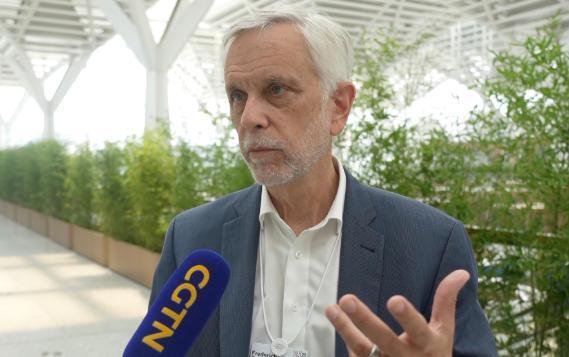
用于检测非标准短语 施普林格·自然推出科研诚信新工具
Zhong Guo Xin Wen Wang· 2025-07-18 08:15
Core Insights - Springer Nature has launched a new tool to detect non-standard phrases in journal and book submissions, aimed at maintaining research integrity and safeguarding academic records [1][2] - The tool identifies awkward or overly complex phrases that may indicate the use of paraphrasing tools to evade plagiarism detection, leading to the rejection of submissions with excessive non-standard phrases [1] - The development of this tool is part of a long-term project involving collaboration between Springer Nature's research integrity team and various technical teams, utilizing insights from academic integrity detectives [1] Tool Features - The non-standard phrase detector is the latest addition to Springer Nature's research integrity solutions, complementing existing tools such as meaningless text detectors and tools for identifying image duplication or tampering [2] - The tool is based on the "Problem Paper Screening" (PPS) system, which initially focused on computer science papers but has since expanded to screen all published literature [2] - Springer Nature has contributed to the STM Integrity Hub, providing a meaningless text detection tool for broader industry use, reinforcing its commitment to publishing integrity [2]
施普林格·自然与上海市科委续约合作 加快上海国际科技创新中心建设
Sou Hu Cai Jing· 2025-06-04 07:50
Core Viewpoint - Springer Nature and the Shanghai Municipal Science and Technology Commission have renewed their strategic cooperation memorandum for another five years, aiming to enhance Shanghai's global influence as an international science and technology innovation center [1][3]. Group 1: Strategic Cooperation - The renewed memorandum extends the partnership established in 2015, focusing on strengthening the capabilities for scientific innovation and achieving breakthroughs in global frontier science and key issues [1][4]. - The agreement includes support for Shanghai to host the International Science Communication Conference in 2027 and provides data and analytical services to facilitate faster and more forward-looking research decisions [3][4]. Group 2: Achievements and Future Plans - Since the first memorandum was signed, Springer Nature has collaborated closely with the Pujiang Innovation Forum and has supported various projects, receiving the "Silver Dove Award" for international communication excellence [5]. - The company has also partnered with Fudan University to launch an international journal titled "Science and AI" in 2026 and will jointly publish the "Science Intelligence White Paper 2025" globally [5].