自然指数

Search documents
中国科学院位列自然指数中国机构百强榜首
第一财经· 2026-03-26 14:47
Core Viewpoint - The article highlights the release of the Nature Index China Institutions Top 100 list, showcasing the contributions of various Chinese institutions to high-quality natural and health science research published in 145 prestigious journals [3]. Group 1: Nature Index Rankings - The top ten institutions by share are: Chinese Academy of Sciences, University of Science and Technology of China, Zhejiang University, Peking University, University of Chinese Academy of Sciences, Tsinghua University, Shanghai Jiao Tong University, Nanjing University, Fudan University, and Sichuan University [3]. - The Nature Index tracks high-quality research output in the fields of natural and health sciences globally, with share being a key metric that counts the proportion of authors affiliated with a particular institution or location [3].

“中国科学城令人叹为观止”,英国诺奖得主呼吁英中科研密切合作
Huan Qiu Shi Bao· 2025-12-05 22:41
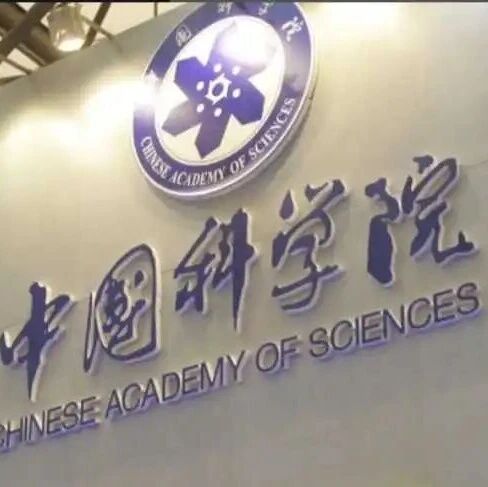
Group 1 - The incoming president of the Royal Society, Paul Nurse, emphasizes that UK universities are increasingly resembling "third world levels" compared to China, urging for closer scientific collaboration between the UK and China [1] - Nurse warns that UK research funding is critically low, with government direct investment in research accounting for only about 0.5% of GDP, placing the UK in a mid-to-low ranking among OECD countries [1] - The assessment led by Nurse in 2023 concludes that the UK's research ecosystem is "fragile and precarious, in urgent need of reform" [2] Group 2 - In contrast to the UK, China's focused investment in research is yielding results, as China surpassed the US in the Nature Index for the first time in 2023, which measures high-quality paper publications in key scientific fields [2] - Although the US still leads in health research, China has outperformed all other countries in the overall number of top research papers published [2]
全球科研城市十强大洗牌!中国占6席,北京上海稳坐冠亚军,天津去哪了
Sou Hu Cai Jing· 2025-11-23 20:10
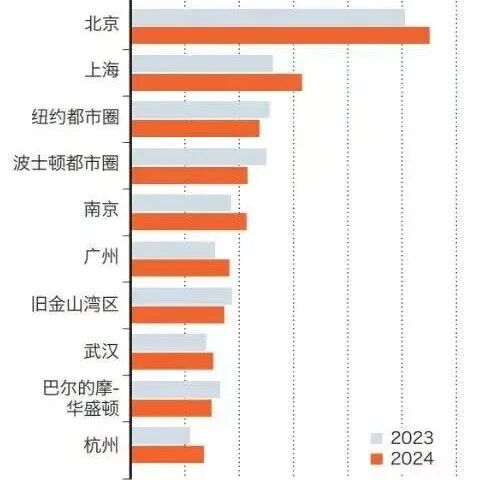
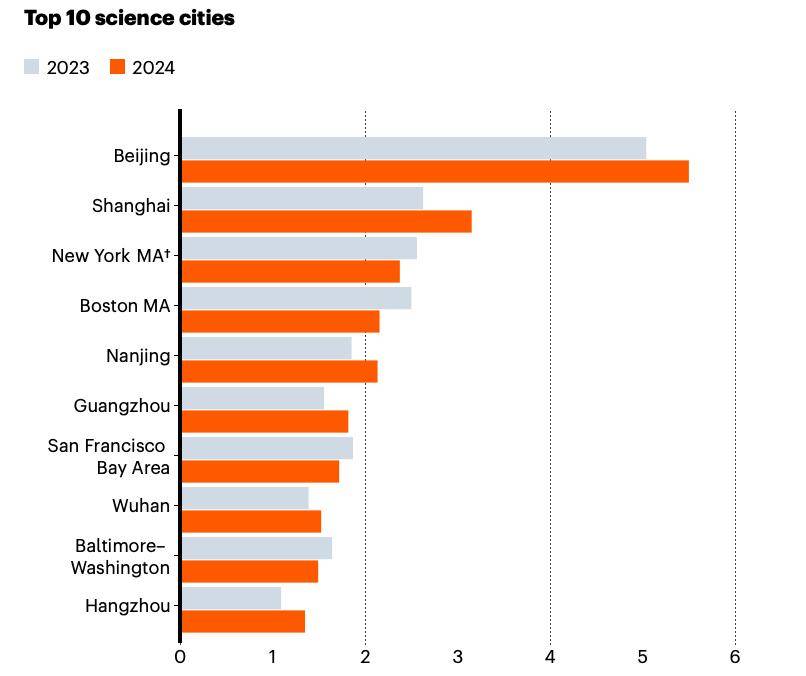
Core Insights - The 2025 Nature Index rankings highlight that Chinese cities dominate the top ten, with Beijing ranked first for nine consecutive years and Shanghai second, while other cities like Nanjing, Guangzhou, Wuhan, and Hangzhou have also improved their standings [1][3][5] - In contrast, American cities have seen a decline in their rankings, with New York, Boston, and the San Francisco Bay Area experiencing negative growth in their contributions [5][7] - The rankings reveal a disparity in research strengths, with Chinese cities excelling in basic sciences while Western cities maintain dominance in life and health sciences [7][9] Chinese Cities' Performance - Chinese cities occupy six of the top ten spots in the Nature Index, with Beijing leading at a contribution share of 5501.45, followed by Shanghai at 3151.61, which has seen a nearly 20% year-on-year increase [3][5] - Nanjing, Guangzhou, and Wuhan each surpassed a contribution share of 1500, while Hangzhou entered the top ten for the first time with a share of 1351.70 [3][5] Decline of American Cities - American cities in the top ten have experienced a comprehensive decline in their contribution shares, with notable cities like New York and Boston still in the rankings but showing negative growth [5][7] - Simon Baker, editor of the Nature Index, noted that Chinese cities are solidifying their leading positions across various disciplines, particularly in chemistry, physical sciences, and earth and environmental sciences [5][7] Research Strength Disparity - The advantage of Chinese cities is concentrated in basic sciences, while life sciences and health sciences remain dominated by Western cities, with New York and Boston holding the top two spots in biological sciences [7][9] - Despite this, cities like Guangzhou and Shanghai are rapidly improving in health sciences, indicating a potential shift in research capabilities [7][9] Tianjin's Challenges - Tianjin is notably absent from the top rankings, with its research strength declining compared to other cities, and it ranked 18th globally in 2023 [9][11] - The city's R&D investment as a percentage of GDP is lower than that of Beijing and Shanghai, and its number of effective invention patents is only about 10% of those cities [9][11] Structural Issues - Tianjin faces significant structural challenges, with only 25.3% of its industrial output coming from strategic emerging industries, which is 18.6 percentage points lower than Shanghai [11][13] - The city has a high reliance on traditional industries, leading to slow transitions in resource consumption and insufficient support for emerging fields [11][13] Innovation and Collaboration Barriers - The city struggles with insufficient technological innovation support, lack of effective collaboration with Beijing, and low levels of enterprise participation in R&D [11][17] - The gap in technology contract transactions between Tianjin and neighboring provinces like Liaoning and Jiangsu highlights the challenges in leveraging its geographical advantages [13][17] Efforts to Revitalize - Tianjin is attempting to revitalize its innovation ecosystem through initiatives like the Tianjin-Kai High-Tech Innovation Park, focusing on AI and new energy, which has attracted 300 tech companies [18] - The number of national high-tech enterprises in Tianjin surpassed 11,000 in 2024, with a 14% year-on-year increase in technology contract transactions [18]

全球榜单!南昌排名跃升19位
Sou Hu Cai Jing· 2025-11-20 06:23
Core Insights - Nanchang has emerged as a notable player in the global research landscape, ranking 70th in the "2025 Nature Index - Research Cities" published by Springer Nature [1][3] Group 1: Global Research City Rankings - The "Nature Index - Research Cities" focuses on the latest research output changes in major global cities, tracking high-quality journal publications [3] - China now holds more than half of the top ten positions in the global research city rankings, increasing from five to six cities compared to 2023 [3] - The top ten global research cities include Beijing, Shanghai, New York City, Boston, Nanjing, Guangzhou, San Francisco Bay Area, Wuhan, Baltimore-Washington, and Hangzhou [3] Group 2: Nanchang's Progress - Nanchang has significantly improved its ranking, moving up 19 places from the previous year, now positioned at 70th [4][6] - Nanchang's ranking has consistently risen over the years: 168th in 2021, 141st in 2022, 106th in 2023, and 89th in 2024 [6] - The city has made substantial advancements in research capabilities, reflecting its vibrant development and potential [7] Group 3: Research and Innovation Initiatives - Nanchang has focused on technology leadership, achieving positive results in research investment, talent cultivation, and technological innovation [7] - The city's R&D intensity surpassed 2.0% in 2024, with major innovation platforms like Yaohu Science Island and Future Science City under construction [7] - Nanchang has established 24 national-level innovation platforms and over 500 provincial-level platforms, enhancing its innovation capacity [8]
广州把科研干到全球第六,你还在说它只有早茶和收租?
Sou Hu Cai Jing· 2025-11-18 18:39
Core Insights - Guangzhou has achieved the rank of the sixth global research city, surpassing cities like Hong Kong, Shenzhen, and Hangzhou, and notably outpacing the San Francisco Bay Area [1][2][7] - The ranking is based on the "Nature Index" published by Springer Nature, which tracks contributions to high-quality scientific journals [8][9] Ranking Overview - The top ten global research cities are Beijing, Shanghai, New York metropolitan area, Boston metropolitan area, Nanjing, Guangzhou, San Francisco Bay Area, Wuhan, Baltimore-Washington, and Hangzhou [2][6] - Guangzhou's ranking improved from eighth to sixth, with a significant increase in its contribution score from 1558.1 to 1820.05 [2][7] Research Output - Guangzhou's research output includes 3,966 papers, ranking fourth in China and sixth globally [7] - The city has shown consistent improvement over the past decade, moving from 42nd place in 2015 to 6th in 2024, overtaking 36 cities [11] Academic Performance - In the five major scientific disciplines tracked by the Nature Index, Guangzhou ranks as follows: sixth in physical sciences, ninth in life sciences, fourth in chemistry, third in earth and environmental sciences, and tenth in health sciences [11] Calculation Methodology - The Nature Index uses a "share" metric to assess contributions, which allocates a paper's contribution based on the proportion of authors affiliated with a specific institution or region [12][13] Institutional Support - Guangzhou is recognized for its strong academic infrastructure, with 84 universities and over 160,000 students, contributing significantly to its research output [16] - The city has established a robust "2+2+N" technology innovation platform, housing national laboratories and major scientific facilities [17][18] Corporate Contributions - In 2023, Guangzhou's R&D expenditure exceeded 100 billion yuan, with corporate R&D accounting for 65.8% of the total [19] - The number of high-tech enterprises in Guangzhou has grown to 13,500, contributing nearly 50% of industrial output [20] Unicorn Companies - By 2025, Guangzhou is projected to have 24 unicorn companies, ranking fourth among Chinese cities and eleventh globally [21]
杭州首次跻身全球前十
Mei Ri Shang Bao· 2025-11-18 07:23
Group 1 - The core viewpoint of the articles highlights Hangzhou's significant rise in the Nature Index, moving from 13th to 10th place globally, marking its first entry into the top ten research cities [1] - The 2024 global top ten research cities include Beijing, Shanghai, New York metropolitan area, Boston metropolitan area, Nanjing, Guangzhou, San Francisco Bay Area, Wuhan, Baltimore-Washington, and Hangzhou, with China occupying more than half of the list for the first time [1] - In various scientific fields, Hangzhou's rankings are as follows: 12th in physical sciences, 12th in biological sciences, 7th in chemistry, 8th in earth and environmental sciences, and 25th in health sciences, indicating strong research potential [1] Group 2 - Hangzhou has been focusing on building five major industrial ecosystems, enhancing basic and applied research, and improving original innovation capabilities [2] - In 2024, Hangzhou's R&D expenditure reached 85.166 billion yuan, an increase of 8.3% from the previous year, with an R&D expenditure intensity of 3.90%, up by 0.15 percentage points [2] - The city's high-tech industry accounted for 72.28% of the industrial added value from January to September, with a high-tech investment growth rate of 4.6%, representing 14.6% of fixed asset investment [2]
中国城市在自然指数科研城市十强榜单上首次过半数
Xin Hua She· 2025-11-17 06:10
Core Insights - Chinese cities have secured more than half of the top ten positions in the global research city rankings for the first time, with Beijing maintaining its position at the top since 2016 [1][2] - The analysis indicates that Chinese cities increased their representation from five to six in the top ten, while all U.S. cities in the top ten experienced a decline in their contributions [1] - Beijing's research output grew by over 9% from 2023 to 2024, while Shanghai's output increased by nearly 20% [1] Summary by Categories Research Output - The latest Nature Index report shows that Chinese cities dominate the rankings, with Beijing and Shanghai leading the way [1] - Other cities in the top ten include New York, Boston, Nanjing, Guangzhou, San Francisco Bay Area, Wuhan, Baltimore-Washington, and Hangzhou [1] - Guangzhou rose from eighth to sixth place, Wuhan from ninth to eighth, and Hangzhou entered the top ten from thirteenth [1] Subject Area Performance - Chinese cities continue to lead in the fields of chemistry, physics, and earth and environmental sciences, with a clean sweep of the top ten in chemistry [2] - Beijing ranks first in all three fields, showcasing its strong research capabilities [2] - The report emphasizes the importance of cross-border and interdisciplinary collaboration among researchers for driving innovation [2]
“2025自然指数—科研城市”发布 南京位列全球第五
Nan Jing Ri Bao· 2025-11-17 02:22
Core Insights - The 2025 Nature Index report highlights significant changes in research output among major global cities, with China now holding more than half of the top ten positions for the first time [1][2] - Beijing remains the leading research city globally, a position it has held since 2016, followed by Shanghai in second place [1] - The report identifies Nanjing as the fifth top research city globally, reflecting its strong scientific and educational resources, industrial foundation, and talent pool [2] Research City Rankings - The top ten research cities for 2024 are: Beijing, Shanghai, New York metropolitan area, Boston metropolitan area, Nanjing, Guangzhou, San Francisco Bay Area, Wuhan, Baltimore-Washington, and Hangzhou [1] - Nanjing's rise in the rankings is attributed to its comprehensive reform in the technology system and supportive policies for innovation and technology transfer [2] Performance in Scientific Disciplines - Chinese cities dominate the rankings in three major scientific fields: Chemistry, Physical Sciences, and Earth and Environmental Sciences [1] - For the first time, Chinese cities occupy all top ten positions in the Chemistry field, with six positions in both Physical Sciences and Earth and Environmental Sciences [1]
自然指数:十强科研城市中中国首次占据一半以上
Di Yi Cai Jing Zi Xun· 2025-11-16 08:16
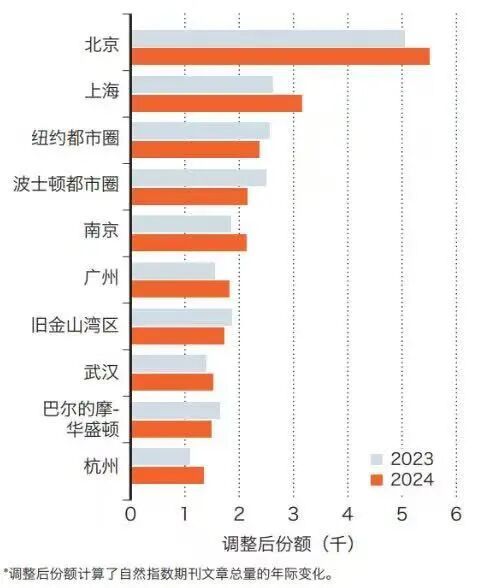
Core Insights - The article discusses the 2025 Nature Index focusing on research output changes in major global cities for 2024, highlighting China's significant presence in the top research cities [2] Group 1: Research City Rankings - China occupies more than half of the top ten global research cities for the first time, increasing from five to six cities from 2023 to 2024 [2] - Beijing retains its position as the top research city globally since 2016, while Shanghai remains in second place [2] - Other cities in the top ten for 2024 include New York metropolitan area, Boston metropolitan area, Nanjing, Guangzhou, San Francisco Bay Area, Wuhan, Baltimore-Washington, and Hangzhou [2] Group 2: Performance of Chinese Cities - Guangzhou improved its ranking from eighth in 2023 to sixth in 2024, surpassing the San Francisco Bay Area [2] - Wuhan continues to rise in the rankings, moving up one position [2] - Hangzhou entered the top ten for the first time, moving up from thirteenth place in 2023 [2] Group 3: Research Output Growth - Beijing's research output increased by over 9% from 2023 to 2024, while Shanghai's output grew by nearly 20% [2] - All American cities in the top ten experienced a decline in their adjusted share of research output during the same period [2]
自然指数:十强科研城市中中国首次占据一半以上
第一财经· 2025-11-16 08:06
Core Insights - The article discusses the latest research output changes in major global cities as reported in the "2025 Nature Index - Research Cities" by Springer Nature, highlighting China's significant presence in the top research cities [4]. Group 1: Research City Rankings - China now holds more than half of the top ten global research cities, increasing from five to six positions from 2023 to 2024 [4]. - Beijing continues to rank first globally among research cities since 2016, while Shanghai remains in second place [4]. - Other cities in the top ten for 2024 include the New York metropolitan area, Boston metropolitan area, Nanjing, Guangzhou, San Francisco Bay Area, Wuhan, Baltimore-Washington, and Hangzhou [4]. Group 2: Performance of Chinese Cities - Guangzhou improved its ranking from eighth in 2023 to sixth in 2024, surpassing the San Francisco Bay Area [4]. - Wuhan continues to rise in the rankings, gaining one position [4]. - Hangzhou entered the top ten, moving up from thirteenth place in 2023 [4]. Group 3: Research Output Growth - Beijing's research output increased by over 9% from 2023 to 2024, while Shanghai's output grew by nearly 20% during the same period [4]. - In contrast, all American cities in the top ten experienced a decline in their share of research output [4].