科研诚信

Search documents
因伪造数据等被处分的川大教师:不当署名、违规套取科研经费
Nan Fang Du Shi Bao· 2026-02-14 14:14
Core Viewpoint - The investigation into Wang Zhuqing, a faculty member at Sichuan University, revealed serious academic misconduct, including data fabrication and improper publication practices, leading to significant disciplinary actions by the university [1][2]. Group 1: Investigation Findings - Sichuan University conducted a thorough investigation into Wang Zhuqing's academic conduct, confirming allegations of data fabrication, alteration, and improper authorship in research publications [1]. - Out of 28 papers reviewed, 6 were found to have issues, including 4 with fabricated or altered image data and 2 with repeated image data publication [1]. - Additional misconduct included failure to follow proper procedures for academic conference service procurement and misappropriation of research funds amounting to 10,000 yuan [1]. Group 2: Disciplinary Actions - Based on the findings, Sichuan University decided to demote Wang Zhuqing from a distinguished researcher to an associate researcher and revoke his eligibility to supervise graduate students [2]. - Wang Zhuqing is also barred from applying for financial support for technology projects for five years, and relevant research misconduct will be reported to appropriate authorities [2]. - The university plans to adjust the mentorship of students under Wang Zhuqing and enhance the management of research funds and academic integrity education among faculty [2]. Group 3: Academic Background - Wang Zhuqing has a notable academic background, focusing on MEMS sensors and biomedical detection chips, with nearly 100 published papers, including 84 in SCI journals and 28 patents in China [3].
四川大学通报王竹卿事件调查结果:停止其研究生招生资格
Xin Lang Cai Jing· 2026-02-14 12:24
Group 1 - Sichuan University conducted a thorough investigation into teacher Wang Zhuqing following reports of academic misconduct, including data fabrication and improper authorship [1] - The investigation revealed issues in 6 out of 28 papers, with 4 papers showing evidence of data manipulation and 2 papers having issues with duplicate data publication [1] - Wang Zhuqing also failed to follow proper procedures for academic conference service procurement and misappropriated research funds amounting to 10,000 yuan [1] Group 2 - The university decided to demote Wang Zhuqing from a distinguished researcher to a distinguished associate researcher as a disciplinary action [2] - Wang Zhuqing's eligibility for graduate student recruitment has been revoked, and he is barred from applying for financial support for technology projects for 5 years [2] - The university will adjust the mentorship of students under Wang Zhuqing and enhance accountability measures for related departments to strengthen research integrity and ethical standards [2]
NeurIPS论文假开源,较真AI研究员开锤了
量子位· 2026-02-04 07:28
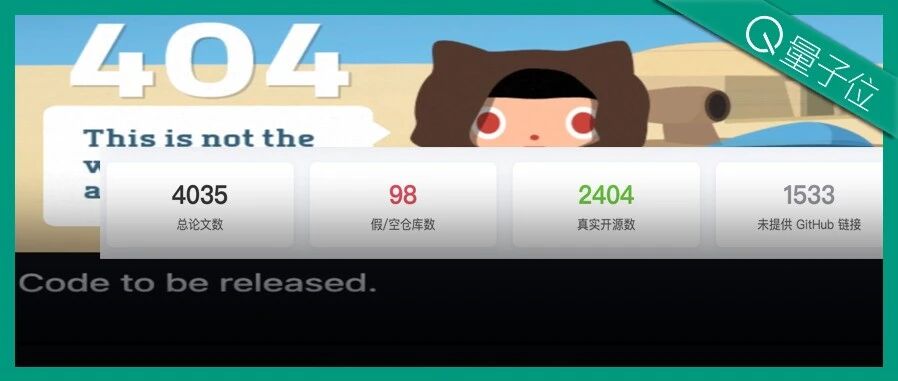
Core Viewpoint - The article highlights the issue of "fake open source" in the AI academic community, where papers claim to be open source but fail to deliver on that promise, leading to a significant number of empty repositories and unfulfilled commitments [3][19]. Group 1: Research Findings - A study of 4,035 papers accepted at NeurIPS 2024 revealed that only 2,404 were genuinely open source, while 1,533 did not provide GitHub links, and 98 papers explicitly stated they were open source but led to empty or non-existent repositories [5][14]. - The research was conducted using an AI system that integrated OpenReview/GitHub API and PDF parsing technology to verify the existence of code linked in the papers [12]. Group 2: Reasons Behind the Issue - The rise of "fake open source" is attributed to the peer review process, where indicating a willingness to open source becomes a de facto requirement for paper acceptance, leading to the prevalence of placeholders like "Coming Soon" [20][21]. - Various factors contribute to the inability to release code, including lengthy compliance processes in industry, high replication costs, and unforeseen circumstances such as team changes or patent issues [24]. Group 3: Community Response - The article notes a growing frustration among researchers and the community regarding the prevalence of empty repositories, with calls for greater accountability in academic commitments [25][28]. - The sentiment expressed by an anonymous researcher emphasizes that lack of time should not be an excuse for failing to fulfill open-source promises, advocating for integrity in academic work [28][30].

惩戒科研不端,岂可让依托单位逍遥事外
第一财经· 2026-01-26 13:49
Core Viewpoint - The article discusses the recent announcement by the National Natural Science Foundation of China regarding the misconduct of 46 researchers, highlighting the lack of accountability for the affiliated institutions involved in these cases [3][4]. Group 1: Issues of Research Misconduct - The announcement revealed punitive measures against individuals, such as project revocation and funding recovery, but did not address how the affiliated institutions would be held accountable [3]. - The article emphasizes that the responsibility of the affiliated institutions is crucial in preventing research misconduct, as they are the primary management entities for researchers [3][4]. Group 2: Institutional Responsibilities - Affiliated institutions should take on three main responsibilities: 1. Implementing strict internal review and educational responsibilities to prevent misconduct [5]. 2. Initiating independent investigations and handling cases promptly upon receiving reports of misconduct [5]. 3. Accepting supervisory and joint responsibility when misconduct is linked to management failures within the institution [5]. Group 3: Recommendations for Improvement - A cross-departmental mechanism for joint punishment of research misconduct should be established, linking misconduct to professional evaluations and social credit systems [6]. - The focus of evaluations should shift from quantitative metrics like publication counts to qualitative aspects such as academic integrity and ethical standards [6]. - A comprehensive approach involving individuals, institutions, and systemic measures is necessary to foster a healthy research environment and eliminate misconduct [6].

壹快评|惩戒科研不端,岂可让依托单位逍遥事外
Di Yi Cai Jing· 2026-01-26 12:21
Core Viewpoint - The governance of scientific misconduct must form a closed loop of "individual-institution-system" interaction, emphasizing the need for institutions to take responsibility in preventing such behaviors [1][2][3] Group 1: Current Situation - The National Natural Science Foundation of China reported 46 cases of scientific misconduct involving over 20 universities and hospitals, with only individual penalties disclosed, raising concerns about institutional accountability [1] - Institutions are seen as the primary platform for organizing research activities and managing researchers, thus their role in preventing misconduct is crucial [1] Group 2: Institutional Responsibilities - Institutions should implement strict internal review and educational responsibilities, establishing comprehensive management systems for research projects and ongoing integrity education [2] - Institutions must take proactive investigation and handling responsibilities, initiating independent investigations upon receiving leads or reports of misconduct [2] Group 3: Accountability and Supervision - Institutions should accept supervision and bear joint responsibility when misconduct is confirmed, especially if linked to management failures or negative cultural influences [3] - A cross-departmental joint punishment mechanism for scientific integrity should be established, linking severe misconduct to professional appointments and social credit systems [3] - The assessment of institutions should include their performance in research integrity, shifting focus from purely quantitative metrics to include qualitative aspects like academic ethics [3]
整治科研诚信,需让撤稿回归纠错本位
Xin Lang Cai Jing· 2026-01-11 08:58
Core Viewpoint - The Chinese Ministry of Science and Technology is launching a special rectification action against academic misconduct, focusing on retracted papers, to address the rising trend of academic dishonesty and its negative impact on the scientific community [3][4]. Group 1: Academic Misconduct and Retraction Trends - The total number of retracted papers globally has significantly increased over the past decade, attributed to heightened awareness and improved detection technologies within the academic community [3]. - Retractions are often perceived negatively, leading to the labeling of authors as academically dishonest, which can adversely affect their careers and future opportunities [3][4]. Group 2: Impact of Retractions on Academic Integrity - The negative consequences of retractions extend beyond the papers themselves, damaging the credibility of researchers and the international reputation of China's scientific community [4]. - A recent incident highlighted the absurdity of academic misconduct, where multiple papers used the same flawed experimental material, showcasing the need for stricter oversight [4]. Group 3: Measures for Improvement - The special rectification action will focus on retracted papers by Chinese scholars in international journals, with increased penalties for serious misconduct such as plagiarism and data fabrication [4][5]. - There is a call for improved peer review mechanisms and journal oversight to prevent academic misconduct, emphasizing the need for a more robust institutional framework [5]. Group 4: Philosophical Perspective on Retraction - Retraction should be viewed as a neutral corrective action rather than a moral judgment, distinguishing between "honest errors" and "clear academic misconduct" [4][5]. - Encouraging a culture of innovation and tolerance for failure is essential, with a focus on returning retractions to their original purpose of correcting errors and safeguarding truth in research [5].

科技部通报:国家重点研发计划项目申报书抄袭
仪器信息网· 2026-01-05 08:59
Core Viewpoint - The article emphasizes the importance of research integrity in scientific innovation and highlights recent cases of plagiarism in project applications, urging researchers to adhere to ethical standards and avoid misconduct [1][4][9]. Group 1: Plagiarism Cases - Zhao, as the project leader, submitted a proposal for the 2023 National Key R&D Program, which was found to have plagiarized content from other established projects, leading to the termination of the review process and denial of funding [4]. - Zhang, another project leader, also submitted a plagiarized proposal for the same program, resulting in similar consequences as Zhao, including a three-year ban from participating in government-funded scientific activities [6]. - A third individual, referred to as Zhang某某, faced identical issues with their project proposal, which was also found to contain plagiarized material, leading to the termination of the project review and a three-year prohibition from government funding [7]. - Chen某某, from an agricultural research institute, was similarly penalized for submitting a plagiarized project proposal, reinforcing the zero-tolerance policy towards research misconduct [9]. Group 2: Institutional Response - The article outlines the institution's commitment to strengthening the research integrity system and maintaining strict management responsibilities throughout the research process [9]. - It emphasizes a "zero tolerance" approach towards various forms of research misconduct, including plagiarism, data fabrication, and violations of publication norms, to ensure a clean and ethical research environment [9]. - Researchers are encouraged to learn from these cases and uphold academic integrity, contributing to the institution's development and the advancement of high-level scientific independence [9].

AI辅助写论文,科技期刊怎么看——专访《柳叶刀》副主编萨宾娜·克莱纳特
Ke Ji Ri Bao· 2025-12-12 08:16
Core Viewpoint - The integration of artificial intelligence (AI) in research activities has led to new forms of academic misconduct, such as paper writing, data fabrication, and implicit plagiarism, posing significant challenges to academic integrity. Group 1: AI Usage in Research - The use of generative AI in research is increasing, with only 7% of authors disclosing its use in submissions, contrasting sharply with surveys indicating over 50% usage among users [2][3] - Instances of "hallucination citations" have been observed, where references are cited that do not exist, with some papers containing up to 10 to 15 such citations [2] Group 2: Editorial Policies and Practices - The journal has implemented a checkbox for authors to declare the use of generative AI, requiring detailed information about the AI model used, its purpose, and its application in the manuscript [1] - Papers with significant undisclosed AI content will be rejected, and institutions may be informed for educational purposes on proper AI usage [3] Group 3: Acceptable and Unacceptable AI Uses - Generative AI is not permitted to replace researchers' work in generating scientific insights, analyzing data, or drawing conclusions [5] - AI can be used to improve grammar and language expression in writing, as well as to summarize existing research [7] Group 4: Challenges and Future Directions - The journal is establishing a research integrity committee to address the impact of generative AI on academic integrity, with a focus on monitoring ongoing cases and adapting to new guidelines [8] - Researchers and editors are advised to treat AI as an auxiliary tool, being cautious of its limitations and potential risks, including the de-skilling of future researchers [9]
AI辅助写论文,科技期刊怎么看
Ke Ji Ri Bao· 2025-12-12 01:31
Core Insights - The integration of artificial intelligence (AI) in research activities has led to new forms of academic misconduct, including paper writing, data fabrication, and implicit plagiarism, posing significant challenges to academic integrity [1] Group 1: AI Usage in Research - The use of generative AI in research is increasing, with only 7% of authors disclosing its use in submissions, contrasting sharply with surveys indicating over 50% usage [2] - Instances of "hallucination citations" have been observed, where references are cited that do not exist, with some papers containing up to 10 to 15 such citations [2] Group 2: Editorial Policies and Practices - Papers that improperly use AI without disclosure will be rejected, and authors may be informed about the need for education on appropriate AI usage [3] - The rejection rate for papers due to improper AI use is currently low, with only a few instances in the past month [4] - The journal does not support the use of AI to replace researchers' work in generating scientific insights, analyzing data, or drawing conclusions [5] Group 3: Acceptable AI Applications - Authors are encouraged to use generative AI to improve grammar and language expression, as well as to summarize existing research, provided they disclose its use [7] Group 4: Addressing Integrity Challenges - The journal has established an internal working group focused on research integrity, monitoring ongoing cases, and adapting to external guidelines [8] - A research integrity committee is being planned to address the impact of generative AI on academic integrity, with a launch meeting scheduled for February next year [8] Group 5: Principles for AI Use - Researchers and editors should view AI as an auxiliary tool, being cautious of its limitations and the potential risks of de-skilling the next generation of researchers [9]
报告显示:中国科研人员对AI与科研深度融合信心显著高于欧美
Zhong Guo Jing Ji Wang· 2025-12-08 14:14
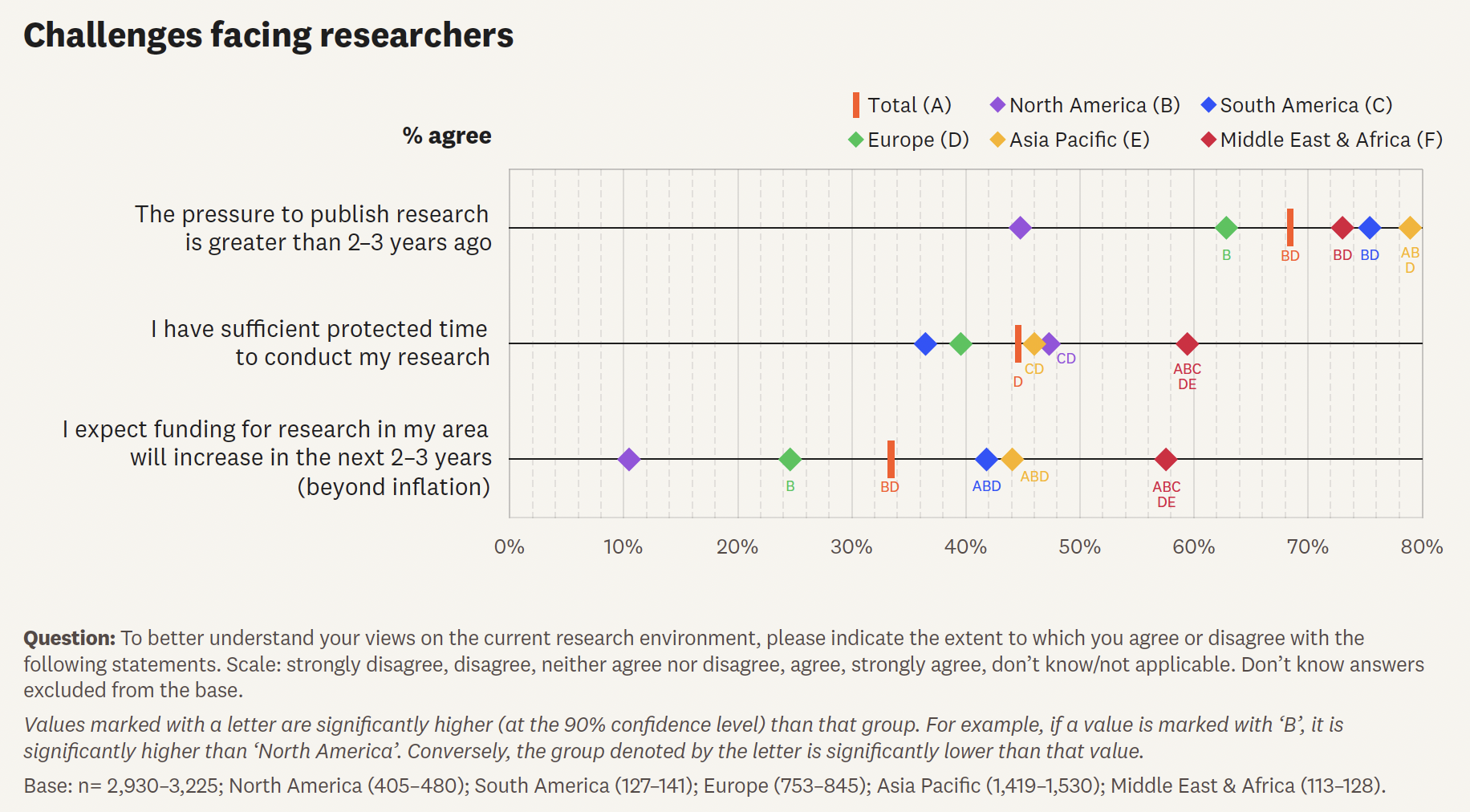
Core Insights - The report highlights the significant role of AI in transforming research practices and the growing awareness among Chinese researchers regarding the practical application and societal impact of their work [1][3] Group 1: AI in Research - 58% of researchers globally are currently using AI tools in their research, a notable increase from 37% in 2024 [3] - Chinese researchers exhibit a much higher confidence in AI's value in research processes compared to their counterparts in the US and UK, with 68% believing AI tools provide more options [6] - Concerns about the ethicality and reliability of AI tools persist, with only 23% of researchers believing the development process of current AI tools is ethical [6] Group 2: Research Funding and Pressure - Only 45% of researchers feel they have enough time for research, and only 33% expect an increase in research funding in the next two to three years, with North American and European researchers being particularly pessimistic [3] - 68% of respondents feel the pressure to publish has increased compared to two to three years ago, yet 74% maintain that peer-reviewed research is trustworthy [3] Group 3: International Mobility and Collaboration - 29% of researchers are considering moving abroad for work in the next two to three years, but the overall willingness to relocate has decreased since 2022 [7] - 63% of researchers believe that collaboration in their fields has become more frequent, with the Asia-Pacific region showing the most positive sentiment [7] - 44% of Chinese researchers are optimistic about funding growth in their fields, the highest among global respondents [7]