肥皂

Search documents
哥伦比亚全国外贸协会分析2026年哥出口挑战
Shang Wu Bu Wang Zhan· 2026-01-06 16:44
Core Viewpoint - The Colombian National Foreign Trade Association indicates that the key to export growth in Colombia by 2026 lies in improvements in agriculture, manufacturing, and sanitary inspection capabilities [1] Group 1: Agriculture - Agricultural exports are expected to remain the main driver, particularly in the North American market, supported by tourism and consumer demand from the 2026 World Cup [1] - Potential export products include avocados, flowers, palm oil, cocoa, and beef, although some sectors face challenges due to sanitary standards and insufficient investment [1] Group 2: Manufacturing - The manufacturing sector is identified as a new growth area, with steel, paper products, soap, and food processing products highlighted as key segments [1] - There is a recommendation to stabilize markets in the US, Europe, and regional areas while accelerating expansion into emerging markets in Asia, the Middle East, and Africa [1] Group 3: Trade Dynamics - The association warns that due to government energy transition policies, exports of mineral and energy products are expected to continue declining [1] - After reaching a peak in 2025, coffee production and prices may face a downturn in 2026 [1] - Multiple factors may lead to export growth rates lagging behind imports, potentially widening the trade deficit and diminishing the contribution of foreign trade to economic growth [1]
500年商脉续写“货到汉口活”
Chang Jiang Ri Bao· 2025-08-28 00:50
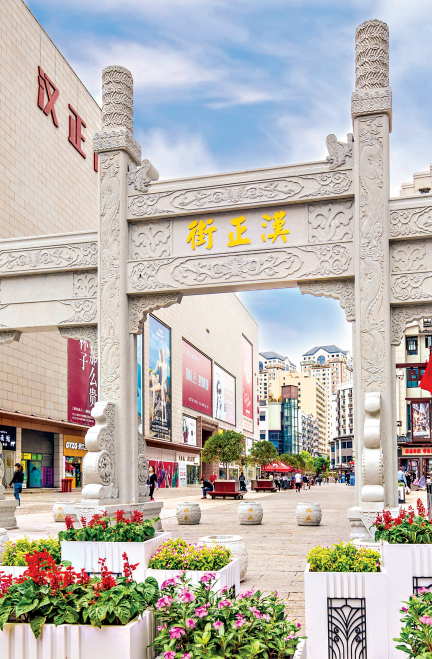
Core Insights - The opening of the Yangtze Commercial Civilization Exhibition Hall on August 28 showcases the 500-year commercial history of Hanzheng Street, highlighting its evolution and significance in Chinese commerce [1][5]. Historical Development - Hanzheng Street has experienced three historical peaks: its rise as a commercial hub after the diversion of the Han River in the Ming Dynasty, its establishment as a key trading port after the opening of Hankou in 1861, and its role in the reform and opening-up era starting in 1979 [2][3][8]. - The street became a vital commercial center, with the tea market in Hankou accounting for 80% of China's tea exports by 1881, marking its second period of prosperity [7]. Exhibition Highlights - The exhibition features four main chapters: Ming and Qing Dynasties, Modern Era, Reform and Opening-up, and New Era, with over a hundred historical photographs and artifacts illustrating the commercial legacy of Hanzheng Street [3][6]. - Notable exhibits include a 1982 article from the People's Daily praising Hanzheng Street's role as a model for small commodity markets during China's economic reforms [8]. Modern Transformation - Hanzheng Street is evolving from traditional retail to a model that integrates online and offline commerce, with significant activity in live streaming and e-commerce [10][12]. - The area is set to become a hub for fashion and design, with initiatives like the Wuhan International Fashion Week and various competitions aimed at fostering new talent in the industry [11][12]. Future Development Plans - The Qiaokou District is implementing a three-year action plan for the transformation of Hanzheng Street, with a total investment of 214.84 billion yuan across 106 projects [13]. - The goal is to enhance the area's commercial and cultural services, positioning Hanzheng Street as a model for urban renewal and industrial transformation [14].