商业文明

Search documents
黄河文明的“活化石”
Xin Lang Cai Jing· 2026-02-13 17:28
Core Viewpoint - The article emphasizes the cultural and historical significance of towns and villages along the Yellow River, highlighting their role as living embodiments of Chinese civilization and the connection between people and the river [2][3][4]. Group 1: Historical Significance - The towns and villages along the Yellow River are described as "living fossils" of Yellow River civilization, each name carrying stories of coexistence with the river [2]. - The Dawangkou culture's black pottery fragments indicate that ancient people understood how to utilize the river's mud for creating vessels over 5,000 years ago [2]. - Zhoucun in Zibo is noted for its commercial culture, representing the fusion of Yellow River civilization and commercial civilization, with historical significance in wealth circulation in northern China [2]. Group 2: Cultural Heritage - The article describes the tranquility of Zhujiayu in Jinan, where the lifestyle reflects a deep connection to nature and tradition, contrasting with the bustling commercial towns [3]. - Nanyang Ancient Town in Jining is portrayed as a historical economic hub where goods from the north and south once converged, illustrating the town's economic history through its waterways [3]. - The ancient towns are seen as repositories of a disappearing way of life, emphasizing the importance of preserving the relationship between people, land, and rivers [3][4]. Group 3: Preservation and Continuity - The protection of ancient towns should extend beyond mere remembrance; it should involve keeping them alive as spaces for daily life and cultural practices [4]. - The value of ancient towns lies not only in their age but also in their potential to offer an alternative lifestyle that is more connected to nature and community [4].

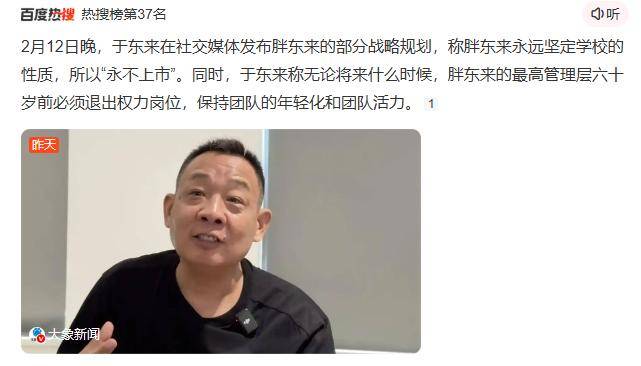
于东来:胖东来永不上市,上市公司永辉依然亏损
Sou Hu Cai Jing· 2026-02-13 16:18
Core Viewpoint - The founder of Pang Donglai, Yu Donglai, emphasizes that the company's decision to remain unlisted is rooted in prioritizing employee happiness over capital market pressures, presenting a significant contradiction in the retail industry where companies typically pursue public listings for expansion [3][4]. Group 1: Business Philosophy - Pang Donglai's "never going public" declaration reflects a deliberate separation from capital logic, with an average monthly salary of 9,886 yuan for employees, significantly higher than the 4,000 yuan level before Yonghui Supermarket's transformation [4][6]. - The company maintains a low employee turnover rate of only 1.05% among its 8,000 employees, showcasing the effectiveness of its high welfare system [4][6]. - Yu Donglai argues that going public would require accountability to investors focused on quarterly reports, which could undermine the company's commitment to employee welfare and supply chain optimization [4][6]. Group 2: Management Structure - A key aspect of Pang Donglai's strategy is the mandatory retirement of management by age 60, which aims to address the succession challenges faced by private enterprises [6][10]. - The governance structure combines family control with professional management, allowing the board to retain decision-making authority while delegating operational control [6][10]. - This approach contrasts with other companies, such as Lao Gan Ma, where the founder's return at an advanced age highlights the difficulties of leadership transition [6][10]. Group 3: Employee-Centric Model - Pang Donglai distributes 95% of its net profits to employees, with average annual bonuses of 100,000 yuan for regular employees and 700,000 yuan for management, fostering loyalty and commitment [6][8]. - The company offers extensive benefits, including 40 days of paid leave and 10 days of "unhappy leave," which materializes the concept of employee happiness into tangible policies [6][8]. - The high employee retention and customer repurchase rate of 82% demonstrate the effectiveness of this employee-centric model, creating a positive feedback loop of high investment leading to high loyalty and premium pricing [8][10]. Group 4: Strategic Positioning - Pang Donglai's strategy focuses on regional depth rather than national expansion, with 80% of its products sourced through self-purchasing, reducing procurement costs by 30%-50% [10][12]. - The company’s operational model, characterized by a 7-hour workday and 140 days of annual leave, poses challenges for replication outside its home region [10][12]. - The performance of Pang Donglai, achieving 235 billion yuan in revenue with only 14 stores by 2025, illustrates that a focused regional strategy can be as effective as nationwide expansion [10][12]. Group 5: Broader Implications - The case of Pang Donglai raises fundamental questions about the ownership and purpose of enterprises, contrasting with publicly listed companies like Yonghui and RT-Mart that struggle with profitability [8][12]. - The company's choice to prioritize employee welfare over capital market pressures represents an alternative model of business that challenges conventional notions of success in the retail sector [8][12]. - This experiment in business philosophy may offer insights into sustainable paths for private enterprises in China, questioning the necessity of public listings for success [12].
活动 | 马到成功,2025福布斯中国年终盛典
Xin Lang Cai Jing· 2026-02-07 13:33
Group 1 - The Forbes China Year-End Gala held on February 4, 2026, in Shanghai gathered outstanding entrepreneurs and industry leaders from technology, healthcare, semiconductors, and investment sectors to discuss future trends in artificial intelligence, hard technology, biomedicine, and business civilization [2] - Forbes China has been releasing various rankings since entering the Chinese market in 2003, including the Best CEO in China and the Top 50 Innovative Companies in China, which serve as important references for observing changes in China's business society [2] - The event featured a forum with keynote speeches and roundtable discussions covering topics such as healthcare, technology, talent, and sustainable development, aimed at exploring industry development trajectories and prospects [4] Group 2 - The keynote speech by Han Xu, CEO of WeRide, emphasized the strategic significance of autonomous driving as the first large-scale application of physical AI, predicting that within five years, everyone could stop driving, leading to the era of household service robots [6] - Chen Zhisheng, CEO of WuXi Biologics, forecasted that tumors could become controllable chronic diseases within five years, similar to diabetes, and discussed the transformative application of digital technology in drug production [12] - Xu Siqing, founder of Alpha Community, highlighted the dual nature of technological advancement, particularly in AI, which presents both opportunities and challenges to existing human life orders [16] Group 3 - Zhang Hua, founder and chairman of Shibang Group, warned that the era where labor is no longer a necessity is approaching, urging companies to design new job structures for collaboration between humans and intelligent agents [18] - Zhu Jia, partner at Guanghe Venture Capital, pointed out that the core bottleneck limiting AI development is not semiconductor chips but power supply, which is driving nuclear fusion technology towards commercialization [20] - The roundtable discussions included insights on the semiconductor industry's supply-demand mismatch, with Wu Shengwu, chairman of Rongxin Semiconductor, noting a structural contradiction where high-end demand faces capacity shortages while non-specialty processes are oversupplied [27] Group 4 - Liu Yuqing, assistant president of Huafeng Technology Group, emphasized the critical role of advanced packaging in enhancing computing power in the post-Moore's Law era, advocating for a focus on deepening capabilities in the domestic equipment sector [29] - Fang Ling, co-founder of CGL, observed a shift in talent competition within the semiconductor industry from purely technical talent to composite talent with commercial awareness, predicting that AI will exacerbate workplace differentiation [31] - The event also recognized companies like Huafeng Technology and Microchip Technology for their innovative contributions to the industry, awarding them the "2025 Forbes China Innovation Power 50" [58]





请对“最惨商业教父”保持尊重
3 6 Ke· 2026-01-21 04:04
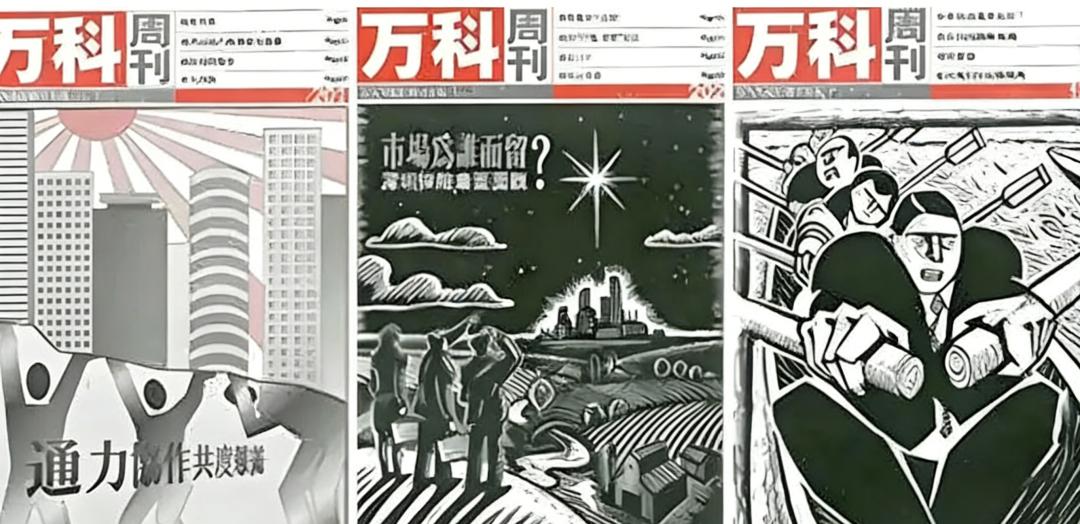
Core Viewpoint - Wang Shi, a prominent figure in Chinese business, is facing public scrutiny and ridicule after retirement, despite his significant contributions to the real estate industry and corporate governance in China [2][3]. Group 1: Wang Shi's Contributions - Wang Shi founded Vanke 40 years ago, navigating through China's economic chaos and the reform of the real estate market, emphasizing a higher commercial culture rather than personal profit [2][4]. - He was the first to advocate for a focus on core business and introduced the "middle-class good housing" strategy, which positioned Vanke as an industry leader [2][4]. - Wang Shi initiated the "Vanke Weekly," discussing economics, market rules, and corporate ethics, aiming to elevate the standards of Chinese business culture [6][8]. Group 2: Corporate Governance and Philosophy - In 1988, Wang Shi made a pivotal decision to relinquish his 40% stake and control over Vanke, establishing a professional management system and transforming it into a "no-boss" company [9][10]. - His principles included avoiding bribery and not engaging in land speculation, which became internal guidelines for Vanke [8][9]. - Wang Shi's vision for Vanke was to create a sustainable business model that prioritized ethical practices over aggressive profit-seeking [19]. Group 3: Challenges and Downfall - After his retirement in 2016, Vanke faced significant challenges, including a governance crisis known as the "Vanke Battle," which highlighted vulnerabilities in its structure [10][15]. - The company, under new leadership, shifted away from Wang Shi's principles, leading to aggressive land acquisitions and substantial financial losses, with a reported loss of nearly 50 billion in 2024 [15][17]. - Wang Shi's attempts to reconnect with Vanke's decision-makers post-retirement indicate his ongoing concern for the company's cultural legacy, which he feels is at risk [17][18]. Group 4: Post-Retirement Ventures - After retirement, Wang Shi founded Deep Stone Group, focusing on green community projects and sports initiatives, although these ventures have faced challenges in attracting business support [11][12]. - He has also engaged in various endorsements and entrepreneurial activities, reflecting his desire to remain relevant in the business landscape [12][14]. - Despite receiving a retirement salary of 10 million annually, Wang Shi chose to forgo this payment in 2024, highlighting his commitment to Vanke's situation [14].

秦朔的出海警示:我们不缺强大,缺“可爱” |卓立出海谈
吴晓波频道· 2026-01-15 00:48
Core Viewpoint - The article emphasizes the necessity for Chinese enterprises to embrace globalization and establish a new supply chain system that integrates both domestic and international markets, moving from merely exporting products to promoting brands globally [2][3][6]. Group 1: Risks and Opportunities - The biggest risk for China is becoming disconnected from the world, while the greatest opportunity lies in fully engaging with global markets [6]. - There is a concern about domestic job losses and potential hollowing out of industries as companies expand overseas, but it is argued that Chinese enterprises must go global to avoid stagnation [4][5][8]. Group 2: Manufacturing and Economic Strategy - The importance of maintaining a robust manufacturing sector is highlighted, especially in light of lessons learned from the U.S. experience of manufacturing hollowing out [10][12]. - It is suggested that China can develop parallel supply chain systems, with one operating internationally and another maintaining domestic manufacturing capabilities [11]. Group 3: Management and Cultural Integration - The article discusses the need for Chinese companies to not only export products but also their management practices and cultural values to be accepted in foreign markets [17][19]. - There is a recognition that soft power and cultural acceptance are crucial for successful international operations, as past failures in markets like Vietnam illustrate the importance of quality and service [18][22]. Group 4: Commercial Civilization - The concept of "commercial civilization" is introduced, defined as value creation centered on people, with a call for leading Chinese enterprises to take a role in promoting this idea as they expand globally [26][28]. - The article stresses that commercial civilization is built through the collective efforts of companies and their products, and it should guide Chinese enterprises in their global endeavors [29].

民营企业可持续传承发展暨风险管理公益论坛在京举办 2025中国上市公司最佳传承100榜单发布
Zheng Quan Shi Bao Wang· 2025-11-03 04:59
Core Insights - The forum highlighted the importance of sustainable succession planning for private enterprises, emphasizing that it should be integrated into the core strategy of businesses [1][2] - The release of the "2025 Best Succession 100 List" aims to encourage companies to prioritize succession planning as an immediate necessity rather than a future consideration [3] Group 1: Forum Highlights - The forum was organized by Beijing Deyuze Law Firm and featured a video address from Ban Ki-moon, who outlined three expectations for entrepreneurs regarding succession planning and risk management [1] - Key speakers emphasized that intergenerational succession is crucial not only for family businesses but also for the healthy development of the private economy in China [1][2] Group 2: Challenges in Succession Planning - High Mingfei, founder of Deyuze, pointed out that many family businesses lack awareness or timely planning for succession, leading to potential legal challenges and asset management issues [2] - Lin Huichun from the Hermann Simon Business School highlighted the prevalent issues of inadequate top-level design and succession planning in Chinese family businesses, advocating for early preparation and structured governance [2] Group 3: Best Practices and Recommendations - Liu Donghua, founder of Zhenghe Island, stressed the importance of proactive measures in succession planning, encouraging entrepreneurs to adopt an open mindset and learn from each other [3] - The forum concluded with a call to action for businesses to shift their perspective on succession from a future concern to an immediate priority, thereby safeguarding wealth and ensuring stability in the private economy [3]
2万门票是“割韭菜”还是“真良心”?北大教授与网友,在胖东来开放日上吵翻了
3 6 Ke· 2025-10-22 09:02
Core Viewpoint - The article discusses the controversy surrounding the recent open day event hosted by the company "胖东来," which charges 20,000 yuan for participants to learn about its retail success, highlighting the divided opinions on its value and implications for the business community [2][3][4]. Group 1: Commercial Judgments - The first divergence is about the nature of the 20,000 yuan fee, with supporters viewing it as an "investment in the future" while critics see it as an "expensive ticket" that is not accessible to struggling small businesses [6][7]. - The second divergence concerns whether the event is about "teaching" or "deifying" the founder, with supporters believing it promotes local business models while critics argue it reinforces a cult of personality around the founder [8][9]. - The third divergence focuses on whether the fee serves as a "filter" for genuine learners or is merely a "marketing gimmick," with supporters believing it ensures commitment while critics question the validity of such a screening process [9][10]. Group 2: Deeper Truths - The first deeper truth questions whether participants can learn the "essence" of the company's philosophy, emphasizing that while surface-level practices can be copied, the underlying values and principles are much harder to replicate [13][14][17]. - The second deeper truth warns that being placed on a "pedestal" comes with risks, as the company will face heightened scrutiny and expectations, making any misstep potentially damaging [18][19][20]. - The third deeper truth posits that charging for the event reflects a responsible business practice, creating a commitment from both the organizer and participants, which can enhance the learning experience [21][22][23]. Group 3: Final Insights - The article concludes that the true value of the open day lies not in replicating the company's model but in encouraging participants to reflect on their own business values and practices, potentially leading to significant personal and organizational growth [24][25][26].
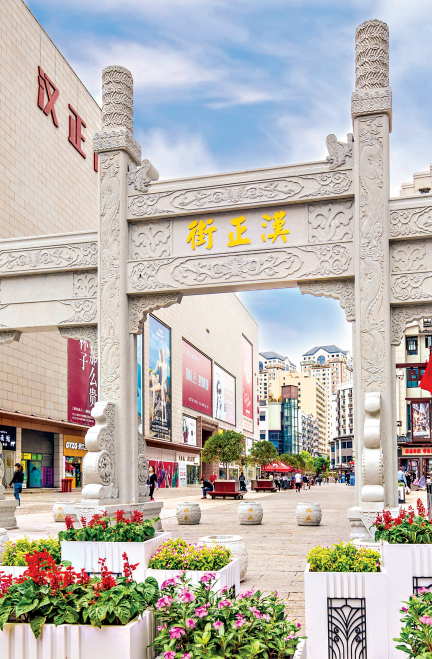
500年商脉续写“货到汉口活”
Chang Jiang Ri Bao· 2025-08-28 00:50
Core Insights - The opening of the Yangtze Commercial Civilization Exhibition Hall on August 28 showcases the 500-year commercial history of Hanzheng Street, highlighting its evolution and significance in Chinese commerce [1][5]. Historical Development - Hanzheng Street has experienced three historical peaks: its rise as a commercial hub after the diversion of the Han River in the Ming Dynasty, its establishment as a key trading port after the opening of Hankou in 1861, and its role in the reform and opening-up era starting in 1979 [2][3][8]. - The street became a vital commercial center, with the tea market in Hankou accounting for 80% of China's tea exports by 1881, marking its second period of prosperity [7]. Exhibition Highlights - The exhibition features four main chapters: Ming and Qing Dynasties, Modern Era, Reform and Opening-up, and New Era, with over a hundred historical photographs and artifacts illustrating the commercial legacy of Hanzheng Street [3][6]. - Notable exhibits include a 1982 article from the People's Daily praising Hanzheng Street's role as a model for small commodity markets during China's economic reforms [8]. Modern Transformation - Hanzheng Street is evolving from traditional retail to a model that integrates online and offline commerce, with significant activity in live streaming and e-commerce [10][12]. - The area is set to become a hub for fashion and design, with initiatives like the Wuhan International Fashion Week and various competitions aimed at fostering new talent in the industry [11][12]. Future Development Plans - The Qiaokou District is implementing a three-year action plan for the transformation of Hanzheng Street, with a total investment of 214.84 billion yuan across 106 projects [13]. - The goal is to enhance the area's commercial and cultural services, positioning Hanzheng Street as a model for urban renewal and industrial transformation [14].
每经热评︱让刑满释放者获得彻底“释放” 呼唤更多“胖东来”
Mei Ri Jing Ji Xin Wen· 2025-08-12 02:45
Core Viewpoint - The company "胖东来" (Pang Dong Lai) is taking a unique approach by offering job opportunities to ex-offenders, which has sparked significant public discussion and controversy. This initiative reflects its brand philosophy of love and freedom, aiming to promote social acceptance and reduce discrimination against this group [1][4][5]. Group 1: Company Philosophy and Strategy - The recruitment of ex-offenders aligns with the company's long-standing brand values of love and freedom, aiming to create a more inclusive workplace [4][5]. - The company has implemented a humane management approach, including compensation for employees who face unjust treatment, which has resulted in a remarkably low employee turnover rate of 0.94% [4][5]. - The company's strategy demonstrates that treating employees well can lead to increased business success and customer traffic, creating a positive feedback loop [4][5]. Group 2: Social Implications and Challenges - The initiative highlights the broader societal issue of employment for ex-offenders, with statistics showing that 70% of them face job rejections due to their criminal records, and less than 40% find employment within three years of release [8][9]. - The company's actions serve as a litmus test for societal acceptance of ex-offenders, challenging the prevalent safety anxieties and stigma associated with this group [8][9]. - The recruitment of ex-offenders is not just a business decision but a response to systemic gaps in the employment landscape for this demographic, aiming to reduce societal risks [9][11]. Group 3: Call for Broader Action - The company’s efforts alone are insufficient to address the employment challenges faced by ex-offenders; a collaborative approach involving more businesses and government support is necessary [11][12]. - There is a need for a comprehensive system that includes incentives for companies hiring ex-offenders, as well as psychological support and skills training for the individuals themselves [12][13]. - The establishment of a supportive environment for ex-offenders requires a dual approach of institutional safeguards and community engagement to alleviate public safety concerns [13][14].
时报观察丨合理设置账期 改善商业生态
证券时报· 2025-06-12 00:20
Group 1 - The core viewpoint emphasizes that the commitment to payment terms is just the starting point, and the construction and evolution of commercial civilization require more practical efforts [1][3] - Major automotive companies collectively committing to control payment terms with suppliers within 60 days is seen as a positive step to break ineffective internal competition and optimize the commercial ecosystem [1][3] - The disparity in power between large enterprises and small businesses leads to "bullying" practices, where smaller firms are often forced to accept unfavorable terms to maintain market share [1][2] Group 2 - A well-ordered competitive environment and a healthy commercial ecosystem are essential public goods for the smooth operation of a market economy, which requires institutional support from government departments [2] - The Chinese government has recognized the issue of delayed payments to small enterprises and has actively implemented policies to address it, such as the "Action Plan to Accelerate the Clearing of Arrears to Enterprises" [2] - Successful multinational companies, like Apple, exemplify the importance of setting reasonable payment terms and respecting small businesses, which contributes to a vibrant supply chain and enhances their competitive edge [2][3]