航天信息

Search documents
双翼共振——永春医药城与北湖未来科学城的“产创”协同进阶
Xin Lang Cai Jing· 2026-01-11 05:54
Core Insights - The article highlights the collaborative development of two key areas in Changchun: the North Lake Future Science City and the Yongchun Pharmaceutical City, emphasizing their roles in driving industrial upgrades through a "science and technology + industry" approach [5][21]. Group 1: Strategic Development - The dual-city layout is not merely an expansion of spatial territory but a critical strategy for cultivating new productive forces in Changchun, aligning with the provincial high-quality development strategy [5][7]. - The North Lake Future Science City is positioned as an "innovation source and talent hub," while the Yongchun Pharmaceutical City is designated as an "industrial growth pole and transformation demonstration area" [5][7]. Group 2: Implementation Mechanisms - Changchun has established specialized working groups led by city leaders to ensure the effective implementation of the dual-city development strategy, creating a collaborative framework for progress [7]. - A closed-loop mechanism for task execution has been established, including weekly scheduling, monthly inspections, and quarterly reports to ensure accountability [7]. Group 3: Policy and Resource Allocation - The city has initiated a "one-window acceptance, parallel approval, and time-limited completion" model for project approvals, significantly streamlining processes [7]. - Over 1 billion yuan in policy benefits have been distributed to enterprises through an "automatic push" system, reducing institutional transaction costs [7][8]. Group 4: Talent and Innovation - A "dual-city talent pool" has been created to prioritize the allocation of resources such as land, funding, and talent to major projects, with over 20,000 various talents introduced [8][19]. - The integration of scientific research and industrial innovation is emphasized, with a focus on avoiding homogeneous competition and fostering a collaborative ecosystem [8][9]. Group 5: Infrastructure and Connectivity - Transportation infrastructure is being enhanced to facilitate connectivity between the two cities, including the construction of a rapid transit route that will reduce travel time to 30 minutes [16][18]. - The establishment of a talent-sharing mechanism aims to break regional barriers, allowing for mutual recognition of qualifications and shared benefits [18][19]. Group 6: Environmental and Ecological Initiatives - Both cities are committed to ecological governance, with initiatives to improve environmental quality and create a sustainable development model [20]. - The North Lake Wetland has been transformed into a recreational area, while the Yongchun Pharmaceutical City is implementing projects to enhance local ecology [20]. Group 7: Future Outlook - The North Lake Future Science City aims to develop three trillion-yuan industrial clusters in optical information, intelligent manufacturing, and new materials, while the Yongchun Pharmaceutical City targets becoming a leading hub for biopharmaceuticals by 2030 [20][21]. - The collaborative advancement of these two cities is seen as a vital exploration for the revitalization of Northeast China's old industrial base [21].

市监总局批准2个仪器人才实训基地
仪器信息网· 2025-11-03 09:07
Core Viewpoint - The establishment of ten measurement talent training centers approved by the State Administration for Market Regulation aims to address the bottlenecks in measurement technology within modern industrial development [1][2]. Group 1: Establishment of Training Centers - The training centers will focus on high-end equipment in aviation, industrial manufacturing instruments, new energy vehicles, thermal instruments, smart power measurement, aerospace information technology, and dairy product applications [1]. - The initiative is part of a broader strategy to enhance measurement capabilities and support high-quality economic and social development [3]. Group 2: Curriculum and Training Approach - The training centers will develop a curriculum that includes basic theory, technical practice, and cutting-edge exploration, utilizing modern techniques such as "virtual simulation + real scene operation" and "theory-practice integration" [2]. - A dynamic adjustment mechanism will be explored to align training resources with industry needs, including the development of a digital training system and an online resource library [2]. Group 3: Talent Development Goals - Measurement talent is a crucial component of the national talent pool, and the training centers will leverage national measurement technology institutions to support advanced manufacturing industries [3]. - By 2030, the State Administration for Market Regulation aims to establish a network of public measurement skill training facilities that are well-distributed and effective [3].

市场监管总局批准建立10个计量人才实训中心 新能源汽车等领域在列
Xin Lang Cai Jing· 2025-10-28 04:23
Core Viewpoint - The State Administration for Market Regulation has approved the establishment of 10 measurement talent training centers focusing on high-end aviation equipment, industrial manufacturing instruments, new energy vehicles, thermal instruments, smart power measurement, aerospace information technology, and dairy product applications [1] Group 1: Training Center Development - The training centers will address measurement technology bottlenecks in modern industrial development by developing a curriculum that includes basic theory, technical practice, and cutting-edge exploration [1] - The centers will utilize modern technological methods such as "virtual simulation + real scene operation" and "theory-practice integration" to conduct customized and modular training [1] Group 2: Dynamic Adjustment Mechanism - The training centers will explore the establishment of a dynamic adjustment mechanism that aligns with industry demands [1] - This will be achieved through the development of a digital training system and the construction of an online resource library to ensure wide coverage and efficient utilization of training resources [1]
发力太空计算!千亿巨头大动作
Zhong Guo Ji Jin Bao· 2025-07-08 13:47
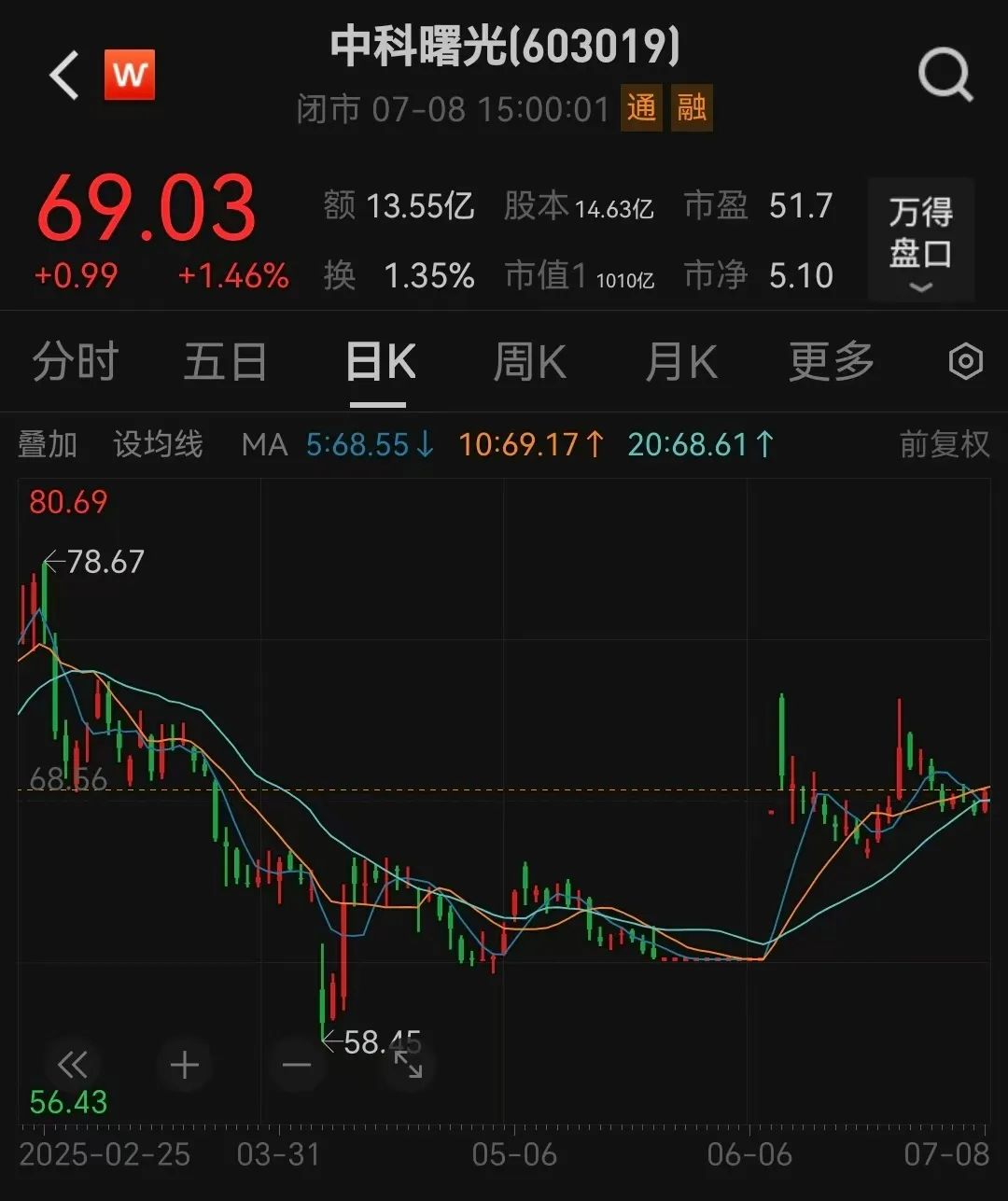
Core Viewpoint - The collaboration between Zhongke Shuguang and Zhongke Xingtou aims to establish a new ecosystem for China's space computing industry, focusing on innovation and application in space computing technology [1][4]. Group 1: Industry Context - Space computing is emerging as a strategic new technology frontier, with the Chinese government emphasizing the development of future industries, including commercial aerospace and low-altitude economy [4]. - The development of space information industry and satellite internet has been integrated into several national strategies, marking a significant opportunity for digitalization and intelligence in the aerospace sector [4]. - Satellites are transitioning from one-way data collection to edge intelligence and integrated smart computing operations, leading to the emergence of space computing as a new scenario [4]. Group 2: Company Profiles - Zhongke Shuguang provides innovative, efficient, and reliable IT products and solutions, holding a strong market position in high-end computing, storage, security, and data center sectors [4]. - Zhongke Xingtou is a leader in space information technology innovation and an integrator of the commercial aerospace industry chain, developing a comprehensive space information service system [5]. Group 3: Collaboration Details - The signed agreement will lead to joint development of high-performance, low-power, and highly reliable core components for space computing scenarios, promoting full-chain technological innovation [6]. - The collaboration aims to create an open and inclusive space computing network, establishing a "天地一体化" (integrated space-ground) intelligent computing architecture for resource interconnection and real-time data processing [6]. - The partnership will also focus on setting standards for space chip interfaces and space data processing models, engaging various stakeholders to accelerate the transformation of aerospace innovation results [6]. Group 4: Global Impact - The collaboration seeks to couple computing technology with aerospace scenarios, aiming to provide inclusive space computing services globally, thereby reducing the global computing gap and promoting the sharing of space information resources [6].