航天火箭

Search documents
一天两失利!国家队和民营航天双双遇挫!股民最担心的事来了
Xin Lang Cai Jing· 2026-01-18 02:41
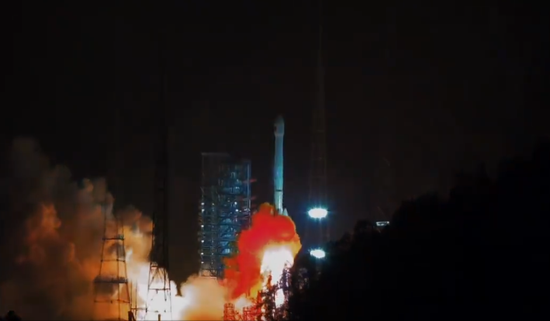
Core Viewpoint - The recent failures of two rocket launches in China have cast a shadow over the commercial aerospace sector, raising concerns among investors and market participants about the stability and maturity of the technology involved [1][3][12]. Group 1: Launch Failures - On January 17, China experienced two significant launch failures within hours: the Long March 3B rocket carrying the Shijian-32 satellite and the private company Starry Sky's Gushenxing-2 rocket, both of which encountered flight anomalies [3][14]. - The Long March 3B rocket had a historical success rate of 110 out of 115 launches, making this failure particularly notable as it breaks a streak of successful launches [3][14]. - The Gushenxing-2 rocket was designed for the small satellite constellation market and its failure represents a significant setback for Starry Sky, which had previously achieved a high success rate with its Gushenxing-1 rocket [5][19]. Group 2: Impact on Starry Sky - Starry Sky is currently in a critical phase as it approaches its IPO, having completed a 2.4 billion yuan Series D financing round in September 2025, with a valuation of 15 billion yuan [7][19]. - The company had successfully launched four satellites just a day before the failure, which had set a positive tone for its upcoming IPO process [19]. - The recent failure may undermine investor confidence and regulatory perceptions regarding the company's technological maturity and operational stability, especially in the context of recent volatility in the A-share commercial aerospace sector [8][19]. Group 3: Industry Context - The global failure rate for new rocket launches is estimated to be between 30% and 50%, with established companies like SpaceX and Rocket Lab having experienced similar setbacks [10][21]. - The aerospace industry is characterized by high risks, and the ability to learn from failures is crucial for future success [10][21]. - China plans to advance multiple reusable rocket launches in 2026, indicating ongoing efforts to develop a reliable and cost-effective space transportation system [10][21].

Weaker hiring outlook for 2026 grads: Majority surveyed rate 2026 job market as poor or fair
Youtube· 2025-11-14 11:55
Group 1 - The hiring outlook for the graduating class of 2026 is dismal, with over half of 183 employers rating the job market for new graduates as poor or fair [1] - This represents the weakest outlook since the first year of the pandemic, indicating a significant decline in hiring prospects [2] - Companies are pausing some hiring due to an uncertain economic outlook and are shifting preferences towards recruits with experience rather than fresh graduates [2] Group 2 - Executives have expressed concerns about the potential for AI to take over tasks typically performed by new graduates, further impacting their job prospects [2] - This situation serves as an early warning sign for upcoming graduates, creating anxiety among them and their parents [3]

天气影响发射计划,贝索斯蓝色起源 “新格伦” 火箭发射再顺延
Huan Qiu Wang Zi Xun· 2025-11-13 02:53
Core Points - Blue Origin's New Glenn rocket launch has been delayed again due to solar activity affecting the mission's payload, the NASA Mars science mission "ESCAPADE" [1][3] - The second launch was originally scheduled for November 13, but was postponed after the company identified potential impacts from solar activity just hours before the launch [3] - This is not the first delay for the New Glenn mission, as previous attempts on November 9 and November 10 were also canceled due to weather conditions [3] - The first demonstration flight of the New Glenn rocket was successfully completed in January, and the upcoming commercial payload launch is being closely monitored within the aerospace industry [3]

突发!“星舰”取消试飞!
证券时报· 2025-08-25 03:57
Core Viewpoint - SpaceX's Starship program faces significant challenges as the latest test flight was canceled due to ground system issues, raising concerns about the rocket's reliability and the feasibility of upcoming missions, including the planned return to the Moon in 2027 [2][3][4]. Group 1: Test Flight Details - The Starship was scheduled for its tenth test flight on August 24, 2023, carrying eight simulated satellites, but was canceled due to ground system problems [2][3]. - Previous test flights in 2023 resulted in failures, including the destruction of the spacecraft and booster explosions, leading to skepticism about the rocket's reliability [3][4]. Group 2: Expert Opinions - Analysts express doubts about the Starship's design, citing a lack of heavy payload testing and structural weaknesses as reasons for the recent failures [4]. - Former NASA astronaut Garrett Reisman mentioned that the future of the Starship is uncertain, with potential for both failure and revolutionary advancements in space exploration [4]. Group 3: Technical Specifications - The Starship rocket measures approximately 120 meters in length and 9 meters in diameter, consisting of a 70-meter booster and a reusable spacecraft designed for missions to Earth orbit, the Moon, and Mars [5]. Group 4: Industry Context - The U.S. government is fostering a competitive commercial space industry, with SpaceX expected to benefit significantly from recent executive orders aimed at maintaining U.S. leadership in this sector [4].

“星舰”又炸了
券商中国· 2025-06-19 12:16
Core Viewpoint - SpaceX's Starship rocket experienced a catastrophic failure during a static fire test, leading to an explosion, with investigations currently underway to determine the cause of the incident [1][2][3]. Group 1: Incident Details - The incident occurred on the evening of the 18th, with local authorities confirming no reports of casualties [2]. - The static fire test was part of preparations for the tenth flight test of the Starship rocket, which is designed for missions to Earth orbit, the Moon, and Mars [3][4]. - The Starship rocket measures approximately 120 meters in length and 9 meters in diameter, consisting of a first stage booster and a second stage spacecraft, both designed for reusability [4].