Retail(零售)

Search documents
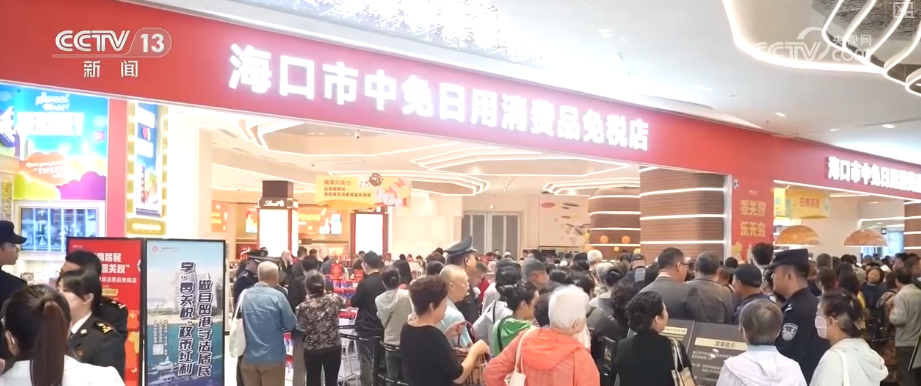
年货“购物车”再更新 “免税红利+本土特色”点亮新春消费市场
Yang Shi Wang· 2026-02-15 09:27
Group 1 - The Hainan New Year goods market is experiencing a surge in demand as the Spring Festival approaches, with a variety of products such as duty-free daily consumer goods, seafood gift boxes, and local specialty agricultural products available for one-stop shopping [1][4] - The core business district of Tanmen in Qionghai, Hainan, is bustling with activity, becoming a popular seafood distribution center where workers are busy preparing and packaging seafood, which has become a sought-after gift for the New Year [3] - On February 11, the first batch of five duty-free stores for daily consumer goods opened in Hainan, featuring items like milk powder, chocolate, and toys, which are now included in consumers' New Year shopping lists [4] Group 2 - In Sanya, Hainan, the Changsheng Century Market showcases local specialty agricultural products alongside goods from various regions, attracting numerous tourists and international friends to experience the festive atmosphere of the New Year [5]

郑州新一轮国补落地 今年,河南消费市场加速向新
He Nan Ri Bao· 2026-01-13 23:36
Group 1 - The core viewpoint of the articles highlights the significant impact of the new round of "old-for-new" consumption policies in Zhengzhou, which has led to a dramatic increase in consumer foot traffic and sales in retail stores [1][2]. - The "old-for-new" policy has broadened its coverage, promoting green, low-carbon, and smart digital consumer products, which has attracted a younger demographic [2][3]. - Local retail brands in Henan, such as Xianfeng Life and Huayu Baijia, have gained popularity due to their quality products and sincere service, while international retail giants like Metro and Sam's Club are also entering the market, intensifying competition [4][6]. Group 2 - The new shopping experiences in large malls, such as the "social + promotion" activities, are designed to enhance consumer engagement and create memorable experiences [5][6]. - The Dragon Lake Tianjie shopping center has achieved impressive sales of over 210 million yuan and attracted more than 420,000 visitors within its first three days, showcasing the potential of the "first-store economy" and immersive experiences [6]. - The provincial government is committed to fostering a better consumption environment and organizing diverse activities to stimulate service consumption growth, reflecting the importance of consumer spending in enhancing the quality of life [6].

Should Invesco S&P Ultra Dividend Revenue ETF (RDIV) Be on Your Investing Radar?
ZACKS· 2025-08-06 11:20
Core Viewpoint - The Invesco S&P Ultra Dividend Revenue ETF (RDIV) offers broad exposure to the Large Cap Value segment of the US equity market, with a focus on dividend revenue and a passive management strategy [1] Group 1: ETF Overview - RDIV was launched on October 1, 2013, and has accumulated assets exceeding $793.74 million, positioning it as an average-sized ETF in its category [1] - The ETF has an annual operating expense ratio of 0.39%, which is competitive within its peer group, and a 12-month trailing dividend yield of 4.1% [4] Group 2: Large Cap Value Characteristics - Large cap companies, defined as those with market capitalizations above $10 billion, are generally more stable with predictable cash flows and lower volatility compared to mid and small cap companies [2] - Value stocks, which typically have lower price-to-earnings and price-to-book ratios, have historically outperformed growth stocks in most markets, although they may lag in strong bull markets [3] Group 3: Sector Exposure and Holdings - The ETF has a significant allocation to the Financials sector, comprising approximately 26.6% of the portfolio, followed by Energy and Healthcare [5] - Us Bancorp (USB) is the largest holding at about 5.55% of total assets, with the top 10 holdings representing around 47.7% of total assets under management [6] Group 4: Performance Metrics - RDIV aims to match the performance of the OFI Revenue Weighted Ultra Dividend Index, with a year-to-date increase of about 2.45% and a one-year increase of approximately 9.91% as of August 6, 2025 [7] - The ETF has a beta of 0.93 and a standard deviation of 18.85% over the trailing three-year period, indicating a medium risk profile [8] Group 5: Alternatives and Market Position - RDIV holds a Zacks ETF Rank of 3 (Hold), suggesting it is a viable option for investors seeking exposure to the Large Cap Value segment [10] - Alternative ETFs in this space include the Schwab U.S. Dividend Equity ETF (SCHD) and the Vanguard Value ETF (VTV), which have significantly larger asset bases and lower expense ratios [11] Group 6: Investment Trends - Passively managed ETFs are gaining popularity among both institutional and retail investors due to their low costs, transparency, flexibility, and tax efficiency, making them suitable for long-term investment strategies [12]