
《一步之遥》

Search documents
“音乐增进了我们对彼此的理解”
Ren Min Ri Bao· 2025-12-23 22:31
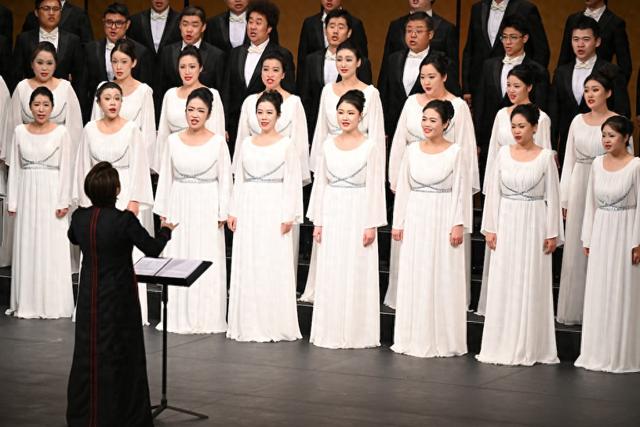
Core Viewpoint - The concert by the China National Opera House Choir in Dhahran, Saudi Arabia, marks a significant cultural exchange event, celebrating the 35th anniversary of diplomatic relations between China and Saudi Arabia and the inaugural China-Saudi Cultural Year [1][2]. Group 1: Event Overview - The concert featured a diverse selection of music from various cultures, including Chinese folk songs, Western classical pieces, and popular music from Latin America and Africa, showcasing the unifying power of music [1]. - The performance received enthusiastic applause from the audience, highlighting the emotional resonance of the music despite language barriers [1]. Group 2: Cultural Exchange - The collaboration between the Saudi Krolla Choir and Chinese musicians included performances of classic Arabic and Chinese songs, enhancing mutual understanding through music [2]. - The event is seen as a stepping stone for further artistic cooperation between Saudi Arabia and China, with expectations for future exchanges and performances [2]. Group 3: Institutional Support - The China National Opera House plans to continue promoting cultural exchanges with Saudi Arabia by organizing more performances in the future [2]. - Saudi Arabia places a high value on cultural industry development and looks forward to increased collaboration between artists from both countries [2].
《茉莉花》唱响,国家大剧院合唱团首次赴沙特阿拉伯演出
Xin Lang Cai Jing· 2025-12-21 03:17
Group 1 - The concert by the National Centre for the Performing Arts Choir in Saudi Arabia marks the 35th anniversary of diplomatic relations between China and Saudi Arabia, showcasing the power of music as a universal language [1][3] - The concert featured a diverse selection of songs from various continents, including Chinese folk songs, European classics, South American rhythms, North American folk tunes, and African songs, highlighting cultural diversity [3][5] - The event took place at the King Abdulaziz Center for World Culture, a significant cultural landmark in Saudi Arabia, which has previously engaged in various cultural collaborations with Chinese institutions [5][9] Group 2 - The collaboration between the National Centre for the Performing Arts and the King Abdulaziz Center is based on mutual respect and the belief in the power of culture to connect people and inspire thought [7] - The performance included participation from the Saudi Krolla Choir, which was established in 2022, enriching the cultural landscape of Saudi Arabia [7] - Previous collaborations between the two cultural institutions include events such as the Beijing Saudi Film Night and participation in the 2024 Beijing International Book Fair, reflecting ongoing cultural dialogue between China and Saudi Arabia [9]

豆瓣6.7,姜文的新片很难评
36氪· 2025-07-22 00:36
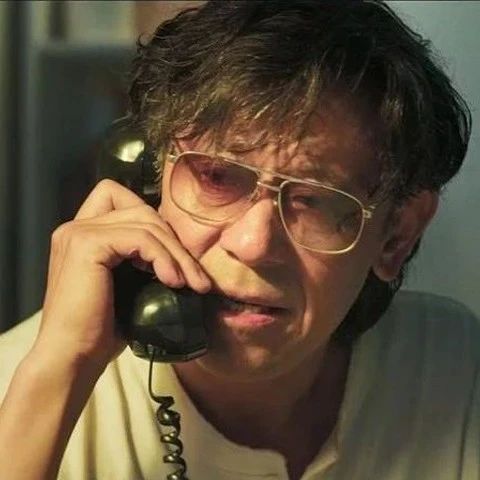
Core Viewpoint - The article discusses the film "You Can Do It!" directed by Jiang Wen, highlighting its unique storytelling and the personal experiences reflected in the narrative, particularly focusing on the relationship between the father and son, represented by the character Lang Lang and his father [3][6][9]. Group 1: Film Overview - The film "You Can Do It!" is directed by Jiang Wen, who is also the writer, actor, and editor, showcasing a strong personal touch in its creation [3][6]. - The film has received mixed reviews since its release, with box office performance not meeting expectations compared to other films [6][9]. - The narrative is inspired by Lang Lang's autobiography "A Journey of a Thousand Miles," emphasizing the importance of focus and dedication in achieving success [9][11]. Group 2: Themes and Symbolism - The film uses the metaphor of making dumplings to illustrate the purity of the creative process, suggesting that the act of creation is more important than external validation [5][7]. - Jiang Wen incorporates elements from his previous works, such as the rooftop motif, symbolizing the boundary between ordinary life and the pursuit of dreams [16][17]. - The film's music and piano performances are designed to evoke the characters' emotional states rather than serve as mere auditory enjoyment, reflecting the intensity of their experiences [13][14]. Group 3: Character Dynamics - The relationship between Lang Lang and his father is central to the film, showcasing a blend of conflict and support as they navigate the challenges of pursuing a musical career [11][19]. - Female characters in the film, such as Lang Lang's mother and a teacher, are portrayed with depth, contributing to the narrative's exploration of family dynamics and emotional connections [25][26]. - The film concludes with a reflection on the mother's influence, suggesting a nuanced understanding of gender roles within the family context [30][32].
豆瓣6.7,姜文的新片很难评
Hu Xiu· 2025-07-21 01:48
Core Viewpoint - Director Jiang Wen's new film "You Can! You Go!" has been released in the summer season, showcasing his creative evolution as he takes on multiple roles in the production process, including writing, directing, acting, and editing [1] Group 1: Film Overview - The film features a narrative inspired by pianist Lang Lang's autobiography "A Journey of a Thousand Miles," emphasizing the theme of overcoming challenges without resorting to violence [4] - The film has received mixed reviews since its preview, with box office performance lagging behind other films like "Lychee" and the animated "The King's Avatar 2" [2][3] Group 2: Character Dynamics - Jiang Wen plays Lang Lang's father, who emphasizes the importance of focus and dedication in pursuing success, as illustrated through the metaphor of making dumplings [2][5] - The film includes a significant absence of dumpling visuals, contrasting the father's insistence on the importance of the process over the outcome [5] Group 3: Visual and Thematic Elements - The film employs recurring motifs from Jiang Wen's previous works, such as the rooftop setting symbolizing freedom and rebellion, and the dynamic visual style that emphasizes upward movement and aspiration [9][10] - The character dynamics reflect a blend of humor and seriousness, with exaggerated character designs serving to quickly establish personality traits [11] Group 4: Female Representation - The film features female characters that embody Jiang Wen's idealized vision of women, with roles that contribute to the narrative's emotional depth [14][15] - The portrayal of Lang Lang's mother and a schoolteacher highlights the complexity of female roles in Jiang Wen's storytelling, moving beyond a simplistic male perspective [19][20]
姜文不行!别上!
Hu Xiu· 2025-07-20 23:38
Core Viewpoint - The article discusses the controversial reception of Jiang Wen's latest film "You Can! You Go!" and critiques its storytelling and character development, suggesting that it lacks depth and coherence compared to his previous works [11][12][36]. Group 1: Film Overview - "You Can! You Go!" is Jiang Wen's seventh independent directorial work, released seven years after "Evil Can't Suppress Justice" [6]. - The film is perceived as the most controversial of Jiang Wen's career, receiving a significant amount of negative reviews, particularly on platforms like Douban [11][12]. - The narrative superficially follows the life of pianist Lang Lang, but is criticized for being more of a chronological account rather than a compelling story [19][21]. Group 2: Character Analysis - The film focuses more on Lang Lang's father, Lang Guoren, rather than Lang Lang himself, portraying the father's psychological journey in raising his son [26][30]. - Other characters in the film are described as overly simplistic and lacking depth, serving merely as tools in the narrative [28][29]. - Jiang Wen's portrayal of Lang Guoren is seen as a mix of affection and authoritarianism, diverging from the more oppressive image typically associated with the character [30][71]. Group 3: Critique of Style and Technique - The film is criticized for its lack of engaging storytelling and technical execution, with claims that it feels rough, tedious, and lengthy [36][65]. - The article suggests that Jiang Wen's previous films, even without deep metaphors, were still captivating, whereas this film fails to engage the audience [35][36]. - There is a notion that the film's design and metaphorical elements come off as superficial and poorly executed, leading to a lack of meaningful engagement with the audience [34][42]. Group 4: Audience Reception and Expectations - The audience's trust in Jiang Wen has diminished, with many feeling that the film's themes of paternalism and masculinity are outdated and unappealing [78][79]. - The article implies that Jiang Wen's attempt to convey deeper meanings through the film may come off as pretentious, alienating viewers [42][79]. - There is a call for Jiang Wen to reconsider his approach to filmmaking, suggesting that he should focus on understanding the audience rather than imposing his narrative [80][81].
拍电影的,少听姜文
Hu Xiu· 2025-05-22 07:25
Group 1 - The article discusses the current state of the Chinese film industry, highlighting a record low daily box office of over 40 million, marking the lowest since records began in 2011 [1] - It suggests that the pandemic has led to a shift in perception, where low box office numbers are no longer seen as problematic, indicating a new norm for the industry [2] - The article emphasizes the importance of genre films as a potential solution for the challenges faced by Chinese cinema [3] Group 2 - The frequent appearances of filmmaker Jiang Wen at events like the Beijing International Film Festival are noted, indicating he has a new film coming out [6][7] - Jiang Wen's unique position in the industry is discussed, with the article suggesting that his individual value is irreplaceable, but his insights may not be as relevant for current filmmakers [9][11] - The article critiques Jiang Wen's recent public engagements, describing them as lacking substance and not providing valuable insights for the industry [13][17] Group 3 - The article reflects on Jiang Wen's creative philosophy, emphasizing talent and individual expression over technical aspects, suggesting that directors should focus on their unique voice [30][32] - It highlights the importance of scriptwriting in filmmaking, with Jiang Wen stressing the need to consider the environment and historical context of characters [35][36] - The article points out a disconnect between Jiang Wen's artistic vision and the technical execution in his recent works, suggesting that this is a broader issue within the industry [38][41] Group 4 - The article discusses the challenges faced by the Chinese film industry, particularly the need to cater to audience preferences while also pushing creative boundaries [58][63] - It suggests that the industry lacks films that are both innovative and traditional, which could appeal to a wider audience [65][67] - The article concludes with a call for filmmakers to better understand audience desires and to create content that resonates with them, rather than solely focusing on artistic expression [47][55]
电影要走出“像”的困扰(锐见)
Ren Min Ri Bao· 2025-05-12 22:21
Core Viewpoint - The film industry is facing challenges due to a lack of originality, with many films becoming too similar to one another, which diminishes audience engagement and interest [1][4]. Group 1: Industry Challenges - The phenomenon of films being too similar has become a negative asset for the film industry, with complex causes and varied manifestations [1][4]. - The issue of similarity is not just about the films themselves but also about the relationship between films and the world, emphasizing the need for creativity rooted in human life rather than imitation of other works [4]. Group 2: Creative Dynamics - The concept of "author cinema" proposed by French critic Truffaut highlights the importance of individual expression in filmmaking, yet it has led to a trend of filmmakers trying too hard to be different, resulting in a new form of similarity [2]. - Successful genre films should balance familiarity with originality, where a certain degree of similarity is acceptable, but there must also be unique elements that allow them to stand out [1][2]. Group 3: Recent Film Examples - The film "大风杀" directed by Zhang Qi attempts innovation in the crime and western genres but suffers from weak story and theme development [3]. - "猎金·游戏" and "人生开门红" showcase a clear pursuit of originality, but they struggle with fragmented plots and disjointed character relationships, failing to effectively explore the themes of similarity and difference [3].