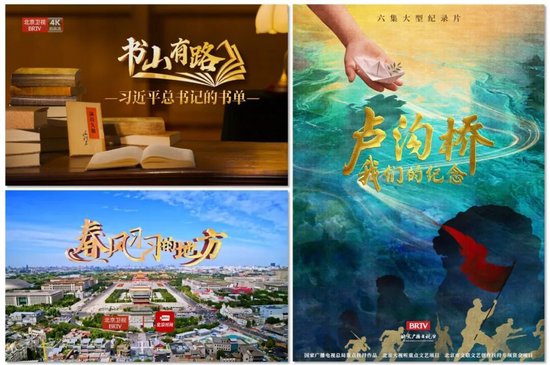
《书山有路——习近平总书记的书单》

Search documents
北京广播电视台党组书记、台长张劲林:奋力谱写首都新型主流媒体建设新篇章
Xin Lang Cai Jing· 2026-02-15 00:29
Core Viewpoint - The article emphasizes the importance of cultural innovation and the role of mainstream media in promoting socialist culture, as outlined in the 15th Five-Year Plan. It highlights Beijing Radio and Television Station's commitment to enhancing its media capabilities and exploring systemic reforms to align with national cultural goals [1][15]. Group 1: Cultural Innovation and Media Strategy - The 15th Five-Year Plan calls for stimulating cultural innovation and developing socialist culture, providing a framework for mainstream media reform [1][15]. - Beijing Radio and Television Station aims to implement a development strategy focused on "news-oriented, content-driven, and integrated media" to enhance its role in cultural promotion [1][15]. - The station has launched programs like "The Road of Books" to engage audiences with Xi Jinping's cultural thoughts, achieving a total viewership of 28 billion across three seasons [20][4]. Group 2: Strengthening Mainstream Media's Influence - The plan emphasizes the need for integrated management of news and online discourse to enhance the guiding capacity of mainstream media [5][21]. - Beijing Radio and Television Station has focused on significant themes such as the 75th anniversary of the founding of New China, producing impactful programs that resonate with the public [22][23]. - The station's economic interview program "Confidence - Uniting Strengths for Continued Struggle" has garnered nearly 400 million views, reflecting its influence on public sentiment [23]. Group 3: Original Content Creation - The plan stresses the importance of enhancing cultural originality and promoting high-quality content across various media sectors [24][29]. - Beijing Radio and Television Station has developed a diverse range of original programs, including high-quality dramas and cultural events, contributing to its reputation as a leading media outlet [25][27]. - The station's documentary series "Specialized and Innovative Research Institute" has reached nearly 1.1 billion views, showcasing its commitment to quality content [25][27]. Group 4: Technological Integration and Media Fusion - The plan advocates for the integration of culture and technology, emphasizing the need for digital transformation in media [26][29]. - Beijing Radio and Television Station has adopted a "1+2+N" media development model, achieving over 400 million users across its platforms [27][30]. - The station has launched innovative projects, including a 4K ultra-high-definition channel and AI-driven content, enhancing its technological capabilities [27][30]. Group 5: International Communication Enhancement - The plan highlights the need to improve international communication mechanisms and innovate dissemination methods [31][32]. - Beijing Radio and Television Station has expanded its international outreach, producing programs that showcase Chinese stories and culture to a global audience [32][33]. - The station's documentary "Panda Adventures" has gained significant international attention, illustrating its success in leveraging cultural resources for global communication [32][33].

“十四五”期间,北京全国文化中心建设硕果累累
Bei Jing Ri Bao Ke Hu Duan· 2025-10-29 11:01
Core Points - The article discusses the achievements and initiatives of Beijing during the "14th Five-Year Plan" period, focusing on cultural development and the establishment of Beijing as a national cultural center [3][4][5][6][7][8][9][10][11][12]. Group 1: Cultural Development Initiatives - Beijing has focused on promoting various cultural themes, including ancient, red, and innovative cultures, under the framework of "one core, one city, three belts, and two zones" [3]. - Significant events such as the centenary of the Communist Party, the Beijing Winter Olympics, and the 75th anniversary of the founding of New China were organized with high standards, showcasing the city's openness and cultural richness [4]. - The city has made substantial progress in promoting socialist core values and has recognized numerous individuals as national moral models, enhancing the moral atmosphere [5]. Group 2: Heritage and Historical Preservation - The city has strengthened the protection of cultural heritage, with over 31 early revolutionary sites being preserved and utilized, and more than 3.1 million visitors to major red culture venues [5][7]. - The application for the World Heritage status of the Beijing Central Axis has been a key focus, leading to the restoration of historical sites and the recognition of 312 historical buildings [7][8]. Group 3: Cultural Consumption and Events - The cultural consumption in Beijing has seen significant growth, with over 57,000 performances expected in 2024, attracting more than 12.8 million viewers and generating over 3.9 billion yuan in ticket sales [9][10]. - The city has launched initiatives to support bookstores and reading activities, with the "Ditan Book Fair" achieving over 100 million yuan in sales, marking a 37.8% increase from the previous year [10]. Group 4: Cultural Industry and Economic Impact - The cultural industry has become a significant contributor to Beijing's GDP, accounting for 11.4%, with policies in place to support new cultural business models [11]. - The integration of culture and technology has been emphasized, with new cultural and technological projects being developed, leading to over 70% of cultural enterprises' revenue coming from new business models [11][12]. Group 5: Integration of Culture, Commerce, and Tourism - Beijing has created mechanisms for the integration of culture, commerce, tourism, and sports, promoting a "one-stop" consumption experience through various events and activities [12].