《亲爱的

Search documents
杨紫宣传小能手再次上线
Xin Lang Cai Jing· 2026-02-05 09:58
Core Viewpoint - Yang Zi, a prominent Chinese actress, showcased her promotional skills at the "Weibo Night" red carpet event on February 5, where she presented a fan supporting her work "Tree of Life" [1] Group 1: Personal Background - Yang Zi was born on November 6, 1992, in Beijing, China [1] - She graduated from the Beijing Film Academy, majoring in performance in the class of 2010 [1] Group 2: Career Highlights - Yang Zi is known for her roles in popular television series such as "Home with Kids," "Ode to Joy," "Ashes of Love," "Dear, Loved," and "The National Colors of the Flower" [1]
杨紫角色区分度拉满:《生命树》刷新央视年度纪录
Xin Lang Cai Jing· 2026-01-31 09:11
Core Viewpoint - The drama "Tree of Life," starring Yang Zi, has achieved a peak viewership rating of 2.38% within the first 30 minutes of its premiere, setting a new annual record for CCTV [1] Group 1: Performance Metrics - "Tree of Life" reached a peak viewership rating of 2.38%, breaking the annual record for CCTV [1] - The show ranked first in multiple categories, including the hot topic list and character popularity, with Yang Zi's character Bai Ju leading the rankings [1] Group 2: Character Portrayal - Yang Zi's portrayal of the female police officer Bai Ju has been widely praised for its authenticity and emotional impact, resonating deeply with viewers [1] - The character's qualities of determination and sincerity have been highlighted, showcasing Yang Zi's ability to embody diverse roles effectively [1]
《许我耀眼》的不纯爱实验,成了还是败了?
Hu Xiu· 2025-10-11 08:35
Core Insights - The article discusses the shift in Chinese contemporary romance dramas, particularly highlighting the series "许我耀眼," which features morally flawed protagonists, diverging from the traditional pure love narrative [1][2][4] - The series has gained significant popularity, breaking the 30,000 heat threshold on Tencent Video, indicating a departure from conventional storytelling in the genre [2] - The emergence of non-pure love narratives reflects a broader trend in the industry, suggesting that there is potential for more diverse storytelling beyond the established norms [6][7] Summary by Sections Traditional Narratives - Historically, Chinese contemporary romance has been confined to pure love narratives, focusing on themes of growth, conflict, and choices centered around love, often relegating social issues to mere background elements [3] - Recent years have seen a rise in narratives that challenge the pure love archetype, with series like "半熟男女" and "许我耀眼" introducing characters with ulterior motives and moral ambiguity [4][5] Non-Pure Love Narratives - The article identifies multiple layers of non-pure love narratives, starting with the challenge to traditional gender dynamics and societal norms, as seen in various recent dramas [8][10] - The second layer involves a re-examination of sexual dynamics, where characters may not adhere to the "double purity" trope, thus complicating the portrayal of relationships [11][12] - The third layer critiques the commodification of love, where marriage and relationships are depicted as transactional, a theme more common in international series than in domestic productions [13][14] Industry Trends - Despite the emergence of non-pure love narratives, pure love remains a dominant force in the genre, with many series ultimately reverting to familiar romantic tropes by their conclusion [5][30] - The article notes that while there is a growing interest in non-pure love stories, they still represent a minority within the genre, with platforms favoring adaptations of popular pure love IPs [16][27] - The success of short dramas has accelerated the evolution of the genre, allowing for more complex narratives and character dynamics to be explored [32][36] Future Directions - The article suggests that the evolution of contemporary romance dramas could take multiple paths, including refining pure love narratives, integrating social issues, or exploring fantastical elements [40][41] - The potential for growth in the genre lies in expanding narrative boundaries and diversifying emotional experiences for audiences, moving beyond the traditional dichotomy of sweet versus painful storytelling [39][42]


《赴山海》口碑崩后成毅火提新项目,演员扛剧逻辑变了?
3 6 Ke· 2025-09-22 11:28
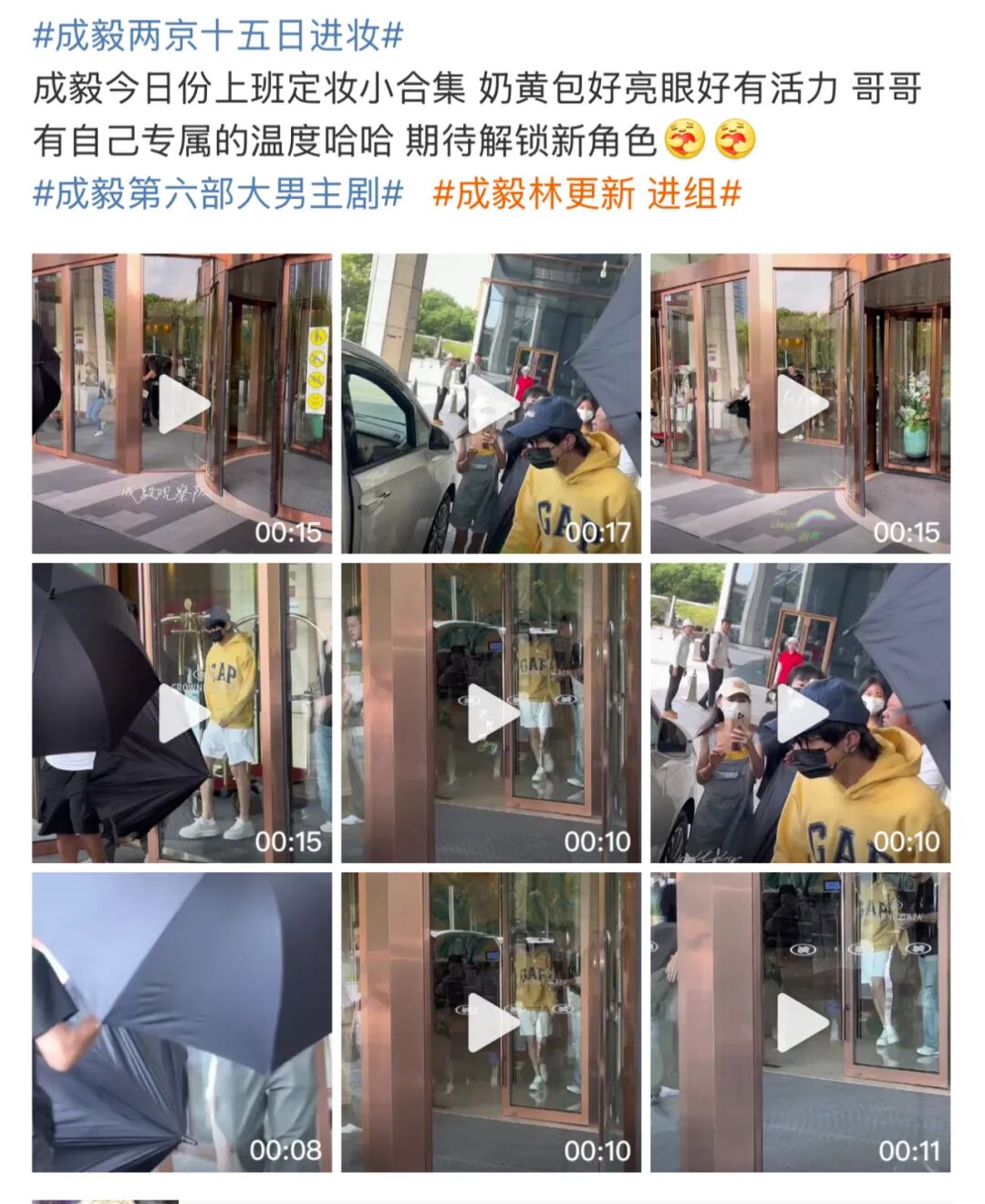
Core Insights - The series "赴山海" has become a new flow password in the internet space, marking a significant event in the drama market for the second half of 2025 [1] - Despite high initial viewership and popularity, the series has faced criticism regarding its quality, leading to a complex evaluation of the lead actor 成毅's ability to carry a show [3][12] - The phenomenon of "black-red" (negative publicity leading to increased attention) has emerged, indicating that the series' flaws have generated significant online discussion, overshadowing its actual quality [9][11] Group 1: Series Performance and Reception - "赴山海" achieved over 700 million views within 10 days of its release, topping the drama popularity charts for 10 consecutive days [1] - The lead actor 成毅's character has garnered over 200 million views on iQIYI, showcasing his significant role in driving the series' initial success [1] - However, the series has been criticized for its production quality, with common complaints about the plot, pacing, and technical errors, leading to a decline in audience reception [6][11] Group 2: Actor's Market Position and Future Projects - 成毅 is set to star in the upcoming series "两京十五日," indicating that despite the current setback, he continues to secure high-profile projects [3] - The market's perception of an actor's ability to carry a show has become increasingly complex, with traditional metrics of success being challenged [3][18] - The concept of "single-person approval" has emerged, where top actors can secure projects based on their individual influence, reflecting a shift in how projects are evaluated in the industry [20][22] Group 3: Industry Trends and Actor Dynamics - The dual nature of flow (popularity) and its backlash has created a cycle where actors can quickly rise and fall based on a single project's reception [11][12] - The industry is witnessing a trend where both flow actors and established talent must continuously prove their worth, as the market allows for limited mistakes [29] - The emergence of a new generation of actors who can balance both popularity and acting skills is reshaping the competitive landscape, with a focus on diverse roles and strong performances [30]
国产剧开始流行小房子了?
虎嗅APP· 2025-09-11 23:58
Core Viewpoint - The article discusses the trend in recent Chinese dramas where female protagonists are depicted moving from larger homes to smaller living spaces, reflecting a shift in narrative that emphasizes autonomy and choice over traditional notions of status and wealth [5][9]. Summary by Sections Changing Narratives in Dramas - Recent Chinese dramas showcase female leads moving from spacious homes to smaller ones, indicating a narrative shift that challenges traditional views on marriage and living conditions [5][6]. - The phenomenon has sparked discussions on social media about the implications of "downward marriage" and the associated living conditions for women [6]. Autonomy and Choice - The article argues that the size of the home should not be viewed as a regression but rather as a reflection of the characters' agency and decision-making power [6][9]. - For instance, in "生万物," the character 宁绣绣 gains decision-making authority and autonomy despite moving to a smaller home, showcasing her ability to influence her circumstances [6][9]. Relationship Dynamics - The dynamics of relationships are explored, with female characters choosing partners based on compatibility and support rather than wealth, as seen in "子夜归" where the protagonist 武祯 exercises her choice in selecting a partner [7][15]. - The article highlights that the size of the home can symbolize the nature of the relationship, with smaller spaces fostering deeper connections and mutual support among characters [8][20]. Historical Context of Housing in Dramas - The article contrasts the current trend of smaller homes with earlier dramas that featured opulent living spaces, such as "我的前半生" and "亲爱的,热爱的," where wealth was prominently displayed [11][12]. - It notes that the portrayal of large homes in earlier dramas often served as a backdrop for romantic and social narratives, while the current trend reflects a more grounded and relatable approach to storytelling [11][14]. Modernity and Mobility - The shift from large homes to smaller living spaces is also seen as a response to modernity, where characters are depicted as more mobile and less tied to traditional notions of stability and ownership [17][19]. - The article suggests that this reflects a broader societal change where the significance of physical space is diminished in favor of personal agency and relationships [18][20]. Conclusion - Ultimately, the article posits that the trend towards smaller homes in Chinese dramas signifies a deeper understanding of female empowerment and the evolving nature of relationships in contemporary society [20].