
《尚书》

Search documents
演出“上线”、开设艺术自习室……各地公共文化服务不断“上新”添彩美好生活
Yang Shi Wang· 2026-02-09 07:32
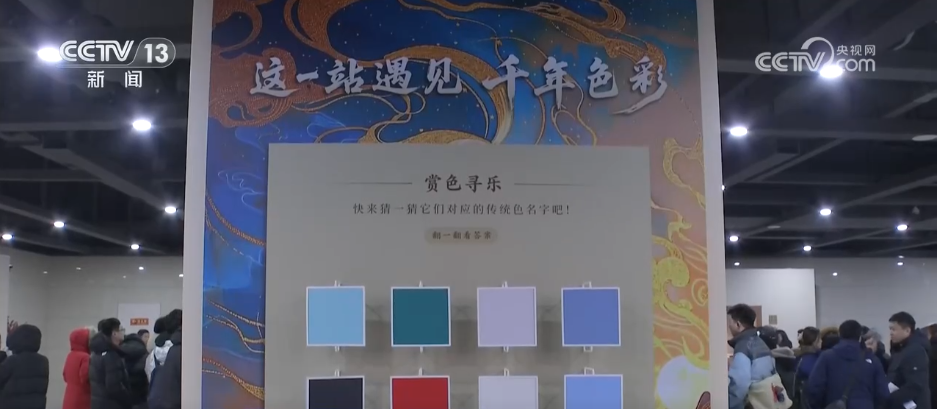
Core Viewpoint - The news highlights the increasing cultural activities and public service offerings in various regions as the Spring Festival approaches, emphasizing the integration of culture and technology to enhance public engagement and learning opportunities. Group 1: Cultural Activities - The Beijing-Kowloon Metro Line 16 has launched a themed reading activity titled "Encountering a Thousand Years of Color," featuring selected books and traditional Chinese color art installations, allowing passengers to engage with cultural content while waiting [4] - Gansu Science and Technology Museum is hosting 46 "Technology Carnival Season" activities, providing children with interactive experiences to explore scientific concepts [7] - The Shaanxi Provincial Song and Dance Theatre has adapted its performances for online streaming, focusing on traditional themes and attracting a growing audience during the Spring Festival [9] Group 2: Cultural Services and Accessibility - In various regions, public cultural services are being tailored to meet community needs, such as free art study rooms and hands-on workshops for making Spring Festival decorations [12][14] - The "Jiyuan Cultural Cloud" platform allows villagers to select cultural programs via mobile devices, transforming public cultural services from a broad approach to a more targeted delivery system, achieving high satisfaction rates [16]

文明互鉴与思想共鸣:中俄文学的古典与现代
Xin Lang Cai Jing· 2026-01-14 23:47
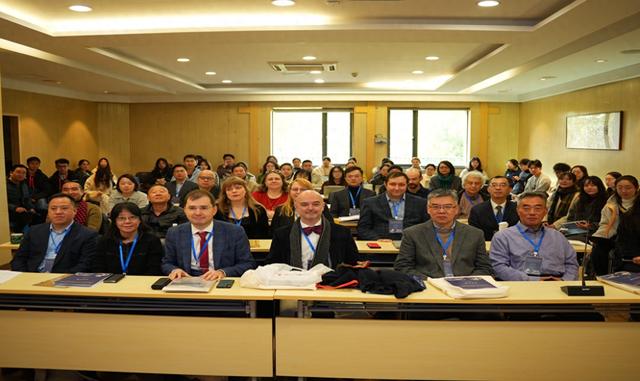
Core Viewpoint - The exchange and collision of literature and culture between China and Russia are likened to two ancient rivers converging in the depths of the Eurasian continent, creating a rich tapestry of mutual resonance and cultural dialogue [1] Group 1: Conference Overview - The conference held from November 26 to 29, 2025, at Nanjing University focused on "Classical and Modern Chinese-Russian Literature," featuring scholars from both countries engaging in multidimensional discussions [1] - The event highlighted the importance of classical literature as a foundation for cultural traditions and modern literature as a key connection to the present and future [1] Group 2: Thematic Presentations - The first session addressed the contemporary significance and methodological innovation of classical literature, emphasizing the need to transcend historical materialism in Chinese classical literature research [4] - The second session explored the regional diversity and high quality of contemporary Chinese literature recognized by Russian readers, showcasing the dynamics of literary dissemination [5] - The third session involved theoretical dialogues and comparative analyses, revealing the potential for mutual learning between Chinese and Russian poetics [6] - The fourth session focused on historical memory and East Asian dissemination, illustrating the depth of Sino-Russian literary exchanges and their role in cultural communication [7]
古典学建设视域下的《尚书》学研究
Xin Lang Cai Jing· 2025-12-21 19:39
Core Insights - The reconstruction of classical studies in China is gaining momentum, with a focus on integrating traditional Chinese texts and culture into a cohesive academic framework [1][6] - The study of the "Book of Documents" (尚书) has evolved significantly, transitioning from a sacred text to a subject of historical and literary analysis, reflecting broader changes in academic paradigms [2][3] Group 1: Evolution of Classical Studies - Since the 1970s, there has been an increase in the understanding of pre-Qin and Han texts, leading to calls for the reconstruction of classical studies to address the limitations of specialized disciplines [1] - The establishment of "Chinese Classical Studies Departments" in major universities aims to create a more integrative approach to the study of ancient culture [1] - The shift from specialized disciplines to a more holistic understanding of classical texts is seen as essential for developing interdisciplinary talent [1] Group 2: Research Paradigms in "Book of Documents" - The research paradigm of the "Book of Documents" has shifted from a focus on its sacredness to a more value-neutral analysis, allowing for a critical examination of its historical context [2][3] - The modern study of the "Book of Documents" can be categorized into three main schools: Traditional, New Evidence, and Historical Critique, each employing different methodologies and perspectives [3] - Recent studies have integrated various disciplines such as geography, sociology, and anthropology, showcasing a cross-disciplinary approach to understanding ancient texts [3] Group 3: New Directions in Research - In the 21st century, the focus of "Book of Documents" research has shifted towards the mutual verification of excavated and transmitted texts, as well as cross-cultural comparisons [4][5] - New methodologies, such as the examination of "system-carrier-ritual" relationships, are replacing traditional text-centric studies, emphasizing the text's role in political and social contexts [5][6] - The integration of digital humanities is transforming the research landscape, allowing for the creation of structured data from classical texts and facilitating interdisciplinary collaboration [7][8]
今天我们如何读古籍(新语)
Ren Min Ri Bao· 2025-06-18 21:53
Core Viewpoint - The difficulty of reading ancient texts stems from complex language, the vast number of available texts, and the significant cultural and philosophical distance from contemporary understanding [2][3]. Group 1: Challenges in Reading Ancient Texts - The first challenge is the complexity of the language, where readers often recognize individual characters but struggle to grasp the overall meaning [2]. - The second challenge is the sheer volume of ancient texts, with over 200,000 existing works, including more than 3,400 titles in the "Siku Quanshu," totaling approximately 800 million characters [2]. - The third challenge is the cultural and philosophical differences, as ancient ethical norms and worldviews can be vastly different from modern perspectives [2]. Group 2: Importance of Reading Ancient Texts - Ancient texts serve as a material carrier of traditional culture, preserving the wisdom of past generations, such as Confucius's reflections in "Lunyu" and Sima Qian's historical insights in "Shiji" [3]. - These texts contain high-level skills in language expression and thought, exemplified by concise yet profound works like "Zuo Zhuan" and "Zhuangzi" [3]. Group 3: Approaches to Reading Ancient Texts - To effectively read ancient texts, one must cultivate interest and discipline, as these texts offer rich humanistic wisdom and life insights [4]. - Modern readers have access to useful tools such as the "Dictionary of Common Ancient Chinese Characters" and various bibliographic works, which facilitate understanding and selection of texts [3].