《民营经济促进法》

Search documents
从衣食住行到数字安全 这一年这些法律守护着我们
Yang Shi Wang· 2025-12-30 22:20
Core Points - In 2025, the National People's Congress (NPC) focused on legislation to address public concerns and improve people's livelihoods, enacting 6 new laws and amending 15 existing laws [2][4][6] Group 1: New Legislation - The NPC passed 6 new laws in 2025, including the "Private Economy Promotion Law," "Nuclear Energy Law," "Public Health Emergency Response Law," "National Park Law," "Legal Education Promotion Law," and "Hazardous Chemicals Safety Law" [4][6] - The "Private Economy Promotion Law," effective from May 20, 2025, marks a significant milestone in economic legislation, establishing legal status for the private economy and enhancing investor confidence [6] Group 2: Amendments to Existing Laws - A total of 15 laws were amended in 2025, including the "Public Security Administration Punishment Law," "Anti-Unfair Competition Law," and "Maritime Law," aimed at modernizing social governance and ensuring national security [7][9] - The revised "Anti-Unfair Competition Law," effective from October 15, 2025, introduces new regulations against low-price competition and data rights violations, enhancing the competitive environment for market participants [9] - The "Public Security Administration Punishment Law" underwent its first comprehensive revision in nearly 20 years, addressing new social governance issues and increasing penalties for serious offenses [11] Group 3: Focus on Food Safety and Community Governance - The revised "Food Safety Law," effective from December 1, 2025, implements stricter regulations on the transportation of liquid foods and establishes accountability across the supply chain to ensure food safety [12][14] - Amendments to the "Village Committee Organization Law" and "Urban Residents Committee Organization Law" aim to enhance democratic processes and community governance, addressing rural and urban governance challenges [16]


良法善治护航民营经济高质量发展
Yang Zi Wan Bao Wang· 2025-05-15 11:50
Core Points - The "Private Economy Promotion Law" was passed on April 30 and will take effect on May 20, marking a significant milestone in the development of the private economy in China [1] - The law reflects the high importance placed by the Party and the state on the private economy, providing strong legal support for the stable development and protection of the legitimate rights of private enterprises [1][2] - Since the 18th National Congress, the private economy has become a vital force in promoting growth, innovation, employment, and improving people's livelihoods, contributing significantly to China's modernization and high-quality development [2] Summary by Sections Legal Framework - The "Private Economy Promotion Law" consists of 9 chapters and 78 articles, establishing mechanisms for fair competition, investment promotion, technological innovation, and rights protection [3] - It emphasizes equal treatment and protection of the private economy, marking the first time the legal status of the private economy is explicitly defined [3] Implementation and Support - Local governments and departments are urged to effectively implement the law, ensuring comprehensive understanding and adherence to its requirements [4] - Specific measures include breaking down market entry barriers, supporting private enterprises in bidding processes, and enhancing financial support for small and micro enterprises [4] Societal Impact - The law is expected to foster a stronger social consensus, enhancing the role of the private economy in technological innovation and the modern industrial system [5] - It aims to empower private enterprises to seize opportunities and contribute to the realization of the Chinese Dream [5]
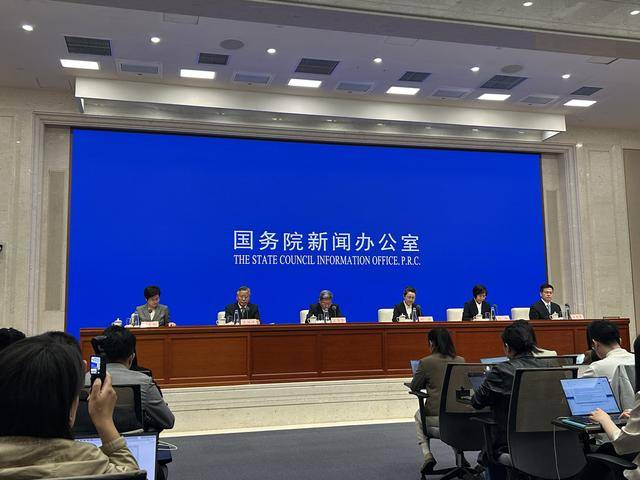
对民营经济的基本方针政策不会变,也不能变 | 直击发布会
Sou Hu Cai Jing· 2025-05-08 10:20
Core Points - The "Private Economy Promotion Law" was passed by the National People's Congress and will take effect on May 20, 2025, establishing legal support for the development of the private economy in China [2][3] - The law emphasizes the importance of the private economy as a vital component of the socialist market economy and a key driver for high-quality development and modernization in China [3] Summary by Sections - **Legislation Overview** - The "Private Economy Promotion Law" incorporates the Party and State's policies and effective practices regarding the development of the private economy into the legal framework of socialism with Chinese characteristics [2] - The law explicitly states the commitment to both public and private ownership, ensuring the coexistence of various economic forms [2] - **Economic Positioning** - The private economy is recognized as an essential part of the socialist market economy and a significant force in achieving national modernization and the rejuvenation of the Chinese nation [3] - The law aims to promote sustainable, healthy, and high-quality development of the private economy as a long-term national policy [3]