《道德情操论》

Search documents
亚当·斯密的AB面
Jin Rong Shi Bao· 2026-01-30 02:05
Core Viewpoint - The article emphasizes the relevance of Adam Smith's theories, particularly "The Wealth of Nations" and "The Theory of Moral Sentiments," in understanding modern economic development and the balance between market forces and moral considerations in society [1][2][3][4][5] Group 1: Adam Smith's Theories - Adam Smith's "The Wealth of Nations," published in 1776, is widely regarded as a foundational text in economics, emphasizing market competition and the "invisible hand" theory [2] - "The Theory of Moral Sentiments," published in 1759, focuses on fairness and moral considerations as essential for economic development, suggesting that a just society is the foundation for economic progress [2] - The combination of both works provides valuable insights into the need for a balanced approach to economic development, integrating moral values with market dynamics [3][5] Group 2: Application to Modern Economic Context - The current phase of China's economic development emphasizes the importance of a high-level socialist market economy, where government, market, and society work collaboratively [3] - The article highlights the necessity of moral sentiments and long-term thinking in business practices, suggesting that these principles should guide enterprises and their leaders [3][4] - The concept of "反竞争式内卷" (anti-competitive internal competition) is linked to the need for ethical considerations in economic practices, reflecting the teachings of both of Smith's works [5]
《大转型》:当我们抗拒市场时,我们在抗拒什么
Sou Hu Cai Jing· 2025-12-28 07:14
Core Argument - Karl Polanyi's "The Great Transformation" critiques classical economic liberalism, arguing that the market-driven logic cannot sustain itself and leads to fundamental contradictions in the modern market world [1][9][20] Market Evolution - The concept of "market" has evolved historically, with Adam Smith's "The Wealth of Nations" laying the groundwork for market-centric economics, emphasizing social cooperation and prosperity [2][3] - Smith's mechanism suggests that individual self-interest, through division of labor and market mechanisms, enhances overall productivity and wealth accumulation, but he did not advocate for a market devoid of moral considerations [3][4] Historical Context - Polanyi argues that the market system is not merely a theoretical evolution but a historical process deeply embedded in social relations, where economic activities were historically governed by customs, laws, and social relationships rather than pure market forces [4][10] Rise of Market Society - The emergence of mercantilism in the 16th century marked a shift towards centralized nation-states, which played a crucial role in shaping modern economic practices and the relationship between trade and national wealth [10][11] - The transition from feudalism to a market economy involved significant government intervention, with policies aimed at maintaining trade surpluses and protecting domestic industries [11][12] Critique of Market Ideology - Polanyi critiques the notion of a self-regulating market as a utopian ideal, emphasizing that the market's expansion is not a natural outcome but requires active government involvement [9][20] - The commodification of essential social elements, such as labor and land, leads to societal tensions and resistance against market forces, highlighting the need for a balance between market dynamics and social welfare [15][16] Labor Market Dynamics - The 1834 Poor Law reform in England marked a pivotal moment in labor market development, transitioning to a system where market forces dictated labor conditions, often at the expense of social protections [17] - Polanyi questions the morality of a labor market driven solely by survival instincts, advocating for a more humane approach that recognizes the social dimensions of economic life [17][18] Societal Implications - The tension between self-regulating markets and social protections continues to shape modern political and economic landscapes, with various movements emerging in response to the perceived failures of market-driven ideologies [18][21] - Polanyi's work calls for a reevaluation of what constitutes a good market and social relationship, emphasizing the importance of human dignity and social cohesion in economic systems [20][21]


这5本入门级经典,值得收藏
Sou Hu Cai Jing· 2025-06-18 05:50
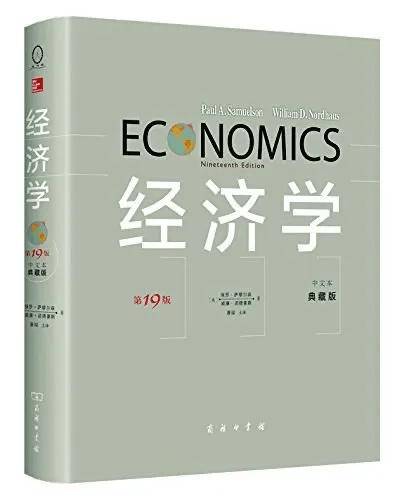
Core Viewpoint - The articles highlight five essential economics books that are foundational for understanding economic principles and theories, emphasizing their historical significance and impact on the field of economics [1][3][5][8][9]. Group 1: Key Books and Their Contributions - "Economics" (19th Edition) by Paul Samuelson and William Nordhaus is a classic textbook that has sold over four million copies globally, significantly influencing generations of economists, particularly in China [1][3]. - "The Wealth of Nations" by Adam Smith is regarded as a cornerstone of modern economics, introducing the concept of the "invisible hand" and is considered one of the greatest books in history [3][5]. - "The Theory of Economic Development" by Joseph Schumpeter is recognized for introducing the "innovation theory," linking innovation with economic development and cycles, and remains influential in contemporary economics [8][9]. - "The General Theory of Employment, Interest, and Money" by John Maynard Keynes is pivotal in macroeconomics, proposing the effective demand theory, which argues that insufficient demand leads to unemployment and economic downturns [9][11]. Group 2: Historical Context and Impact - The 19th edition of "Economics" incorporates contemporary economic data and discussions on monetary policy, economic growth, and inflation, reflecting the changes in the economic landscape [3]. - Adam Smith's "The Theory of Moral Sentiments" is noted for its moral framework that complements market economics, emphasizing the importance of equitable distribution of economic gains for social stability [5]. - Max Weber's "The Economic History" provides a comprehensive analysis of the evolution of the world economy, particularly the origins of capitalism, and compares various economic systems [7].