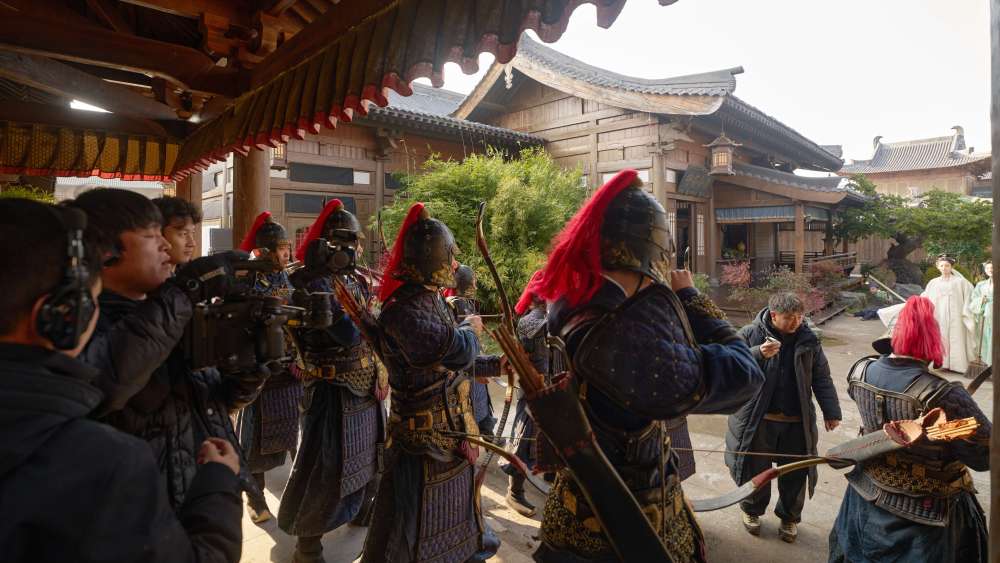
《金吾不禁》

Search documents
期待柯宇的新作品金吾不禁
Xin Lang Cai Jing· 2026-02-08 06:10
Group 1 - The core viewpoint of the article revolves around the anticipation for Zhou Keyu's new work "Jin Wu Bu Jin" and his personal experiences during the filming process [1] - Zhou Keyu mentioned that he lost over 10 pounds while filming, indicating a significant physical transformation due to the role [1] - He expressed a desire to collaborate with Bai Yu, believing that such a partnership would be highly beneficial for his growth as an actor [1] Group 2 - Zhou Keyu reflected on the impact of his previous work "Sniper Butterfly," describing it as a valuable learning experience that provided him with cherished memories [1] - The article also touches on the progress of the preparation for "Start Reasoning 4" and his upcoming filming schedule, highlighting his active engagement in the industry [1] - Zhou Keyu humorously addressed a comment from Zhang Linghe regarding their friendship, emphasizing that their good relationship allows for such playful banter [1]


演员表的花式套路该休矣
Xin Lang Cai Jing· 2026-01-24 07:17
Core Viewpoint - The film "Biao Ren: Wind Rises in the Desert" has generated significant discussion due to its complex actor title classifications, which may confuse audiences about the core cast [2][3]. Group 1: Actor Title Classifications - The film features a detailed classification of 30 actors into 8 categories, including "leading actor," "special performance," and "friendship guest appearance," which complicates the understanding of the main cast [2][3]. - Other films, such as "Kong Qiang," also employ intricate title classifications, leading to humorous reactions from audiences regarding the excessive variety of titles [3]. - The trend of elaborate title classifications is not limited to films; television series also exhibit similar practices, with various creative title arrangements that can confuse viewers [3][4]. Group 2: Impact of Title Classifications - The practice of title classification reflects a competitive struggle for "main character status," where actors prioritize title rankings over compensation during negotiations [4]. - The term "banwei" (番位), originating from the Japanese entertainment industry, signifies the importance of title placement in determining an actor's commercial value, which has diverged from the quality of the work itself [4]. - Historical examples demonstrate that an actor's value is not solely determined by their title; memorable performances can come from characters with less prominent roles [4][5]. Group 3: Industry Reflection - The focus on title rankings detracts from the essence of acting, where the emphasis should be on the quality of the work rather than on title competition [5]. - The industry is encouraged to shift away from these tactics and prioritize genuine storytelling and character development, allowing audiences to engage more with the narrative rather than the superficial aspects of actor titles [5].
文化新观察丨从横店看中国影视业的韧性生长和创新脉动
Xin Hua Wang· 2025-12-28 18:45
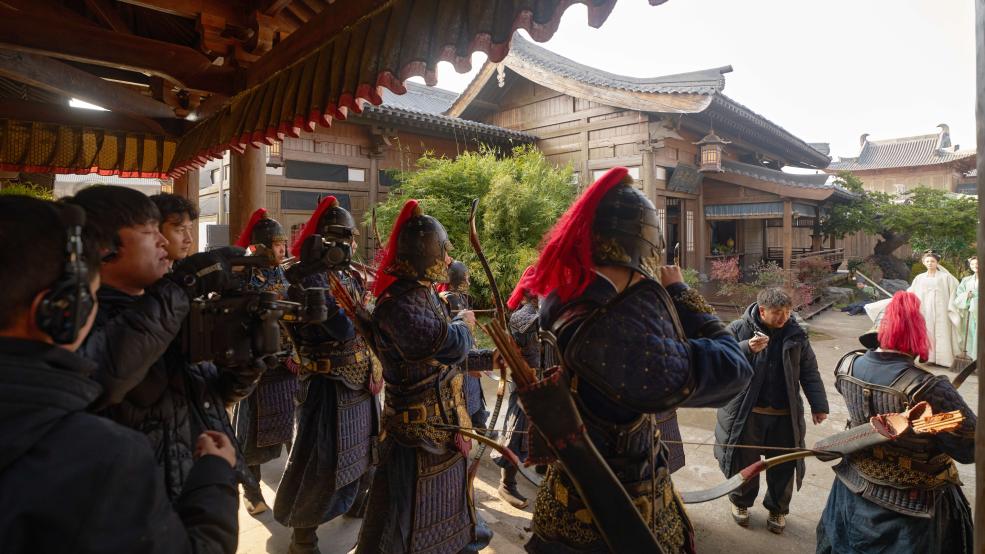
Core Insights - The Chinese film and television industry in 2025 is characterized by multiple intertwined trends, including resilience in traditional series, rapid evolution of micro-short dramas, and the unprecedented integration of artificial intelligence in creative and production processes [1] Group 1: Traditional Series - Despite facing various pressures, the traditional film and television industry demonstrates strong resilience through narrative innovation and thematic breakthroughs, with 469 long drama productions reported by the Hengdian Film and Television Cultural Industry Cluster Management Committee, remaining stable compared to the previous year [5] - The "Hengdian Index" indicates a continuous recovery in the economic benefit index of TV dramas, reflecting improved profitability driven by quality enhancement and cost control [5] - The focus on high-quality storytelling is emphasized by industry leaders, advocating for a "script-centered" approach to ensure that the essence of the story is prioritized in production [6][7] Group 2: Micro-Short Dramas - The micro-short drama sector is expanding, with a diverse range of themes emerging, including inspirational stories and narratives reflecting national sentiments, as seen in successful productions like "Adventurer Langya" [8][11] - The industry consensus is shifting towards a broader thematic exploration, moving beyond mere entertainment to address social issues and convey positive values, as demonstrated by works like "Wild Girl" and "This Life's Fate" [11] - The micro-short drama industry has created over 1.33 million jobs across the entire production chain, indicating its significant impact on employment and its potential for further integration with cultural promotion and legal education [11] Group 3: Technological Empowerment - The integration of AI technology is transforming the film and television industry, enabling rapid production processes that previously required extensive manual effort, as illustrated by the use of AI in creating complex visual scenes [12][13] - Major industry players are exploring innovative applications of AI, such as seamless integration of live-action footage with AI-generated scenes, which helps reduce costs and enhance production efficiency [15] - The establishment of the "Hengdian Film and Television Large Model" and the AI Film and Television Ecological Service Center signifies a systematic approach to leveraging AI across various production stages, enhancing creative potential and artistic expression [15][17]

从横店看中国影视业的韧性生长和创新脉动
Xin Lang Cai Jing· 2025-12-28 12:13
Core Insights - The Chinese film and television industry in 2025 is characterized by multiple intertwined trends, including resilience in traditional series, rapid evolution of micro-short dramas, and the unprecedented integration of artificial intelligence in creative and production processes [1] Group 1: Traditional Series - Despite facing multiple pressures, the traditional film and television industry demonstrates strong resilience through narrative innovation and thematic breakthroughs, with 469 long drama productions reported as of November, maintaining levels from the previous year [5] - The "Hengdian Film and Television Index" indicates a continuous recovery in the economic benefit index of television dramas, reflecting improved profitability driven by quality enhancement and cost control [5] - Industry leaders emphasize the importance of a "script-centered" approach, advocating for a focus on storytelling as the foundation for successful productions [6] Group 2: Micro-Short Dramas - The micro-short drama sector is expanding, with companies like Dongyang Ge Wu Zhi Zhi Cultural Media launching successful titles such as "Adventurer Langya" and "One Piece Cloth" [8] - The genre is diversifying, moving beyond homogeneous themes to include rich narratives that engage with social issues, as seen in works like "Wild Girl" and "This Life's Fate" [11] - The micro-short drama industry has created over 1.33 million jobs across the entire production chain, indicating its significant impact on employment [11] Group 3: Technological Integration - AI technology is becoming integral to the film and television industry, with advancements allowing for rapid production processes that previously took days to complete [12][13] - Major industry players are exploring new paths for cost reduction and efficiency through AI, such as seamless integration of AI-generated scenes in productions [15] - The establishment of the "Hengdian Film and Television Large Model" aims to provide comprehensive AI support for script analysis, scene previews, and post-production effects, standardizing technological capabilities across the industry [15]