万余盈World Wealth

Search documents
跨境支付:从“赚手续费”到“带企业闯全球”
Hua Xia Shi Bao· 2025-12-26 00:17
Core Viewpoint - Since 2025, China's cross-border trade and personnel exchanges have significantly increased, providing strong momentum for the development of cross-border payments [1] Group 1: Cross-Border Payment Trends - The cross-border payment industry is undergoing transformation, moving away from a single funding channel model towards diversified scenarios, full-chain services, and global layout [1][2] - The demand for cross-border consumption is driving innovation in payment services, with a shift from focusing solely on large corporate transactions to including small personal transactions [3] - The integration of QR code payment systems across borders is rapidly advancing, enabling real-time currency conversion and optimizing cross-border settlement processes [3] Group 2: Infrastructure and Policy Support - The continuous improvement of infrastructure supports technological innovation, with the CIPS system covering 189 countries and processing 4.03 million transactions in the first half of the year [5] - Recent policies have provided critical support for diversified payment scenarios, simplifying processes and establishing standards for cross-border payment innovations [6] Group 3: Evolving Role of Cross-Border Payment Providers - Cross-border payment services are evolving from mere payment facilitation to comprehensive support for businesses, including market research, resource matching, and fund management [7] - Companies are launching products that support multiple currencies and financial management, reducing operational costs and risks for cross-border sellers [8] Group 4: Addressing Market Challenges - Cross-border enterprises face challenges due to varying payment environments in different markets, leading to the development of unified payment solutions to streamline operations [9] - Payment providers are enhancing their service offerings by integrating financial services into business scenarios, creating a closed loop of "payment + value-added services" [10] Group 5: Global Expansion and Compliance - Companies are expanding their global presence by obtaining various payment licenses and establishing local offices to address compliance challenges [10][11] - The establishment of a comprehensive global payment license framework supports operations in over 100 countries and regions, facilitating transactions in more than 130 currencies [11]
跨境支付:从“赚手续费”到“带企业闯全球”|2025中国经济年报
Hua Xia Shi Bao· 2025-12-25 12:18
Core Insights - Since 2025, China's cross-border trade and personnel exchanges have significantly increased, providing strong momentum for the development of cross-border payments [2] - The cross-border payment industry is undergoing transformation, moving away from a single funding channel model towards diversified scenarios, full-chain services, and global layouts [2][3] Group 1: Cross-Border Payment Trends - The cross-border payment sector is evolving to meet the diverse needs of trade scenarios, compliance requirements, and service demands, supported by regulatory frameworks and technological advancements [3] - The infrastructure for cross-border payments is continuously improving, enhancing the ability to support real-time transactions and reducing settlement times from hours or days to seconds [11][12] - The integration of different countries' QR code payment networks is facilitating cross-border transactions, with significant partnerships established in various regions [12][13] Group 2: Consumer Behavior and Payment Methods - In retail, foreign consumers are increasingly using mobile payment methods, with a notable percentage opting for Alipay and WeChat Pay [8][9] - The demand for cross-border consumption is driving innovation in payment services, moving beyond large corporate transactions to include small personal purchases [9] Group 3: Industry Adaptation and Services - Cross-border payment services are transitioning from being mere financial intermediaries to becoming comprehensive partners for businesses venturing abroad, focusing on market research, resource matching, and financial management [15] - Companies are launching products that support multiple currencies and streamline the payment process, reducing operational costs and risks for cross-border businesses [16] - The challenges posed by varying payment environments in different markets are being addressed through unified payment solutions that simplify technical integration and support brand expansion [17] Group 4: Regulatory and Compliance Landscape - Regulatory changes are providing essential support for the diversification of payment scenarios, with new policies aimed at simplifying processes and clarifying standards [14] - Companies are actively acquiring payment licenses globally to enhance compliance and operational capabilities, with significant expansions in various regions [18]


“AI+合规+本地化”资金管理引擎,万里汇保障150万企业全球拓新
Sou Hu Cai Jing· 2025-12-05 06:50
Core Insights - In 2025, China's foreign trade demonstrates resilience amid complex environments, with a 6.2% year-on-year increase in goods exports in the first ten months, particularly strong growth in emerging markets like ASEAN, the Middle East, and Latin America [1] - Ant International's cross-border payment and account service brand, WorldFirst, reported serving over 1.5 million global enterprise clients and processing nearly $200 billion in transaction volume, reflecting a growth of nearly 100% [1] - The shift in China's foreign trade focus is moving from "scale expansion" to "high-quality outbound" strategies, with cross-border financial services accelerating tailored solutions for enterprises [1][8] Group 1: Business Growth and Services - WorldFirst's transaction volume in emerging markets grew over 300% in the first half of 2025, with services now covering over 220 countries and regions [2] - The introduction of the multi-currency account "World Account" allows enterprises to manage global business efficiently, supporting 32 currencies for wallet balances and 101 currencies for payments [2] - The launch of the "World Card" and wealth management products enhances the one-stop cross-border financial service capability, streamlining the entire process from collection to payment [2] Group 2: Compliance and Localization - WorldFirst emphasizes a "compliance first, localized deep cultivation" service system to address the varying compliance needs of outbound enterprises, having obtained over 60 payment licenses globally [4] - Strategic partnerships with local financial institutions in Southeast Asia, the Middle East, and Africa enhance local service capabilities and support cross-border financial services for SMEs [4] - A solution for Sino-African trade has been launched, supporting local currency collections in 13 African countries, facilitating trade relations [4] Group 3: AI Integration and Risk Management - AI tools are widely applied, with 90% of sellers using AI to control risks and reduce costs, achieving 100% multilingual customer service availability [7] - The self-developed "Eagle Sequence" AI model predicts foreign exchange needs with over 90% accuracy, potentially reducing foreign exchange costs by up to 60% [7] - The SHIELD risk control model monitors transactions in real-time, ensuring payment security and reducing the risk of frozen accounts [7] Group 4: Strategic Shift in Global Operations - The growth of WorldFirst in 2025 reflects a profound shift in the paradigm of Chinese enterprises going global, focusing on efficiency, resilience, and sustainability [8] - The need for systematic, intelligent, and compliant global operational capabilities is emphasized to help enterprises navigate cyclical fluctuations and conduct global business effectively [8]
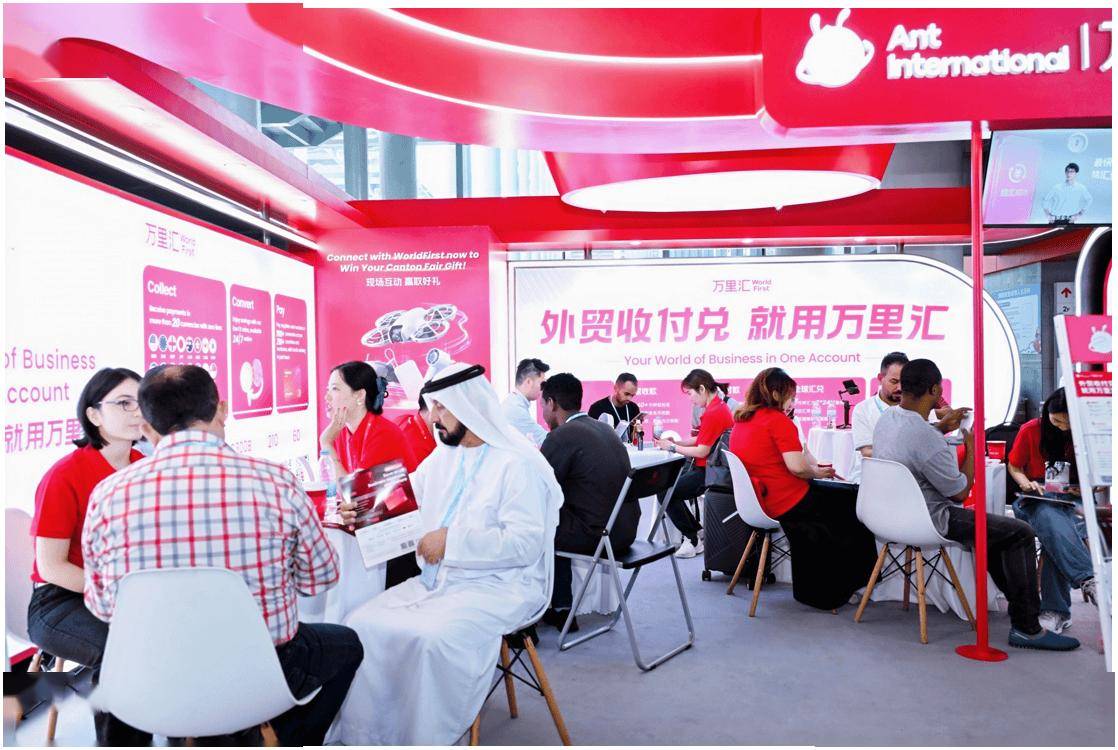
一个账户全球运营,万里汇助力全球超150万企业增长
Sou Hu Cai Jing· 2025-12-04 10:49
Core Insights - In 2025, China's foreign trade demonstrates resilience amid complex environments, with a 6.2% year-on-year increase in goods exports in the first ten months, particularly strong growth in emerging markets like ASEAN, the Middle East, and Latin America [1] - Ant International's cross-border payment and account service brand, WorldFirst, reported serving over 1.5 million global enterprise clients and processing nearly $200 billion in transaction volume, reflecting a nearly 100% year-on-year growth [1] - The growth indicates a shift in Chinese foreign trade from "scale expansion" to "high-quality outbound" strategies, with cross-border financial services accelerating tailored solutions for enterprises [1] Cross-Border Financial Services - WorldFirst's "World Account" has seen over 300% growth in transaction volume in emerging markets in the first half of 2025, supporting businesses in managing multiple markets and currencies [3] - The service now covers over 220 countries and regions, with wallet balances in 32 currencies and support for payments in 101 currencies, achieving same-day settlement for 95% of transactions [3] - The introduction of the "World Card" and "World Wealth" products enhances the one-stop cross-border financial service capability, allowing enterprises to manage the entire process from receiving payments to currency exchange and fund management [3] Compliance and Localization - WorldFirst has established a compliance-first and localized service system, obtaining over 60 payment licenses globally, including a recent license in Malaysia [5] - Partnerships with local financial institutions in Southeast Asia, the Middle East, and Africa enhance local payment and settlement capabilities [5] - The company has launched solutions to facilitate trade between China and Africa, supporting local currency payments in 13 African countries [5] AI Integration - 90% of WorldFirst's cross-border sellers are utilizing AI tools, with 100% of customer service now available 24/7 in multiple languages [7] - The self-developed "Eagle Sequence" AI model predicts foreign exchange needs with over 90% accuracy, potentially reducing foreign exchange costs by up to 60% [7] - The SHIELD risk control model monitors transactions in real-time, ensuring payment security and reducing risks associated with frozen accounts [7] Strategic Shift in Global Operations - The growth of WorldFirst in 2025 reflects a significant shift in the paradigm of Chinese enterprises going global, moving from speed and scale to efficiency, resilience, and sustainability [8] - The focus is on building systematic, intelligent, and compliant global operational capabilities to help enterprises navigate cyclical fluctuations and conduct global business effectively [8]