
三江茶

Search documents
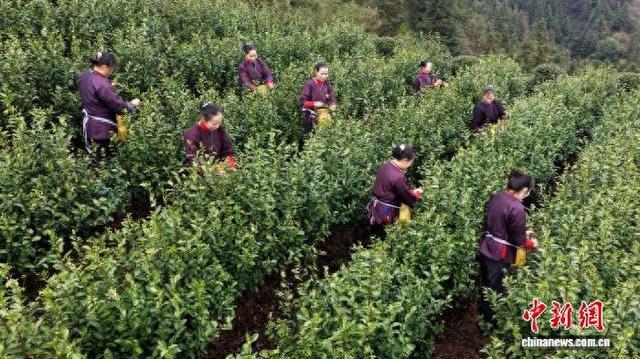
(走进中国乡村)茶香飘四海 广西侗寨解锁“绿富”密码
Xin Lang Cai Jing· 2026-02-08 07:09
Core Insights - The article highlights the thriving tea industry in Sanjiang Dong Autonomous County, Guangxi, emphasizing the region's unique qualities and cultural integration in tea production [1][3]. Industry Overview - Sanjiang is recognized as an international "golden tea-producing area" with over 2,000 years of history in tea cultivation [3]. - The county has a total tea garden area of 215,000 acres, with approximately 300,000 people involved in the tea industry [5]. - The annual production of dry tea is 21,300 tons, generating a comprehensive annual output value of 8.7 billion yuan [5]. Product Quality and Innovation - Sanjiang's early spring tea is celebrated for its "early, special, fresh, and fragrant" qualities, earning the title of "China's first early spring tea" [3]. - Local tea farmers, like Wu Haipeng, are innovating by introducing superior tea varieties and standardized production processes, enhancing quality through technology [2][3]. Cultural Integration and Tourism - The tea industry is deeply intertwined with local culture, incorporating Dong ethnic music, dance, and traditional tea-making techniques into tourism experiences [5]. - Villages are developing tea tourism, creating demonstration points that combine tea culture with travel, thus promoting both sectors [5]. - The transformation of villages, such as Buan Village, into recognized tourist destinations showcases the potential of tea to drive rural revitalization [5].

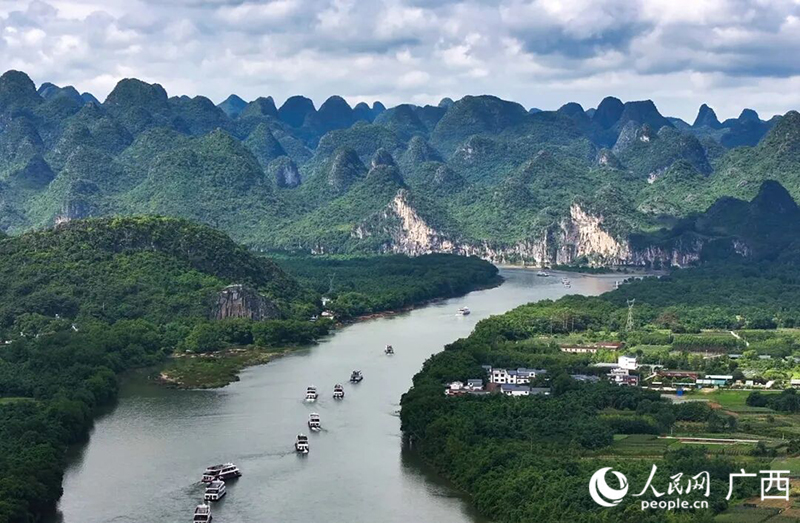
打开广西绿色答卷:山水增“颜”,生态提“质”
Zhong Guo Xin Wen Wang· 2026-02-07 00:53
Group 1 - The core viewpoint emphasizes the importance of ecological protection for sustainable economic development in Guangxi, showcasing a commitment to green development and environmental conservation [1][2][5] - The government report highlights impressive ecological achievements, including a 96.1% rate of good air quality days and a 99.1% proportion of good water quality in surface water assessments [1][6] - The integration of ecological protection with economic growth is evident, as seen in the success of the Rong'an kumquat industry, which has over 230,000 acres of cultivation and nearly 10 billion yuan in total industrial output value [3][5] Group 2 - The report outlines plans for a comprehensive green transformation of the economy and society, focusing on integrated protection of natural resources and the development of a green economy [6][7] - The introduction of innovative technologies in traditional industries, such as the zinc extraction process that significantly improves efficiency and resource recovery, demonstrates a shift towards sustainable industrial practices [3][5] - The emphasis on new energy systems and the promotion of clean energy applications indicate a strategic direction towards enhancing energy supply and sustainability in Guangxi [6]
三江为何独钟情大湾区?一杯茶、一幅农民画里的山海协作密码
Nan Fang Nong Cun Bao· 2025-10-11 07:06
Core Viewpoint - The collaboration between Guangxi's Sanjiang Dong Autonomous County and Guangdong's Wuchuan City is enhancing the market presence of Sanjiang's unique agricultural products, particularly tea and local art, in the Greater Bay Area, showcasing a successful model of regional cooperation and cultural exchange [11][79]. Group 1: Agricultural Products and Market Integration - The upcoming promotional event for Sanjiang's agricultural products in Guangzhou highlights the ongoing collaboration between Guangdong and Guangxi, which has established a regular mechanism for product integration into the Bay Area market [5][7]. - Sanjiang's tea, particularly the high-altitude varieties, is gaining popularity in the Bay Area, with local enterprises leveraging cold chain logistics to ensure freshness and quality [21][40]. - The collaboration has significantly improved the sales channels for Sanjiang's oil tea, with products now available in Guangzhou supermarkets, marking a shift from local sales to broader market access [23][24]. Group 2: Cultural and Artistic Promotion - Sanjiang's unique cultural products, such as the local farmer paintings, are being showcased as part of the promotional efforts, emphasizing the region's rich cultural heritage and its appeal to Bay Area consumers [62][68]. - The integration of traditional art forms with modern marketing strategies is helping to attract tourists and consumers, thereby boosting local economies and cultural appreciation [72][73]. - The cultural resonance of Sanjiang's art is transforming consumer perceptions, where buyers are increasingly interested in the lifestyle and cultural narratives behind the products [74][75]. Group 3: Economic Impact and Future Prospects - The collaboration framework has allocated over 65% of funding towards industrial development, facilitating infrastructure upgrades and enhancing product quality standards [32][76]. - The Greater Bay Area's consumer market, with a population of 70 million and a rising disposable income, presents significant opportunities for Sanjiang's agricultural products [43][44]. - The successful integration of Sanjiang's products into broader markets is not only increasing sales but also contributing to rural revitalization and sustainable development in the region [78][79].
