三洋冰柜

Search documents
新赛道!“二手经济”撑起万亿级大市场
Xin Lang Cai Jing· 2025-12-25 14:16
Core Insights - The second-hand goods market in China has become a trillion-yuan industry, with a transaction volume of 1.69 trillion yuan in 2024, reflecting a 28% year-on-year growth and a compound annual growth rate of 12% over the past six years [3][4]. Group 1: Pilot Program and Market Trends - The Ministry of Commerce and other departments initiated a pilot program for second-hand goods circulation in December 2024, with 10 cities and 28 enterprises as the first trial units [1][3]. - The pilot program has shown initial success, with markets like Chongqing's Dongjiaxi flea market experiencing increased foot traffic, peaking at over 20,000 visitors in a single day [1][3]. - In Wuhan, the Qingshan Huayong old goods market is focusing on second-hand kitchen equipment, with annual sales expected to exceed 100 million yuan [3][4]. Group 2: Consumer Behavior and Market Dynamics - The consumer demographic for second-hand goods is diverse, with middle-aged consumers focusing on home decor and younger consumers interested in collectibles and digital products [6][7]. - The second-hand market is evolving into a new consumption model that integrates green, personalized, and intelligent features, moving beyond mere practicality and economic benefits [9][10]. Group 3: Innovations and Future Developments - The industry is witnessing innovative transformations, with companies like Yijia Water (Wuhan) utilizing live streaming for sales, achieving monthly sales exceeding 2 million yuan [4][5]. - The integration of AI, big data, and cloud computing is expected to enhance the efficiency of second-hand goods transactions, with platforms like Xianyu reporting over 10 billion yuan in AI-enabled transaction volume [10][11]. - Future developments will focus on creating a transparent and regulated market, with initiatives to prevent fraud and ensure product authenticity [10][11].

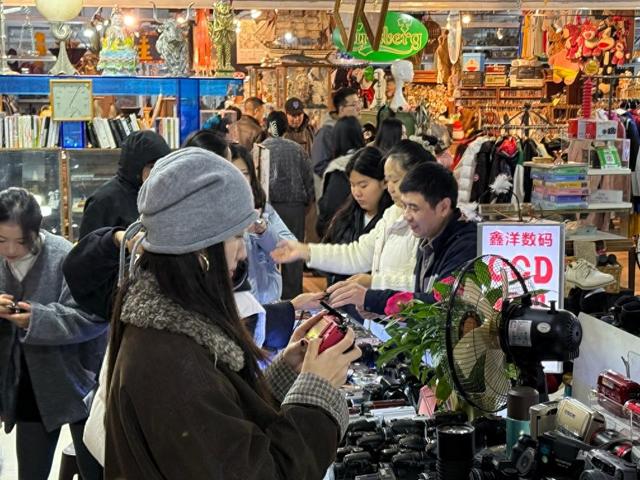
财经聚焦|新赛道!“二手经济”撑起万亿级大市场
Xin Hua She· 2025-12-25 14:06
Core Insights - The second-hand goods market in China has become a trillion-yuan industry, driven by the circulation of used products and supported by government initiatives [1][2] - The Ministry of Commerce and other departments have launched pilot programs in 10 cities and 28 enterprises to promote second-hand goods circulation, showing initial positive results [2][3] Market Growth - The transaction volume of second-hand goods in China reached 1.69 trillion yuan in 2024, marking a 28% year-on-year increase, with a six-year average compound growth rate of 12% [2] - Pilot cities are focusing on various categories such as second-hand mobile phones, clothing, and furniture, adapting to local consumer needs [2] Consumer Trends - There is a noticeable increase in young consumers and foreign tourists visiting second-hand markets, indicating a shift in consumer demographics [2] - The second-hand market is evolving into a new consumption model that integrates green, personalized, and intelligent consumption [7][8] Innovation and Technology - The second-hand market is experiencing innovation, with new business models such as rental, auction, and after-sales buyback being developed [8] - Technologies like AI, big data, and cloud computing are being integrated into the second-hand goods circulation, enhancing transaction efficiency and user experience [8][9] Regulatory Framework - The government is working on establishing a comprehensive regulatory framework to ensure the integrity and quality of second-hand goods, aiming to eliminate fraudulent practices [8] - Industry standards are being developed to support the growth of a structured and vibrant second-hand goods ecosystem [3][9]
财经聚焦丨新赛道!“二手经济”撑起万亿级大市场
Xin Hua Wang· 2025-12-25 13:06
Core Insights - The second-hand economy has emerged as a trillion-yuan market, driven by the circulation of used goods and new consumption patterns [1][4] - The Ministry of Commerce and other departments initiated pilot programs for second-hand goods circulation in 2024, with 10 cities and 28 enterprises participating [1][4] Market Growth - The second-hand goods market in China reached a transaction volume of 1.69 trillion yuan in 2024, marking a 28% year-on-year increase, with a six-year average compound growth rate of 12% [4][5] - Pilot cities are focusing on second-hand mobile phones, clothing, and furniture, adapting to local consumer needs [4][5] Consumer Trends - The demographic of consumers is broad, with both young and older individuals participating in the market, showing varied preferences for different product categories [8][10] - The market is witnessing a shift from mere practicality to a new consumption model that integrates green, personalized, and intelligent aspects [11] Innovations and New Business Models - The second-hand market is experiencing significant innovation, with new business models such as rental, auction, and after-sales buyback emerging [12][13] - Technologies like AI, big data, and cloud computing are being integrated into the second-hand goods circulation, enhancing transaction efficiency and consumer experience [12][13] Regulatory and Structural Developments - The Ministry of Commerce is working on establishing a robust policy framework and industry standards to support the growth of the second-hand economy [5][12] - Efforts are being made to create a transparent and trustworthy trading environment, addressing issues like online transaction irregularities and trust costs [12][13]