
专业运动鞋

Search documents
年营收55亿,李宁、安踏代工厂龙行天下闯关主板IPO
Nan Fang Du Shi Bao· 2026-01-08 08:01
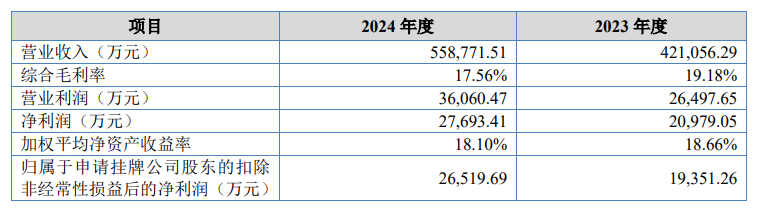
Core Viewpoint - Longxing Tianxia, a professional sports footwear manufacturer backed by major brands like Li Ning and Anta, has officially initiated its A-share listing process, aiming to list on the Shanghai Stock Exchange despite facing challenges such as high customer concentration and competitive pressures in the industry [1]. Group 1: Company Performance - Longxing Tianxia has shown steady growth in its financial performance, achieving a revenue of 4.211 billion yuan in 2023, with a net profit of 207 million yuan. The company expects a revenue increase of 32.71% to 5.588 billion yuan in 2024, with net profit rising to 278 million yuan [2][3]. - The company’s revenue structure indicates that running shoes are the primary source of income, contributing 2.068 billion yuan in 2024, accounting for 37% of total revenue [3]. Group 2: Production and Capacity - Longxing Tianxia has established a global production network with 27 factories across China, Vietnam, and Indonesia, employing a total of 27,458 staff, including 12,324 foreign employees. The company produced nearly 50 million pairs of footwear in 2024 [5]. - The company has been shifting production capacity overseas, with the sales proportion from its Vietnam base increasing from 25.68% in 2023 to 39.32% in 2024 [5]. Group 3: Industry Context - The Chinese sports footwear manufacturing industry has seen significant growth, with market size increasing from 23.4 billion yuan in 2019 to 47.8 billion yuan in 2023, reflecting a compound annual growth rate of 19.6%. The industry is expected to continue growing, potentially exceeding 70 billion yuan by 2028 [5]. - The industry is characterized by high competition and a trend towards specialization, which presents both opportunities and challenges for manufacturers like Longxing Tianxia [9]. Group 4: Customer Concentration and Risks - Longxing Tianxia faces risks associated with high customer concentration, with the top five clients accounting for 86.74% of revenue in 2023 and 88.86% in 2024. Li Ning is the largest client, contributing 24.76% of sales [7]. - The company’s gross profit margin has declined from 19.18% in 2023 to 17.56% in 2024, indicating pressure on profitability [10]. Group 5: Strategic Goals and IPO Plans - The primary goal of Longxing Tianxia's IPO is to leverage capital market resources to overcome development bottlenecks and expand production capacity in Vietnam and Indonesia, while also investing in smart and digital factory upgrades [11]. - The company acknowledges the risks associated with the IPO process, including the possibility of not passing the review or failing to issue shares, which could impact its market position [11].


分野与突围:中国鞋业洗牌期,中小鞋企生存法则——对话升维咨询
首席商业评论· 2026-01-08 04:27
Core Viewpoint - The article discusses the significant transformation in the Chinese footwear industry, highlighting a shift from traditional consumption patterns to a focus on comfort, functionality, and health, which reflects broader changes in consumer values and aesthetics [6][10]. Group 1: Market Dynamics - The Chinese footwear industry produced 13 billion pairs of shoes in 2024, accounting for over 54% of global production and 62.20% of exports, maintaining its position as the world's largest producer and exporter [7]. - There is a stark contrast in market performance, with traditional shoe brands facing declining sales while specialized sports brands experience high demand, indicating a bifurcation in consumer preferences [6][10]. - The article notes that many small and medium-sized shoe enterprises are struggling due to overcapacity and a mismatch between traditional business models and evolving consumer demands [11][12]. Group 2: Consumer Behavior Changes - Consumers are increasingly seeking shoes that meet specific needs for different occasions, moving away from the previous model where one type of shoe sufficed for multiple activities [12][15]. - The demand for specialized footwear has led to a clear market divide: generic styles are struggling to sell, while technologically advanced products are in high demand, indicating a shift towards professionalization and high-end offerings in the market [16][18]. Group 3: Industry Challenges - The article identifies three critical disconnects affecting small and medium-sized shoe companies: a structural mismatch between traditional capabilities and new market demands, supply chain issues, and a lack of genuine innovation [11][20]. - Many companies are trapped in outdated operational models, relying on low-cost production and imitation rather than investing in brand development and innovation [18][20]. Group 4: Strategic Recommendations - Companies are encouraged to undergo systemic restructuring, focusing on strategic clarity, capability enhancement, and dynamic long-termism to adapt to market changes [27][39]. - The article emphasizes the importance of understanding unique value propositions and targeting specific consumer segments to create competitive advantages [28][32]. - It suggests that successful companies will be those that maintain a strong commitment to quality, leverage data-driven decision-making, and remain open to learning from other industries [43][44]. Group 5: Future Outlook - The article concludes that the future of the footwear industry will favor companies that can create real, perceivable value for consumers, moving away from traditional competitive strategies based on scale and cost [46][57]. - It highlights the necessity for businesses to innovate continuously and adapt to changing consumer needs, emphasizing that those who can effectively address these challenges will thrive in the evolving market landscape [49][50].

龙行天下启动主板IPO进程,这家安踏、李宁的代工商需警惕估值陷阱
Xin Lang Cai Jing· 2025-12-29 00:15
Core Viewpoint - Longxing Tianxia Technology Co., Ltd. has officially initiated its IPO process, aiming to raise capital for expansion and modernization in the competitive sports footwear industry [1][4]. Group 1: Company Overview - Longxing Tianxia, founded in 1998 and headquartered in Dongguan, specializes in the development, design, production, and sales of sports footwear [1]. - The company reported a revenue of 4.211 billion yuan in 2023, projected to increase to 5.588 billion yuan in 2024, representing a year-on-year growth of 32.71% [1]. - The net profit after deducting non-recurring items is expected to rise from 194 million yuan to 265 million yuan [1]. - The overall gross margin is forecasted to decline from 19.18% in 2023 to 17.56% in 2024 [1]. Group 2: Business Composition - The company's revenue is heavily reliant on a few key clients, with the top five clients contributing 89.12% of sales in 2024 [2]. - Li Ning is the largest client, accounting for 25.01% of sales, followed by Under Armour (23.68%), Adidas (17.49%), Decathlon (13.80%), and Anta Group (9.12%) [2]. - Running shoes are the primary revenue source, generating 2.068 billion yuan in 2024, which is approximately 37% of total revenue [2]. Group 3: Industry Perspective - The sports footwear manufacturing industry is evolving towards specialization and deeper outsourcing, presenting opportunities for companies with scale and R&D capabilities [3]. - However, the industry is highly competitive, with many participants facing growth pressures and profit margin challenges [3]. - Longxing Tianxia is considered a mid-sized growth company, with a production capacity of nearly 50 million pairs, significantly lower than industry giants like Huayi Group and Yue Yuen Industrial [3]. Group 4: Global Production and Trade Environment - Longxing Tianxia has been shifting production capacity overseas since 2016, establishing a base in Vietnam and planning a new facility in Indonesia [4]. - The sales proportion from the Vietnam production base is expected to increase from 25.68% in 2023 to 39.32% in 2024 [4]. - The changing international trade environment and potential trade barriers pose uncertainties for this global production strategy [4]. Group 5: IPO Objectives and Future Challenges - The IPO aims to leverage capital market resources to overcome development bottlenecks and expand production capacity [4]. - The company plans to enhance automation and digital transformation in its factories, which requires significant funding [4]. - Future challenges include high customer concentration, intensified industry competition, declining gross margins, and external economic fluctuations [5].