两农信用价值贷

Search documents
从“街边店”到“产业链”,城商行普惠金融“三板斧”探路
Nan Fang Du Shi Bao· 2025-12-23 03:02
Core Insights - Inclusive finance is experiencing a period of innovative practices, focusing on serving small and micro enterprises and empowering rural revitalization [1] - The transition from "incremental expansion" to "quality improvement and structural optimization" in inclusive microfinance is accelerating [1] Group 1: Current Trends in Inclusive Finance - As of the end of 2024, the balance of inclusive microfinance loans in China reached 32.93 trillion yuan, a year-on-year increase of 14.6% [2] - The proportion of credit loans within inclusive microfinance loans is 27.3%, up by 3.2 percentage points from the previous year [2] - The weighted average interest rate for newly issued inclusive microfinance loans in 2024 is 4.13%, a decrease of 33 basis points compared to the previous year [2] Group 2: Innovative Loan Products - Various city commercial banks are developing tailored products such as "Tea Loan," "Pig Loan," and "Homestay Loan" to meet regional economic characteristics [3] - A city commercial bank in Hubei has provided nearly 6 billion yuan in loans to county farmers this year, with a total agricultural loan scale exceeding 43 billion yuan [3] Group 3: Government and Bank Collaboration - The collaboration between government and banks is crucial for addressing the challenges in inclusive finance, particularly in risk management and service enhancement [4] - Government initiatives include the introduction of credit value loans and risk-sharing mechanisms to support small and micro enterprises [5] Group 4: Data Utilization and Risk Management - The integration of government data resources significantly enhances the precision of inclusive finance services [6] - A city commercial bank in Hubei has developed a credit profile for 285,000 technology enterprises based on various data dimensions [6] Group 5: Service Accessibility and Network Expansion - City commercial banks are transforming traditional banking models by establishing financial service stations in rural areas, creating a "15-minute financial service circle" [7] - A city commercial bank in Hubei has achieved full coverage of city and county with 254 service outlets, enhancing accessibility for remote farmers [8]


小鸡蛋“孵”出大产业 ——邮储银行湖北省分行金融赋能禽蛋产业升级
2 1 Shi Ji Jing Ji Bao Dao· 2025-12-04 16:09
Core Viewpoint - The poultry and egg products industry in Hubei has been identified as one of the province's top ten key agricultural industry chains, significantly contributing to rural income and employment while facing financing challenges that hinder its growth [1]. Group 1: Industry Development and Challenges - Hubei's poultry industry supports millions of farmers and jobs, becoming a crucial income source in regions like Jianghan Plain and East Hubei Hills [1]. - Traditional farming models face financing difficulties due to a lack of standardization and collateral, leading to challenges in loan applications and missed opportunities for growth [1]. - Many farmers have missed critical procurement periods for chicks and orders during price surges due to insufficient funds [1]. Group 2: Financial Innovations and Support - Postal Savings Bank of Hubei has focused on high-quality development of the poultry industry by implementing a "one county, one product" service model, providing over 50 billion yuan in loans to more than 30,000 poultry industry clients [1][5]. - The "Two Agricultural Credit Value Loan" product allows farmers without traditional collateral to access credit based on their business creditworthiness, with 200 million yuan approved for a farmer in just three days [5][6]. - The bank has developed tailored financial products for different segments of the poultry industry, including farmers, buyers, and processing companies, enhancing the entire supply chain [7]. Group 3: Efficient Response to Market Needs - The bank's innovative financial services, such as the "Postal Agricultural Quick Loan," enable rapid loan approvals, allowing farmers to seize market opportunities quickly [8][9]. - The collaboration with the provincial agricultural guarantee company has facilitated a significant reduction in financing costs for farmers, with a loan balance of 75.17 million yuan by October 2025 [9][10]. - The bank's multi-layered financial service approach has effectively supported the growth of the poultry industry, contributing to its modernization and sustainability [10].

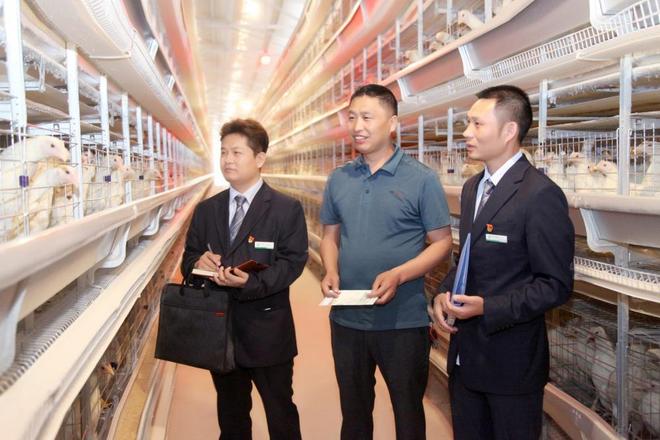
小鸡蛋“孵”出大产业——邮储银行湖北省分行金融赋能禽蛋产业升级
Zheng Quan Ri Bao Zhi Sheng· 2025-11-30 07:12
Core Insights - The poultry and egg products industry in Hubei has been identified as one of the top ten key agricultural industry chains, significantly contributing to the income of millions of farmers and providing numerous job opportunities [1][8] - Traditional farming methods have led to financing challenges for farmers, hindering the scale and standardization of the poultry industry [1][2] - Postal Savings Bank of Hubei has developed innovative financial products and services to support the high-quality development of the poultry industry, including credit loans without collateral [2][3][6] Financing Challenges - Farmers often face difficulties in obtaining loans due to a lack of traditional collateral, leading to missed opportunities for expansion and procurement [1][2] - The "Two Agricultural Credit Value Loan" product allows farmers to secure loans based on their creditworthiness rather than physical collateral [3][7] Financial Support Initiatives - The Postal Savings Bank has issued over 50 billion yuan in small loans to more than 30,000 poultry industry clients, with over 11 billion yuan disbursed this year alone [1][5] - The bank's "chain service" approach extends financial support across the entire poultry industry chain, from farming to processing, ensuring sustainable development [4][5] Case Studies - A farmer in Shiyan City successfully secured a 200,000 yuan loan in just three days, enabling him to expand his operations and potentially increase sales by 10 million yuan [2][3] - Another farmer in Huanggang City has grown his poultry operation from 5,000 to 150,000 birds with continuous support from the Postal Savings Bank [4][5] Innovative Financial Models - The "Postal Agricultural Quick Loan" model allows for rapid loan approval and disbursement, significantly benefiting farmers during critical production periods [6][7] - The collaboration with provincial agricultural guarantee companies has further reduced financing costs for farmers [7] Future Outlook - The Postal Savings Bank aims to continue enhancing its financial services for rural development, focusing on innovative products and efficient service delivery to support the growth of the poultry industry [8]
荆楚大地上的普惠金融创新:“冷数据”算账,“暖分析”帮扶
Nan Fang Du Shi Bao· 2025-08-19 04:33
Core Insights - The article highlights the transformative impact of inclusive finance in Hubei, particularly through innovative loan products that address the financing challenges faced by small and micro enterprises, farmers, and technology companies [2][3][4][5]. Group 1: Challenges in Inclusive Finance - Hubei Bank faces common industry challenges such as scattered credit data, lack of collateral, and high operational and risk control costs, which hinder access to financial services for small business owners [3]. - Long-standing issues like inefficient capital allocation and limited financing channels have been significant barriers to the growth of private enterprises in Hubei [4]. - The reliance on traditional collateral requirements restricts financing for asset-light market participants, leading to difficulties for agricultural and technology enterprises in securing loans [4][5]. Group 2: Innovative Solutions - Hubei Bank has developed a product system aimed at addressing the financing difficulties of technology companies, small and medium enterprises, and farmers by leveraging credit value instead of traditional collateral [6][7]. - The bank introduced three types of credit value loans in 2025: Knowledge Value Credit Loan, Commercial Value Credit Loan, and Two-Farmer Credit Value Loan, allowing businesses to access loans without collateral [6][7]. - The Knowledge Value Credit Loan enables up to 10 million yuan in credit for technology companies based on innovation metrics, while the Commercial Value Credit Loan quantifies soft strengths like tax records and market reputation for small businesses [6][7]. Group 3: Service Accessibility and Efficiency - Hubei Bank has expanded its service network to ensure financial services reach rural areas, with 254 branches covering all cities and counties, and mobile financial service stations bringing services directly to farmers [8]. - The bank has implemented a full lifecycle service system that caters to businesses at different growth stages, offering tailored products from startup loans to larger financing options [9]. - The introduction of the "301" online quick loan model allows for a streamlined application process, significantly improving approval efficiency and reducing the need for collateral [10]. Group 4: Collaborative Ecosystem - Hubei Bank has established a collaborative ecosystem involving government and enterprises to share risks and enhance the effectiveness of inclusive finance initiatives [11]. - The bank's "One County, One Product" strategy aligns financial services with local industry needs, exemplified by tailored loan products for specific agricultural sectors [11][12]. - Future plans include expanding the bank's technological capabilities and product offerings to ensure comprehensive coverage of regional industries and enhance the effectiveness of inclusive finance [12].