
生猪贷

Search documents
根植红色沃土 情暖千家万户
Xin Lang Cai Jing· 2025-12-27 22:49
Core Viewpoint - The article highlights the commitment of Xishui Rural Commercial Bank to integrate party leadership with business operations, emphasizing its role in supporting local agriculture and rural development through innovative financial services and community engagement [5][9][13]. Group 1: Party Leadership and Governance - Xishui Rural Commercial Bank emphasizes the importance of party leadership as the foundation of its governance, incorporating party work requirements into its company charter and establishing a governance framework that ensures party discussions precede major business decisions [6][7]. - The bank has developed a governance system known as "One List and Four Rules," which clarifies decision-making responsibilities and integrates party leadership into all governance processes, ensuring systematic and procedural compliance [6][7]. Group 2: Community Engagement and Service Innovation - The bank has established a "Party Building + Business" model, integrating party activities with business operations to enhance community engagement and address local needs effectively [7][9]. - Xishui Rural Commercial Bank has initiated various community service activities, including financial education programs and support for migrant workers, demonstrating its commitment to extending financial services beyond traditional banking environments [8][12]. Group 3: Financial Support for Agriculture - The bank has actively supported local agricultural development by providing tailored financial products such as "Pig Loans," "Sheep Chain Loans," and "Beef Loans," which cater to the specific needs of local farmers [9][11]. - In 2025, the bank provided over 250 million yuan in credit support to more than 1,000 farmers, significantly contributing to the growth of local agricultural industries [9][11]. Group 4: Financial Literacy and Accessibility - Xishui Rural Commercial Bank has implemented initiatives to improve financial literacy among rural residents, including mobile services and community workshops that address various financial topics [12][13]. - The bank's efforts to facilitate access to financial services have resulted in a significant increase in loan processing efficiency, with a daily average of 300 loans processed, enhancing its reputation as a "red bank" in the community [13].


从“街边店”到“产业链”,城商行普惠金融“三板斧”探路
Nan Fang Du Shi Bao· 2025-12-23 03:02
Core Insights - Inclusive finance is experiencing a period of innovative practices, focusing on serving small and micro enterprises and empowering rural revitalization [1] - The transition from "incremental expansion" to "quality improvement and structural optimization" in inclusive microfinance is accelerating [1] Group 1: Current Trends in Inclusive Finance - As of the end of 2024, the balance of inclusive microfinance loans in China reached 32.93 trillion yuan, a year-on-year increase of 14.6% [2] - The proportion of credit loans within inclusive microfinance loans is 27.3%, up by 3.2 percentage points from the previous year [2] - The weighted average interest rate for newly issued inclusive microfinance loans in 2024 is 4.13%, a decrease of 33 basis points compared to the previous year [2] Group 2: Innovative Loan Products - Various city commercial banks are developing tailored products such as "Tea Loan," "Pig Loan," and "Homestay Loan" to meet regional economic characteristics [3] - A city commercial bank in Hubei has provided nearly 6 billion yuan in loans to county farmers this year, with a total agricultural loan scale exceeding 43 billion yuan [3] Group 3: Government and Bank Collaboration - The collaboration between government and banks is crucial for addressing the challenges in inclusive finance, particularly in risk management and service enhancement [4] - Government initiatives include the introduction of credit value loans and risk-sharing mechanisms to support small and micro enterprises [5] Group 4: Data Utilization and Risk Management - The integration of government data resources significantly enhances the precision of inclusive finance services [6] - A city commercial bank in Hubei has developed a credit profile for 285,000 technology enterprises based on various data dimensions [6] Group 5: Service Accessibility and Network Expansion - City commercial banks are transforming traditional banking models by establishing financial service stations in rural areas, creating a "15-minute financial service circle" [7] - A city commercial bank in Hubei has achieved full coverage of city and county with 254 service outlets, enhancing accessibility for remote farmers [8]

普惠金融2.0时代,谁是创新领跑者?广东这场金融盛会袭来
Nan Fang Du Shi Bao· 2025-11-07 00:31
Core Viewpoint - The rapid growth of inclusive finance in China is significantly contributing to the economy, with a notable increase in micro and small enterprise loans, reflecting a robust support system for economic development [2][3]. Group 1: Inclusive Finance Growth - As of the end of September 2025, the balance of inclusive micro loans reached 36.09 trillion yuan, marking a year-on-year growth of 12.2%, which is 5.6 percentage points higher than the overall loan growth rate [3][4]. - The balance of operating loans for farmers with a single credit limit of less than 5 million yuan increased by 346.5 billion yuan in the first three quarters [3]. - The total amount of loans issued since the establishment of the financing coordination mechanism for small and micro enterprises has reached 22 trillion yuan [2]. Group 2: Policy and Implementation - The "14th Five-Year Plan" emphasizes the development of inclusive finance, with a focus on practical implementation guided by the People's Bank of China [2]. - The National Financial Supervision Administration and the People's Bank of China jointly released a plan in June 2025, outlining 16 measures to enhance the inclusive financial service system [3]. Group 3: Innovations in Inclusive Finance - The research identified three major innovative highlights in inclusive finance: 1. The digital transformation of inclusive finance, utilizing big data and AI to enhance credit assessment and service delivery [6]. 2. The exploration of inclusive supply chain finance, providing targeted financial services along the supply chain to alleviate financing difficulties for small and micro enterprises [6][7]. 3. The development of region-specific inclusive financial products tailored to local economic characteristics, such as specialized loans for local industries [7]. Group 4: Guangdong's Inclusive Finance Initiatives - The Guangdong province has seen an 8% year-on-year growth in inclusive loans, outpacing the overall loan growth rate by 2.3 percentage points [8]. - A case collection initiative has been launched to identify and promote exemplary practices in inclusive finance from financial institutions in Guangdong, focusing on digital transformation, supply chain finance, and regional characteristics [9].

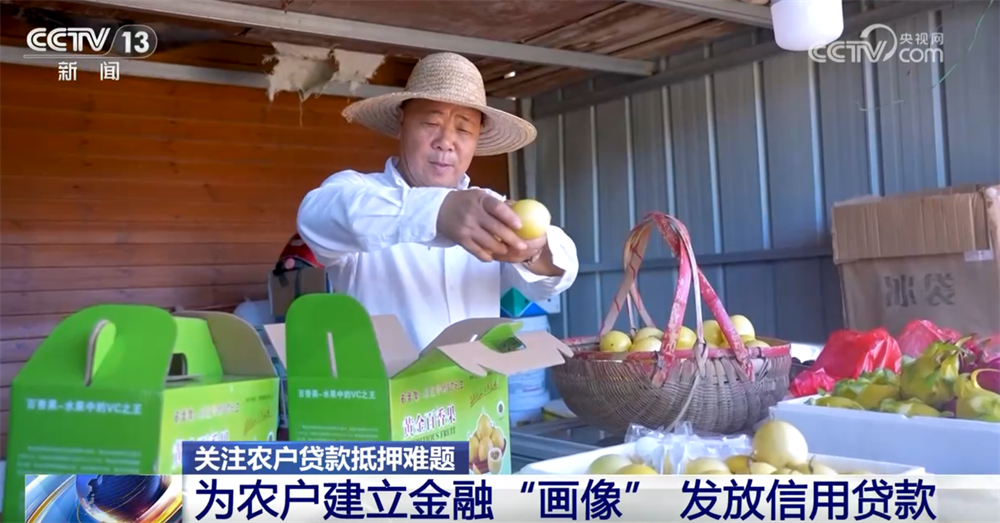
各地探索“多路径”破解农户贷款抵押难题 “信用+”让金融服务乡村振兴更精准
Yang Shi Wang· 2025-09-15 02:53
Core Insights - The article discusses the challenges faced by farmers in obtaining loans due to a lack of effective collateral and highlights various innovative solutions being implemented across different regions in China to address these financing difficulties [1][10][23]. Group 1: Innovations in Rural Financing - In Zhejiang, the application of big data technology has enabled the establishment of financial profiles for farmers, creating a loan whitelist that alleviates the financing difficulties caused by insufficient collateral [1][5][9]. - By the end of July, Zhejiang Rural Commercial Bank had achieved full coverage of eligible farmers for credit, benefiting 9.568 million households with a total credit amount of 1.44 trillion yuan, with credit loans accounting for 68% of the total [9][30]. - In Hunan, financial institutions have adopted a "whole village credit" model, which has supported 377 villages and 6,317 farmers with a total credit amount of 1.61 billion yuan [16][18]. Group 2: Credit Assessment and Loan Products - In Hubei, a pilot program has been initiated to evaluate the credit value of farmers and rural assets, allowing individual farmers to receive credit limits of up to 1 million yuan based on their credit ratings [18][20]. - The introduction of specialized credit loan products such as "pig loans," "aquaculture loans," and "pepper loans" has been developed to meet the needs of agricultural producers [14][20]. - The national agricultural credit guarantee alliance has been established to help farmers and agricultural cooperatives overcome financing challenges, with over 4.8 million farmers receiving guarantees and financing exceeding 1.76 trillion yuan [29][30]. Group 3: Shift Towards Credit-Based Financing - The Financial Regulatory Administration reported that as of July, credit loans accounted for over 50% of the total balance of operating loans for farmers, indicating a significant shift from reliance on collateral to credit value [30][34]. - The number of new agricultural entities receiving loans has increased by 10.18% since the beginning of the year, with regions like Fujian and Shanxi showing loan approval rates exceeding 70% [32][34]. - The recent implementation of the "Implementation Plan for High-Quality Development of Inclusive Finance in the Banking and Insurance Industries" emphasizes increasing credit loan issuance to farmers and new agricultural entities [36].
探索“再贷款+”融资新机制 中国人民银行云浮市分行精准赋能县域产业振兴
Jin Rong Shi Bao· 2025-09-11 06:34
Group 1 - The core viewpoint emphasizes the innovative financial support mechanisms introduced by the People's Bank of China in Yunfu, aimed at fostering local economic development through targeted loans and subsidies [1][3][5] - As of July 2025, the balance of agricultural and small business re-loans in Yunfu reached 1.724 billion yuan, with a utilization rate of 97%, significantly supporting high-quality regional economic growth [1] - The "re-loan + provincial loan interest subsidy" model has been successfully implemented, allowing technology companies to benefit from lower loan rates and additional financial support [2][3] Group 2 - The financial institution has identified 24 strategic emerging industry enterprises eligible for credit, facilitating loans totaling 158 million yuan, which is expected to generate 1.6594 million yuan in provincial subsidies [3] - The introduction of innovative financing products such as "company + base + family farm" models has enabled local agricultural cooperatives to secure loans, enhancing their operational capabilities [4][5] - The "re-loan + modern agricultural industry chain" service model has led to the issuance of 560 million yuan in preferential loans to new agricultural operators, promoting local specialties [5] Group 3 - The collaboration between the People's Bank of China and local market regulation departments has resulted in the issuance of 113 million yuan in credit to "special, excellent, and new" individual businesses, benefiting 71 merchants [8] - The "Yue Quality Loan - Yun Quality Loan" model has been established to create a quality evaluation system for enterprises, facilitating access to financing for over 300 companies [8] - The ongoing efforts aim to deepen the "re-loan +" model, leveraging monetary, fiscal, and industrial policy synergies to drive sustainable economic development in key areas [8]
荆楚大地上的普惠金融创新:“冷数据”算账,“暖分析”帮扶
Nan Fang Du Shi Bao· 2025-08-19 04:33
Core Insights - The article highlights the transformative impact of inclusive finance in Hubei, particularly through innovative loan products that address the financing challenges faced by small and micro enterprises, farmers, and technology companies [2][3][4][5]. Group 1: Challenges in Inclusive Finance - Hubei Bank faces common industry challenges such as scattered credit data, lack of collateral, and high operational and risk control costs, which hinder access to financial services for small business owners [3]. - Long-standing issues like inefficient capital allocation and limited financing channels have been significant barriers to the growth of private enterprises in Hubei [4]. - The reliance on traditional collateral requirements restricts financing for asset-light market participants, leading to difficulties for agricultural and technology enterprises in securing loans [4][5]. Group 2: Innovative Solutions - Hubei Bank has developed a product system aimed at addressing the financing difficulties of technology companies, small and medium enterprises, and farmers by leveraging credit value instead of traditional collateral [6][7]. - The bank introduced three types of credit value loans in 2025: Knowledge Value Credit Loan, Commercial Value Credit Loan, and Two-Farmer Credit Value Loan, allowing businesses to access loans without collateral [6][7]. - The Knowledge Value Credit Loan enables up to 10 million yuan in credit for technology companies based on innovation metrics, while the Commercial Value Credit Loan quantifies soft strengths like tax records and market reputation for small businesses [6][7]. Group 3: Service Accessibility and Efficiency - Hubei Bank has expanded its service network to ensure financial services reach rural areas, with 254 branches covering all cities and counties, and mobile financial service stations bringing services directly to farmers [8]. - The bank has implemented a full lifecycle service system that caters to businesses at different growth stages, offering tailored products from startup loans to larger financing options [9]. - The introduction of the "301" online quick loan model allows for a streamlined application process, significantly improving approval efficiency and reducing the need for collateral [10]. Group 4: Collaborative Ecosystem - Hubei Bank has established a collaborative ecosystem involving government and enterprises to share risks and enhance the effectiveness of inclusive finance initiatives [11]. - The bank's "One County, One Product" strategy aligns financial services with local industry needs, exemplified by tailored loan products for specific agricultural sectors [11][12]. - Future plans include expanding the bank's technological capabilities and product offerings to ensure comprehensive coverage of regional industries and enhance the effectiveness of inclusive finance [12].

融资协调机制破难点疏堵点支持小微
Jin Rong Shi Bao· 2025-08-08 07:59
Group 1: Core Insights - Ningbo has introduced a "combined registration" model for mortgage loans to facilitate seamless refinancing for small and micro enterprises, significantly reducing costs and processing time [1] - The financial regulatory authority has expanded the scope of refinancing policies to all small and micro enterprises, aiming to alleviate financing pressures [1][2] - A coordination mechanism has been established to support small and micro enterprises, resulting in substantial credit issuance and a focus on priority sectors [2] Group 2: Financing Mechanisms - The coordination mechanism has prioritized foreign trade small and micro enterprises, providing tailored financial support and insurance products to address their unique challenges [3] - Innovative financing solutions, such as "cross-border e-commerce insurance," have been developed to support export activities and mitigate risks [3][4] - Local banks have been proactive in addressing financing needs by providing loans and market analysis to enterprises facing operational challenges [4][5] Group 3: Addressing Financing Barriers - Various local initiatives have been implemented to resolve common financing barriers faced by small and micro enterprises, such as property disputes and lack of traditional collateral [5][6] - The use of innovative approaches, like "temporary order pledges" and "guarantees from actual controllers," has enabled banks to provide loans despite existing challenges [6][7] - The establishment of a "recommendation list" has facilitated access to credit for enterprises previously deemed ineligible due to minor issues [7] Group 4: Innovative Financial Products - Financial institutions have developed new products and services tailored to the specific needs of small and micro enterprises, enhancing the precision and coverage of financial services [8][9] - Examples include the "pollution rights pledge" and "climate loans," which integrate environmental factors into the financing process [8][9] - Collaborative efforts among government, banks, and insurance companies have led to the creation of risk-sharing mechanisms to support various sectors, including agriculture [9]
