
中信保诚周期优选A

Search documents
短期波动不改长期逻辑,化工新叙事正徐徐展开
Xin Lang Cai Jing· 2026-02-06 08:40
Core Viewpoint - The chemical industry is experiencing a pivotal moment driven by supply-side reforms, which may lead to improved profitability and valuation recovery for leading companies in the sector [4][28][38]. Group 1: Industry Overview - The chemical industry has faced significant challenges over the past four years, including excess production capacity and declining profits due to weak domestic demand and increased exports [4][5][24]. - The industry is closely linked to global economic conditions, with periods of opportunity often followed by prolonged downturns [4][24]. Group 2: Supply-Side Reforms - Recent government policies aim to eliminate low-price competition and encourage quality improvements, leading to the exit of outdated production capacities [6][7][24]. - The tightening of new capacity approvals is expected to fundamentally change the industry's landscape, reducing excess supply both domestically and globally [7][27]. Group 3: Profitability and Valuation Recovery - The chemical sector may witness a "Davis Double Play" scenario, where both profitability and valuations improve simultaneously [28]. - Current valuations for leading chemical companies remain low, not reflecting their asset scale or market position, indicating potential for significant upward revaluation [29][30]. Group 4: Market Consensus - There is a growing consensus among institutional investors regarding the chemical sector, driven by confidence in policy execution, recognition of bottoming profitability, and acknowledgment of low valuations [31]. Group 5: Short-Term Adjustments and Long-Term Trends - Recent fluctuations in the chemical sector are viewed as short-term disturbances, with the long-term positive trend and core logic remaining intact [32]. - The industry is expected to benefit from a tightening supply environment and ongoing policy support, which may lead to a positive shift in price expectations for chemical products [32][34]. Group 6: Investment Strategies - Investment opportunities in the chemical sector can be captured through a professional framework that focuses on identifying businesses with clear pricing power and potential for profit recovery [35][36]. - Key strategies include investing in sectors with stable pricing capabilities, capturing price rebounds during market pessimism, and identifying advanced production capacities that can yield significant profits [36][37].

这位博士基金经理,把“涨价”和“反内卷”说透了
Xin Lang Cai Jing· 2025-12-29 07:33
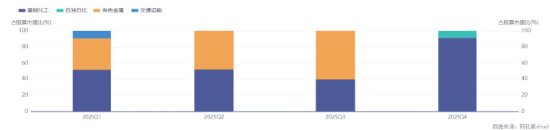
Core Insights - The cyclical sector has shown strong performance this year, prompting inquiries about investment strategies in this area [1][22] - Sun Huicheng, a fund manager at CITIC Prudential Fund, has developed a clear and executable investment framework based on over a decade of research in the chemical and non-ferrous metals industries [1][24] Investment Framework - Sun's investment strategy focuses on identifying companies with upward revisions in profit expectations, employing three main approaches: 1. Seek "perfect businesses" that can sustain price increases, such as the refrigerant industry, which benefits from stable pricing dynamics [5][26] 2. Target industries where prices have bottomed out and are poised for a rebound, like spandex and coal chemical sectors [6][27] 3. Identify companies with advanced production capabilities that the market is skeptical about, allowing for early investment before performance validation [7][27] Market Outlook - Sun's macroeconomic perspective is illustrated through a "macro clock" concept, focusing on two main themes: 1. Non-ferrous metals, particularly aluminum and copper, are expected to perform well in the current hawkish environment of the Federal Reserve, with aluminum being favored due to limited new supply and strong demand [9][29][30] 2. The chemical industry is seen as a sector with significant potential during the transition from deflation to inflation in China, driven by supply-side reforms and the "anti-involution" policy [11][31][32] Specific Sector Focus - In the non-ferrous metals sector, aluminum is highlighted for its price elasticity and potential profit growth, while gold is suggested for later in the year as a hedge against inflation [10][30] - In the chemical sector, Sun emphasizes the importance of price elasticity and the impact of supply-side policies, focusing on spandex, large refining, and PTA (polyester) chains as key areas for investment [12][32][33][34]