
中国书法

Search documents
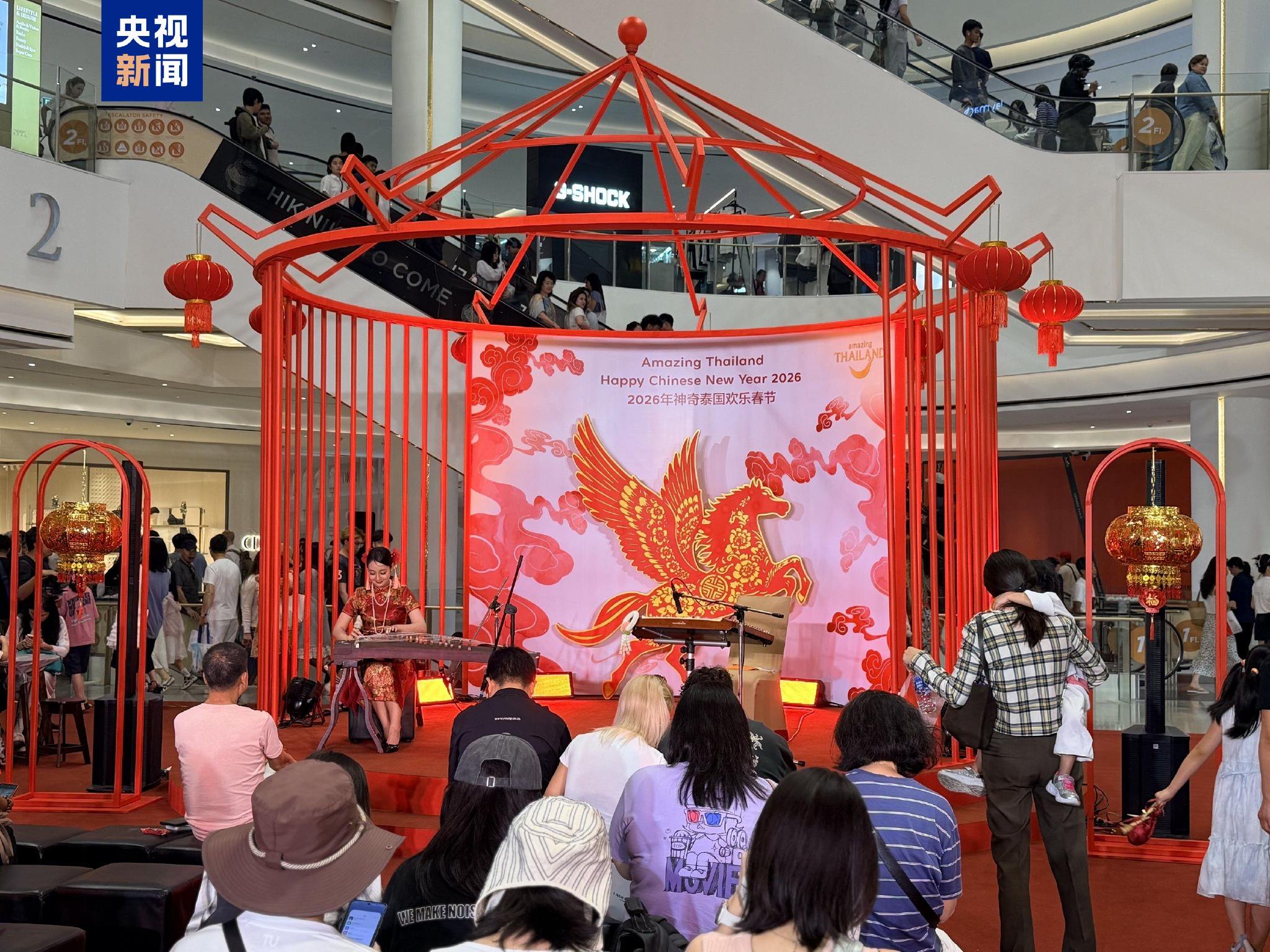
中国非遗亮相“2026年神奇泰国欢乐春节”活动
Xin Lang Cai Jing· 2026-02-15 05:19
Group 1 - The "2026 Magical Thailand Happy Spring Festival" event was grandly launched in Bangkok at the Siam Paragon shopping center on February 14 [3] - The event features multiple Chinese intangible cultural heritage projects, including Huaxian woodblock New Year paintings and Shangqiu fish lanterns, as well as Chinese calligraphy [7] - Thai intangible cultural heritage showcased at the event includes Thai Khon mask painting and Thai kite-making, attracting a large number of visitors for interaction [11]

瑙鲁总统开平寻根
Nan Fang Nong Cun Bao· 2026-02-14 08:35
Core Viewpoint - The visit of Nauru President David Adeang to his ancestral hometown in Kaiping, Guangdong, highlights the cultural ties between Nauru and China, showcasing the importance of heritage and cultural exchange in strengthening bilateral relations [4][22]. Group 1: Cultural Significance - President Adeang visited his ancestral village, where his great-grandfather originated, emphasizing the historical connection between Nauru and China [9][10]. - The celebration included traditional Chinese New Year festivities, reflecting the vibrant cultural atmosphere of the village [11][20]. - Adeang engaged in Chinese calligraphy, writing the character "福" (fortune), which symbolizes cultural appreciation and personal connection to his roots [15][18]. Group 2: Bilateral Relations - The visit serves as a demonstration of goodwill and friendship between the people of Nauru and China, as Adeang actively participated in local customs and traditions [22][23]. - The event included a visit to the UNESCO World Heritage site of Kaiping Diaolou, further promoting cultural understanding and appreciation [23][24].

海角之城“春”潮起——在南非开普敦感受中非人文交流
Xin Hua Wang· 2026-02-02 13:31
Group 1 - The event in Cape Town celebrated the Chinese New Year, showcasing cultural exchange between South Africa and China, emphasizing themes of reunion and hope [1][2] - The celebration featured various activities, including food stalls with traditional Chinese dishes and cultural experience areas, attracting both local citizens and the Chinese community [1] - Performances included lion dances, Sichuan opera face-changing, and martial arts, highlighting the unique charm of Chinese culture while also incorporating local African elements [2] Group 2 - Participants expressed that such events promote mutual understanding and cultural diversity, enhancing friendships between different ethnic groups [2] - The event aligns with the Year of Cultural Exchange between China and Africa, emphasizing the importance of civilizational mutual learning and connection among people [2] - Local youth actively participated in performances, indicating a growing interest in Chinese culture and martial arts, which they believe contributes positively to their personal development [2]
走进莫斯科孔子学院,对话俄罗斯青年
Huan Qiu Shi Bao· 2025-05-11 21:59
Core Viewpoint - The article discusses the understanding of historical events, particularly the Nanjing Massacre and the contributions of China and Russia during World War II, among Russian youth, emphasizing the importance of preserving historical truth and cultural exchange between China and Russia [1][2][3][4]. Group 1: Historical Awareness - Many students at the Confucius Institute in Moscow are aware of the Nanjing Massacre, with estimates of around 300,000 deaths during the six-week period following the Japanese invasion [2]. - Students also recognize other historical atrocities, such as the actions of Unit 731 and the "comfort women" issue, indicating a broader understanding of Japan's wartime conduct [3]. - There is concern among students regarding the distortion of historical facts and the denial of contributions made by China and Russia during World War II, with many actively countering such narratives [3][4]. Group 2: Cultural Influence - The Confucius Institute serves as a significant platform for Russian youth to engage with Chinese culture, with students expressing fascination with various aspects, including calligraphy and tea culture [5]. - Chinese pop culture, including music and films, has gained popularity among Russian youth, with artists like Jay Chou and films like "The Battle at Lake Changjin" being particularly well-received [6]. - Social media and video platforms are crucial for Russian youth to explore Chinese culture, with many expressing a desire to study in China, driven by positive perceptions of Sino-Russian relations [7].