临期商品

Search documents
被曝多地关店?好特卖也“跑不动了”
Feng Huang Wang Cai Jing· 2025-12-22 07:54
Core Viewpoint - The discount retail brand "Haotemai" is facing challenges as it closes stores in major cities and slows down its expansion, with the company claiming that the overall closure rate remains below 5% and that the slowdown is a strategic choice rather than a halt in franchising [1][2]. Group 1: Store Operations and Growth - Haotemai has closed 25 stores and opened 49 in the last 90 days, indicating a stagnation in overall store growth, with 954 operational stores currently [3]. - The company aims to reach 960 stores by June 2024 and nearly 1,000 by July 2024, but some franchisees are struggling to recoup their investments, particularly in lower-tier markets [3][6]. - The company's revenue for 2023 was 3.64 billion, a 51.5% year-on-year increase, with a projected revenue of 4.85 billion for 2024, reflecting a slower growth rate of 33.4% [6]. Group 2: Business Model and Profitability - Haotemai operates on a "soft discount" model, selling near-expiry goods and excess inventory, which allows for higher profit margins of 25%-30% compared to 15% for "hard discount" models [4][6]. - The supply chain for Haotemai's products is heavily reliant on low-cost goods, with 60% of inventory being excess stock from brand owners and distributors [7]. Group 3: Supply Chain Challenges - The availability of excess inventory has decreased due to improved inventory management by brands and distributors post-pandemic, leading to increased competition in the soft discount sector [8][9]. - The entry of competitors like Hema and other e-commerce giants is further squeezing Haotemai's market share [9]. Group 4: Quality Control Issues - Haotemai has faced multiple quality control issues, including a recent incident involving expired products, raising concerns about the reliability of its supply chain [10][11]. - The company has been implicated in selling counterfeit goods, with significant amounts involved, and has not adequately addressed concerns regarding procurement and supplier vetting [12]. - Consumer complaints primarily focus on product quality, with numerous reports of expired items and counterfeit products being sold [12][13].
被曝多地关店?好特卖也“跑不动了”
凤凰网财经· 2025-12-22 07:47
Core Viewpoint - The discount retail brand "Hao Te Mai" is facing challenges as it closes stores in major cities and slows down its expansion, with the official response indicating that the closure rate is below 5% and is part of a strategic decision for steady development [1][2]. Group 1: Store Operations and Growth - "Hao Te Mai" has closed 25 stores and opened 49 stores in the last 90 days, indicating a stagnation in overall store growth, with 954 operational stores currently [3]. - The company aims to reach 960 stores by June 2024 and is approaching the milestone of 1,000 stores [3]. - Some franchise stores have closed due to poor performance in lower-tier markets, affecting the return on investment for franchisees [4]. Group 2: Business Model and Financial Performance - The "soft discount" model relies on selling near-expiry goods and excess inventory, achieving higher gross margins of 25%-30% compared to 15% for "hard discount" models [5][4]. - "Hao Te Mai" reported a revenue of 3.64 billion yuan in 2023, a 51.5% year-on-year increase, with a store count growth of 63% to 815 stores [9]. - The projected revenue for 2024 is 4.85 billion yuan, reflecting a slower growth rate of 33.4%, with a store count increase of 15.3% [9]. Group 3: Supply Chain and Quality Control Issues - The supply chain for "Hao Te Mai" heavily relies on low-cost near-expiry goods, with 60% of inventory being excess stock from brand partners [11]. - The reduction in available excess inventory due to improved stock management by brands and increased competition in the "soft discount" sector poses a risk to the business model [12][13]. - Quality control issues have arisen, including complaints about expired products and counterfeit goods, which have led to negative consumer experiences and raised concerns about the company's supply chain management [15][18][20].


被指多地接连闭店!知名品牌最新回应,杭州有超40家,很多人爱买
Sou Hu Cai Jing· 2025-12-20 02:05
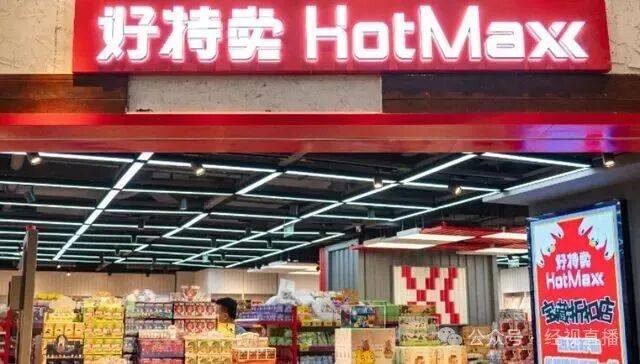
Core Viewpoint - The discount retail chain HotMaxx is reportedly closing stores in several major cities and has halted new franchise agreements in some areas, indicating a significant slowdown in its expansion plans for 2025 [1][3][10]. Group 1: Store Closures and Franchise Changes - Consumers have reported that HotMaxx is closing stores in key urban areas such as Guangzhou, Changsha, Hangzhou, and Beijing, with a notable reduction in new store openings planned for 2025, dropping to a scale of only a few dozen [3][10]. - HotMaxx has acknowledged that the closure of some stores is a normal operational choice by franchisees or direct stores, with an overall annual closure rate not exceeding 5% [6]. - The company has stated that the slowdown in new franchise agreements is a strategic decision to focus on core cities, rather than a complete halt, with current franchise opportunities limited to seven cities including Shanghai, Nanjing, and Guangzhou [6][10]. Group 2: Market Context and Industry Trends - The discount retail sector, which saw rapid growth from 2020 to 2022 with brands like HotMaxx, has entered a phase of consolidation due to increased competition and market saturation, leading to the exit of several brands [10]. - The shift in the discount retail landscape is characterized by a transition from aggressive expansion to a focus on efficiency and supply chain management, indicating a maturation of the market [10]. - HotMaxx, which initially gained popularity through low-priced products, is now facing challenges that reflect broader industry trends towards more sustainable growth practices [11].
临期商品为何卖不动?原来是“抠门”标签在作怪
3 6 Ke· 2025-07-02 06:42
Core Insights - The article discusses the significant issue of food waste, highlighting that over 30% of food is wasted globally, with a substantial portion being discarded due to nearing expiration dates [1][2] - It explores consumer perceptions of near-expired products, revealing that price promotions, while commonly used, may negatively impact consumer perceptions and lead to a stigma associated with purchasing such items [2][8] Group 1: Consumer Behavior and Perception - A study indicates that consumers often associate purchasing near-expired products with being "stingy," as evidenced by a higher "stinginess score" for those buying such items compared to regular products [3][4] - The social pressure of being perceived as "cheap" significantly affects consumer choices, with a notable decrease in the willingness to purchase near-expired products when the choice is public [4][8] Group 2: Marketing Strategies - Marketing strategies that emphasize sustainability and smart consumer choices can improve consumer attitudes towards near-expired products, as shown by higher click-through rates for ads framing these purchases positively [5][9] - The article suggests that retailers should avoid terms like "cheap" and instead focus on narratives around sustainability and responsible consumption to reshape consumer perceptions [9][10] Group 3: Recommendations for Retailers - Retailers are encouraged to create private shopping environments for near-expired products to alleviate social pressure, such as using self-checkout options or dedicated stores for these items [10][12] - Implementing strategies that highlight the environmental benefits of purchasing near-expired products can enhance their appeal and align with corporate social responsibility initiatives [13][14] Group 4: Pricing Strategies - The article advises against overt discounting strategies that may reinforce negative stereotypes, suggesting alternative approaches like limited-time offers or bundling near-expired products with regular items [15][16] - A shift in consumer perception from "stingy" to "smart" can be achieved through thoughtful marketing and pricing strategies, emphasizing the rationality behind purchasing near-expired goods [16][17]