临沂商城价格指数

Search documents
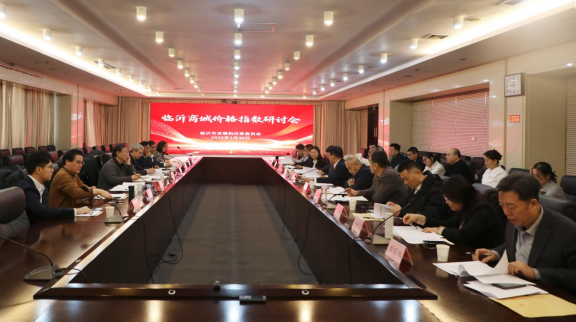
临沂商城价格指数研讨会成功召开,专家建言献策聚焦价格指数长远发展
Zhong Guo Fa Zhan Wang· 2026-02-03 09:39
Core Insights - The meeting focused on the optimization, promotion, and long-term development of the Linyi Mall Price Index, which is crucial for the mall's digital transformation and international development [1][3] Group 1: Current Status and Strategic Planning - Linyi Mall has achieved an annual transaction volume exceeding 600 billion yuan and a logistics total exceeding 1 trillion yuan, establishing itself as a significant commodity distribution center in China [3] - The implementation of supportive policies from the Shandong Provincial Government is accelerating the mall's transition towards internationalization and branding [3] Group 2: Expert Recommendations - Experts emphasized the need for the index construction to adhere to standardized and scientific directions, focusing on optimizing core technical aspects such as base period adjustments and weight configurations [5] - Suggestions included leveraging experiences from established indices like the national CPI to create a more targeted and forward-looking index system tailored to Linyi Mall's industrial characteristics [5] Group 3: Future Development and Collaboration - The meeting highlighted the importance of advancing the index collection methods towards automation and intelligence, and expanding into innovative categories like financial indices [6] - A collaborative approach across departments and entities is essential to enhance the authority and influence of the index, which serves as both a market dynamic thermometer and an industry upgrade booster [6]

【广发宏观贺骁束】高频数据下的11月经济:价格篇
郭磊宏观茶座· 2025-12-01 05:34
Core Viewpoint - The article discusses the recovery of the BPI index in November, driven by expectations of interest rate cuts by the Federal Reserve and ongoing narratives in various industries, particularly in metals and commodities [1][4]. Group 1: BPI Index and Commodity Prices - The BPI index recorded 878 points as of November 28, reflecting a 1.0% increase compared to the end of October, with energy and non-ferrous indices rising by 0.4% and 2.7% respectively [1][4][5]. - In November, the pricing of bulk commodities showed mixed results, with thermal coal and glass futures prices increasing by 7.0% and 7.6% month-on-month, while rebar futures fell by 0.6% [9][11]. Group 2: Real Estate Market - The housing prices in four major cities continued to adjust, with the second-hand housing price index decreasing by 0.7% to 1.5% compared to the last week of October [11]. Group 3: Emerging Manufacturing Prices - Prices for upstream materials in emerging manufacturing sectors, such as storage chips and lithium carbonate, remained strong, while the photovoltaic industry saw a decline, with the SPI index dropping by 2.6% [2][12]. - The DXI index for the DRAM memory industry rose by 70.7%, and lithium hexafluorophosphate prices surged by 67.4% month-on-month [2][12]. Group 4: Shipping and Logistics - In the shipping sector, the CCFI index increased by 9.8%, while the WCID indices for routes to Los Angeles and New York fell by 14.3% and 23.3% respectively [14]. - The Baltic Dry Index (BDI) rose by 30.2%, indicating a recovery in dry bulk shipping rates [14]. Group 5: Food Prices - Food prices generally increased, with the average wholesale price of pork rising by 0.2% and key vegetable prices increasing by 1.8% [17].