
久车GO

Search documents
久车GO以“链接与赋能”重塑汽车供应链 长久股份出席2025年度汽车经销商发展论坛
Bei Jing Ri Bao Ke Hu Duan· 2025-11-14 10:51
Core Insights - The automotive industry in China is facing significant structural challenges, including high inventory levels and thin profit margins, prompting the need for innovative solutions [4] - Jiuche GO's ecological strategy focuses on "linking demand, optimizing the ecosystem, and empowering with digital intelligence" to reconstruct the relationships within the automotive distribution sector [4][5] Group 1: Market Dynamics - The lower-tier markets are identified as key drivers for growth in China's automotive consumption, with sales in fifth-tier cities increasing by 14.6% year-on-year, nearly three times the growth rate of first-tier cities [5] - The market share of fuel vehicles in third-tier cities and below is less than 50%, indicating substantial unmet demand [5] Group 2: Jiuche GO's Strategic Initiatives - Jiuche GO has established a large third-party fulfillment network, with over 5,800 local regulatory personnel covering more than 17,000 4S stores, effectively filling the market gap at the distribution end [5] - The platform has served nearly 100 dealers across 14 provinces and 31 cities, processing over 40,000 units of D-class inventory with a regulatory asset value exceeding 5 billion [6] Group 3: Ecosystem Optimization - The "direct connection between manufacturers and secondary networks" strategy has transformed the traditional multi-level distribution model, significantly reducing logistics, inventory, and capital costs [5][6] - Jiuche GO aims to create a collaborative ecosystem where information, funds, and vehicles form an efficient closed loop, integrating manufacturers, platforms, and dealers into a cohesive unit [10] Group 4: Digital Empowerment - The platform serves as both a "digital distribution network" and a "market sensor" for manufacturers, providing real-time decision support for product planning and inventory allocation [9] - For dealers, Jiuche GO offers stable vehicle sources and utilizes data integration and intelligent algorithms to identify and distribute precise customer leads [9] Group 5: Vision for the Future - Jiuche GO aspires to establish not just a trading platform but a new ecosystem of collaborative growth, aiming for a digital transformation of the automotive supply chain [10] - As of November 2025, the platform has facilitated over one million vehicle transactions and served more than 50,000 dealers, positioning itself as a benchmark for innovation in the industry [10]


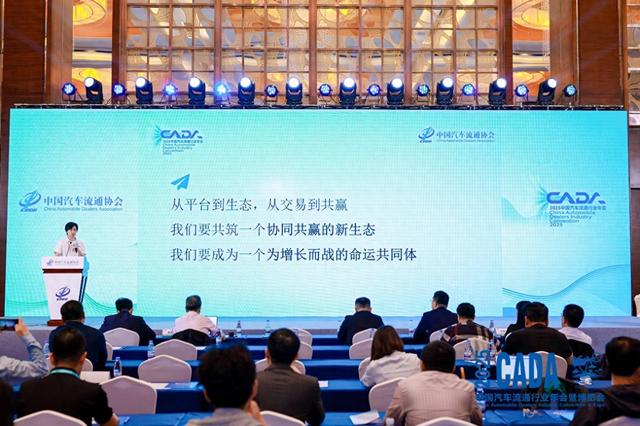
久车GO:以“链接与赋能”重塑汽车供应链
Xin Hua Wang· 2025-11-11 00:55
Core Viewpoint - The automotive industry is facing significant challenges, and 久车GO aims to reshape the supply chain through a three-pronged ecological strategy of "linking demand, optimizing ecology, and digital empowerment" to provide innovative solutions for industry transformation [1][2]. Group 1: Challenges in the Automotive Market - The current Chinese automotive sales system has notable irrationalities, with manufacturers and dealers under immense operational pressure due to systemic issues accumulated over time [2]. Group 2: Linking Demand - The lower-tier markets are identified as a key driver for growth in Chinese automotive consumption, with sales in fifth-tier cities increasing by 14.6% year-on-year, nearly three times the growth rate of first-tier cities [3]. - 久车GO has established a vast third-party fulfillment network, covering over 17,000 4S stores with a localized regulatory team of more than 5,800 people, effectively activating secondary dealers in county-level markets [3]. Group 3: Optimizing Ecology - The "direct connection between manufacturers and secondary networks" has transformed the traditional multi-level distribution model, significantly reducing redundant costs related to logistics, inventory, and capital occupation [4]. - The platform has served nearly 100 dealers across 14 provinces and 31 cities, managing over 40,000 units of D-class inventory with an asset value exceeding 5 billion yuan [4]. Group 4: Digital Empowerment - The platform serves as both a "digital distribution network" and a "market sensor" for manufacturers, while acting as an "intelligent empowerment platform" for dealers [5]. - For manufacturers, the platform creates a closed-loop sales data system, providing real-time decision support for product planning and inventory allocation, while for dealers, it helps in identifying and distributing high-quality customer leads [5]. - An example includes the 一汽丰田卡罗拉 project, where the platform facilitated over 27 million exposures and provided more than 7,500 high-quality leads monthly, achieving a conversion rate of approximately 3% [5]. Group 5: Ecological Vision - The goal of 久车GO is to establish not just a trading platform but a collaborative and win-win new ecosystem, integrating information, funds, and vehicles into an efficient closed loop [6]. - As a new retail platform developed by 长久股份, 久车GO is driving the digital transformation of the automotive supply chain through a dual approach of "online trading platform + offline county-level franchises," having facilitated over 1 million vehicle transactions and served more than 50,000 dealers by November 2025 [6].


长久股份薄薪潼:下沉市场是驱动中国汽车消费的关键引擎
Zhong Guo Jing Ying Bao· 2025-11-10 09:53
Core Insights - The sinking market is identified as a key driver for the growth of China's automotive consumption, with lower-tier cities showing significant sales growth compared to first-tier cities [2][3] - The retail sales of automotive products in China reached 3.6 trillion yuan from January to September, reflecting only a slight increase of 0.6% year-on-year, which is notably lower than the overall retail sales growth [2] - The automotive manufacturing industry's profit margin stands at 4.5%, significantly below the average of 6% for downstream industries, indicating ongoing profitability challenges [2] Market Dynamics - Sales growth in lower-tier cities is substantial, with five-tier cities experiencing a year-on-year increase of 14.6%, nearly three times that of first-tier cities, while third and fourth-tier cities grew by 8.15% and 10.65% respectively [2] - Fuel vehicles hold less than 50% market share in third-tier cities and below, indicating a large unmet demand [2] Industry Challenges - The automotive sales system in China faces significant inefficiencies, with manufacturers and dealers under immense operational pressure, leading to a "three losses" situation for manufacturers, dealers, and consumers [3] - Over 70% of secondary dealers face challenges such as unstable vehicle supply and difficulty in customer acquisition, while nearly 60% struggle with thin profits and inventory backlog [5] Strategic Initiatives - Long-term strategies proposed include activating county and rural markets to create new growth areas in lower-tier markets, shifting from zero-sum competition to symbiotic growth [3] - The launch of the new retail platform, Jiuche GO, aims to optimize the automotive distribution ecosystem by linking demand, enhancing the ecosystem, and leveraging digital intelligence [3][4] Platform Development - Jiuche GO has established a vast third-party delivery network with over 5,800 local regulatory personnel covering more than 17,000 4S stores, facilitating access to previously unreachable markets [4] - The platform has registered 52,300 merchants and operates in over 400 cities and 2,300 counties, addressing the channel gaps in the end markets [4] Digital Transformation - Jiuche GO's dual-channel strategy combines online trading with offline county-level franchises to drive the digital transformation of the automotive supply chain ecosystem [7] - The platform provides comprehensive digital support to secondary dealers, including stable vehicle supply, precise lead generation, and inventory collaboration, significantly reducing operational costs and risks [6] Performance Metrics - As of November 2025, Jiuche GO has facilitated over one million vehicle transactions and served more than 50,000 dealers, showcasing its impact on the automotive retail landscape [7]

这家经销商在做一种很新的生意
Zhong Guo Qi Che Bao Wang· 2025-05-09 02:33
Core Insights - Long-lasting partnership between Changjiu Co. and FAW Toyota for exclusive distribution of Corolla 1.2T in China, focusing on underdeveloped markets and utilizing the "Jiuche GO" digital platform for sales management and customer engagement [2][3][4] Group 1: Partnership Details - Changjiu Co. has signed a project cooperation agreement with FAW Toyota, making it the exclusive distributor for the Corolla 1.2T model in mainland China [2] - The partnership aims to explore incremental market opportunities and implement a new automotive channel model through the "Jiuche GO" platform [2][3] - The collaboration allows for dynamic production adjustments based on market demand, emphasizing a sales-driven production model [8] Group 2: "Jiuche GO" Platform - The "Jiuche GO" platform, launched in March 2024, leverages big data and cloud computing to enhance market analysis and user services [3] - The platform connects upstream manufacturers with county-level markets, creating a new retail ecosystem for automotive sales [3][4] - As of April 2025, the platform has registered over 52,300 automotive dealers, covering 1,376 county-level markets across China [4] Group 3: Market Context - The Corolla 1.2T model was chosen despite a 37.7% year-on-year sales decline, indicating its importance in maintaining overall sales for the Corolla lineup [5][6] - The model's sales accounted for a significant portion of Corolla's total sales, suggesting it remains a valuable asset for Changjiu Co. [6] - The exclusive distribution model aims to alleviate inventory pressures on FAW Toyota's existing dealer network while avoiding direct price cuts that could harm brand image [7] Group 4: Industry Implications - The partnership represents a shift towards a "sales-driven production" model, allowing for more efficient inventory management and reduced risk for manufacturers [8] - The collaboration is expected to enhance Changjiu Co.'s profitability through targeted marketing strategies in underdeveloped markets [9] - The initiative may serve as a test case for the effectiveness of digital sales platforms in the automotive industry, potentially leading to broader applications in the future [9][10]
