云计算中心

Search documents
构建网络空间命运共同体迈向新阶段
Xin Lang Cai Jing· 2026-02-08 21:39
Core Viewpoint - The article emphasizes China's commitment to building a community of shared future in cyberspace, highlighting its role in global governance and cooperation in the digital realm, particularly for developing countries [1][2][5]. Group 1: Development Initiatives - China has signed digital economy cooperation memorandums with 26 countries and has 33 "Silk Road e-commerce" partner countries as of August 2025, showcasing its efforts in international digital collaboration [2]. - Chinese enterprises are actively involved in building digital infrastructure, including 5G bases, data centers, and smart cities, contributing to projects like the "China-ASEAN Information Port" and the "Digital Silk Road" [2]. - Huawei's global digital inclusion initiative, launched in 2019, has implemented digital skills training programs in hundreds of schools worldwide, aiding in the development of digital talent [2]. Group 2: Security Framework - China's approach to cybersecurity is based on a comprehensive and cooperative security perspective, promoting consensus and collaboration among nations [3]. - The country has released several strategic documents, including the "National Cybersecurity Strategy" and the "Global Data Security Initiative," reflecting its commitment to multilateral cooperation and opposition to unilateral security practices [3]. - By 2025, China aims to establish partnerships with 294 computer emergency response organizations across 87 countries and regions to enhance data security and personal information protection [3]. Group 3: Collaborative Pathways - China advocates for multilateral cooperation, emphasizing dialogue and practical collaboration to address global digital governance challenges [4]. - The establishment of the World Internet Conference International Organization in 2022 has increased representation and voice for developing countries in global governance [4]. - Initiatives like the "China-ASEAN Digital Governance Cooperation" and the "China-Africa Internet Development and Cooperation Forum" aim to enhance digital transformation in partner regions [4]. Group 4: Future Directions - The article outlines a vision for a fair, open, and secure cyberspace, focusing on enhancing the voice of developing countries within the UN framework for cyberspace governance [5][6]. - It emphasizes the importance of multi-stakeholder participation in international dialogues, encouraging contributions from various sectors, including technology and civil society [6]. - The promotion of the "Digital Silk Road" aims to improve digital infrastructure and security, particularly for developing nations, while fostering local talent through training and knowledge exchange [6].
2025年GDP30强城市预测:深圳近4万亿,福州接近郑州,温州破万亿
Sou Hu Cai Jing· 2025-12-12 17:35
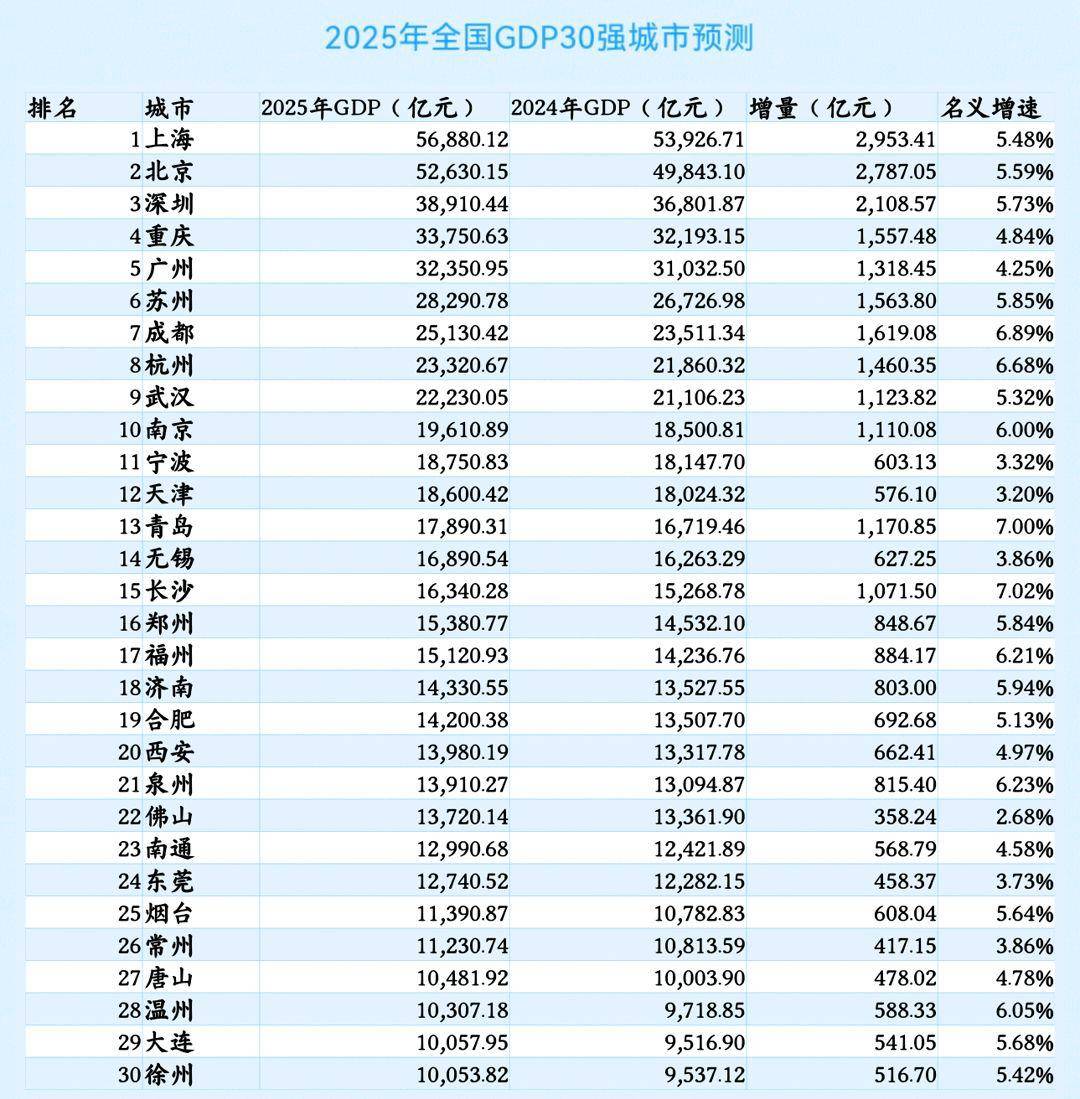
Core Insights - The 2025 GDP forecast for major Chinese cities highlights significant economic growth, with Shanghai leading at 56,880 billion yuan, followed by Beijing at 52,630 billion yuan, and Shenzhen at 38,910 billion yuan [1][2] Group 1: Major Cities and Economic Growth - Shanghai is projected to maintain its position as the top city with a GDP of 56,880 billion yuan, showing a nominal growth rate of 5.48% [2] - Beijing is expected to reach a GDP of 52,630 billion yuan, with a nominal growth rate of 5.59% [2] - Shenzhen's GDP is forecasted to be 38,910 billion yuan, with a nominal growth rate of 5.73%, driven by its status as a global tech innovation hub [2][3] Group 2: Emerging Cities - New first-tier cities like Chengdu and Hangzhou are showing impressive growth rates, contributing to a more balanced economic development across China [1] - Wenzhou is notable for being the first city to surpass a GDP of 1 trillion yuan, reaching 10,307 billion yuan, marking a significant milestone in regional economic development [1][6] Group 3: Shenzhen's Economic Model - Shenzhen's economy is characterized by a strong innovation ecosystem, with an expected annual patent authorization exceeding 100,000, accounting for 15% of the national total [3] - The city is projected to attract over 100 billion USD in foreign investment, with strategic emerging industries expected to grow by 12% [2][3] Group 4: Fuzhou's Economic Development - Fuzhou is forecasted to achieve a GDP of 15,120 billion yuan, with a growth rate of 6.21%, benefiting from free trade zone policies and a focus on digital economy [5] - The city aims to enhance its marine economy, with expected output surpassing 500 billion yuan and a 10% increase in port throughput [5] Group 5: Wenzhou's Economic Transformation - Wenzhou's GDP is projected to reach 10,307 billion yuan, with a growth rate of 6.05%, driven by its vibrant private economy [6][8] - The city is focusing on innovation, with an expected 5,000 new patents annually and a significant increase in cross-border e-commerce activities [6][8]

发布信息化应用场景机会清单 成都双流区携手中国移动及生态伙伴联动发展
Mei Ri Jing Ji Xin Wen· 2025-07-10 01:35
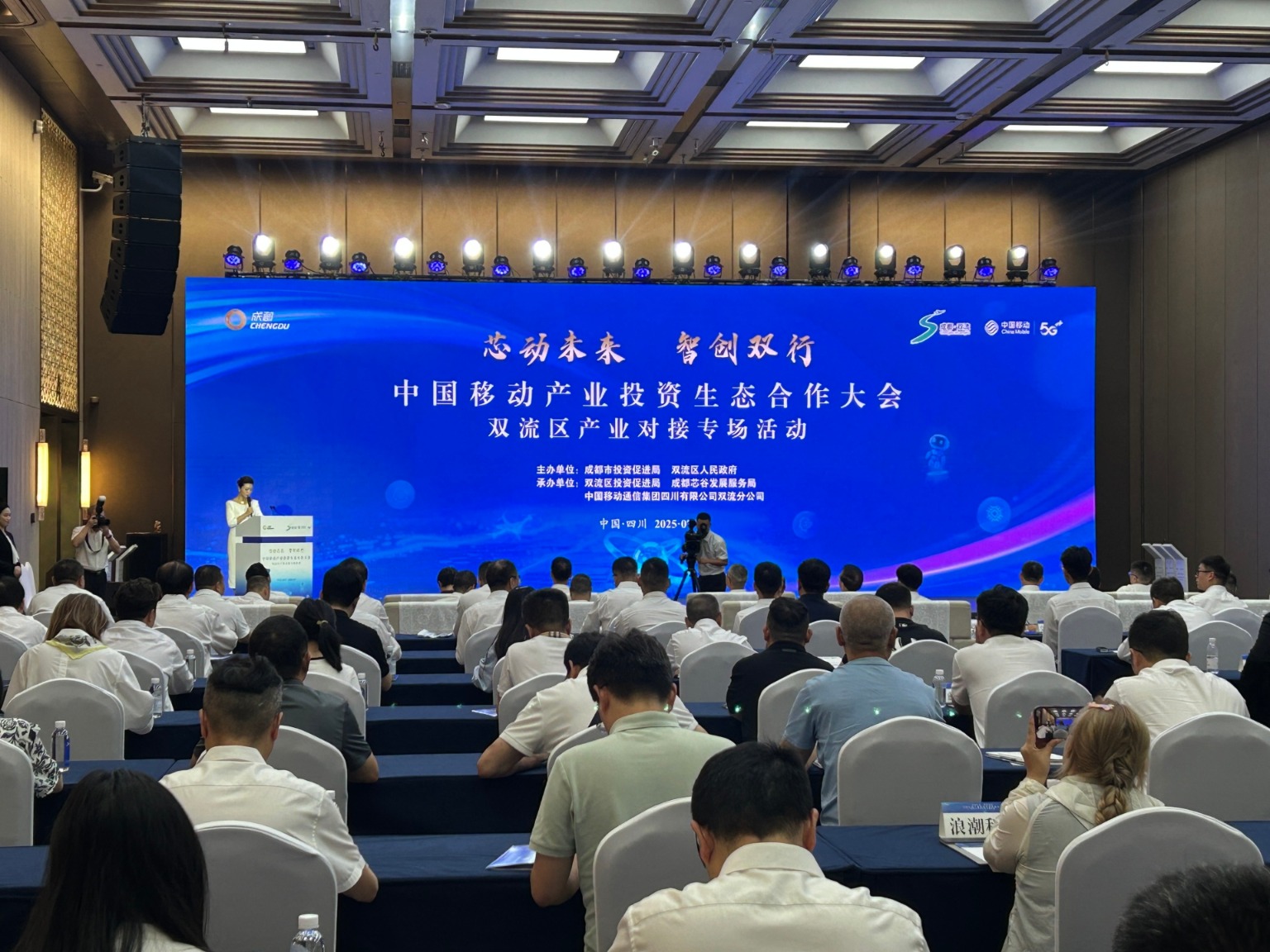
此外,双流区还现场发布了2025信息化应用场景机会清单,涵盖人工智能、安全管理、软件及信息服务等多个方面,精准锚定移动产业链升级需求,为科技 企业提供"靶向式"落地通道。中国移动以"1+4+1"的能力体系为蓝图,擘画未来产业布局,并释放加入中国移动产业生态的一系列合作机会。 双流区相关负责人表示,未来将持续深化与中国移动的战略协作,强化要素保障与机制创新,塑造"有需必应,无事不扰"营商环境品牌,加快培育双流移动 全链条产业生态,提速构建空港数智生态共同体。下一步,中国移动四川公司也将充分发挥自身核心优势,以"硬核实力"持续为双流产业升级注入"数字动 能"。 活动现场图片来源:每日经济新闻钟坤靓摄 (文章来源:每日经济新闻) 7月9日,中国移动产业投资生态合作大会双流区产业对接专场活动在成都双流区举行。60余家集成电路、光通讯、大数据等中国移动生态链企业参会,共建 联动发展新格局,共享发展新机遇。 中国移动通信集团四川有限公司是西部地区网络规模最大、服务客户最多、综合实力最强的信息通信运营商,长期以来深度赋能双流区经济社会建设。据 悉,中国移动四川公司将继续加大投资,在双流区建设西部云计算中心项目,投资不低于1 ...