五色灵芝

Search documents
国运来了!我国将入手50亿吨世界级铁矿,澳美破防:铁矿牌废了
Sou Hu Cai Jing· 2025-11-03 06:11
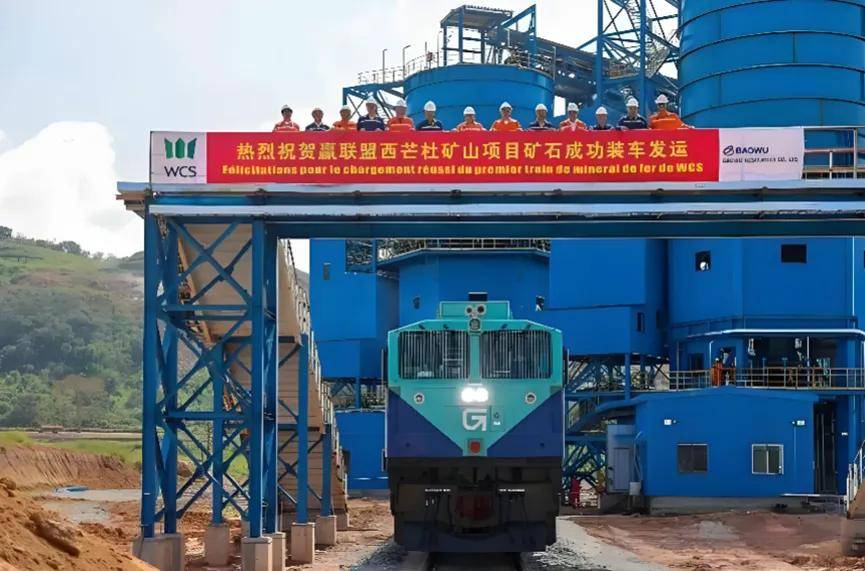
Core Viewpoint - The development of the Simandou iron ore project in Guinea, a collaboration between China Aluminum Corporation and Rio Tinto, is set to significantly impact the global iron ore market and enhance Guinea's economic position, while also challenging the dominance of Australian and Brazilian suppliers [1][5][6]. Group 1: Project Overview - The Simandou iron ore project has a total reserve of 5 billion tons, making it one of the largest undeveloped high-quality iron ore resources globally [1]. - The project includes a 600-kilometer railway and deep-water port, with an estimated investment of $13.3 billion to $21 billion, half of which is funded by Chinese investments [2][5]. - The first shipment of iron ore, totaling 150,000 tons, is expected to begin in October, with sea transport starting in November [2]. Group 2: Economic Impact - The International Monetary Fund predicts that the Simandou project will boost Guinea's GDP by 26% by 2030, positioning it as a key player in the global iron ore market [5]. - China is expected to receive approximately 27 million tons from the projected annual output of 60 million tons from the Simandou project [5]. Group 3: Market Dynamics - The commencement of the Simandou project may lead to downward pressure on iron ore prices, particularly affecting Australian and Brazilian suppliers [6][8]. - The project is anticipated to reduce Australia's share of iron ore exports to China from 60% in 2024 to 45% in 2025, diminishing its bargaining power in the iron ore sector [8]. - The shift towards the Simandou project and the use of RMB for transactions may disrupt the existing pricing dominance held by Australian suppliers [10].

美国重金挖角中国顶尖人才,年薪高达上亿,中国科技还能逆袭吗?
Xin Lang Cai Jing· 2025-10-16 20:14
Core Insights - A fierce talent war has erupted in Silicon Valley, with Meta's founder Mark Zuckerberg personally recruiting eight core researchers from OpenAI within a week, offering staggering compensation packages that can reach up to $300 million over four years, with some researchers earning $100 million in their first year, which is several times the total career earnings of an average engineer [1] - In contrast, China's tech sector is experiencing significant breakthroughs, including successful electromagnetic catapult technology tests for its sixth-generation fighter jets and domestic AI models achieving performance levels comparable to GPT-4, with Nvidia's CEO stating that the technology gap between China and the U.S. has narrowed to a nanosecond level [1] Group 1: Talent and System Building - China's tech development requires not just "optimizers" but "system builders" who can create frameworks from scratch, as evidenced by the country's success in the electric vehicle market, which has become a global sales leader despite initial skepticism [3] - The effective collaboration across the entire industrial chain in China, involving thousands of professionals in various fields, has enabled the successful implementation of technologies from the ground up, contrasting with the ongoing issues faced by U.S. projects like the Ford-class aircraft carrier's electromagnetic launch system [3] Group 2: Resilience and Talent Pool - China's collaborative network possesses a strong "self-healing" capability, allowing it to quickly attract new talent even if a few top scientists leave, supported by a vast talent pool of over 4 million STEM graduates annually, which is eight times that of the U.S. [5] - The Chinese government is enhancing talent return policies and increasing research funding, with national R&D expenditure reaching 3.33571 trillion yuan in 2023, an 8.4% increase from the previous year, and university R&D funding growing by 14.1% [5] Group 3: Domestic Innovations and Global Impact - The return of top scientists, such as biologist Yan Ning, has coincided with significant breakthroughs in China's biotechnology sector, demonstrating that domestic advancements can compete internationally, as seen with the successful commercialization of the "Five-Color Ganoderma" product [7] - China's long-term investment in talent cultivation has resulted in a steady increase in the number of top scientists, with 27,165 scholars listed in the 2024 global top 2% scientists ranking, reflecting the country's growing capabilities in critical fields like semiconductors and AI [9]