五菱宏光mini

Search documents
传统“流水线”不见了——上汽通用五菱宝骏基地破解差异化生产难题
Jing Ji Ri Bao· 2026-02-09 23:04
Core Viewpoint - The company has developed an innovative manufacturing system called the Intelligent Island Manufacturing System (I^2MS), which allows for flexible production of 24 different vehicle models without traditional assembly lines, enhancing efficiency and adaptability in response to market demands [2][4][9]. Group 1: Manufacturing Innovation - The factory utilizes "smart islands" for various assembly processes, enabling the production of different vehicle models in a highly efficient manner [2][3]. - The I^2MS breaks down traditional assembly line processes into 78 independent assembly islands, allowing for differentiated production of various models and configurations [2][5]. - The system supports a 60% reduction in new model introduction time and a 33% decrease in repetitive investment, with capacity utilization increasing from 85% to over 90% [5][9]. Group 2: Market Adaptation - The shift to the Intelligent Island Manufacturing System is driven by the increasing demand for personalized vehicle configurations and the need for rapid adaptation to market changes [4][9]. - The company has recognized the trend of customization among consumers, particularly with the success of models like the Wuling Hongguang Mini, which has attracted a younger demographic [3][4]. Group 3: Technological Development - The initial phase of the project faced challenges, but the establishment of the Guangxi New Energy Vehicle Laboratory has facilitated the integration of advanced technologies into the manufacturing process [6][9]. - The system employs advanced AI and digital platforms to optimize production processes, ensuring efficient material flow and assembly operations [7][9]. Group 4: Performance Metrics - The manufacturing cycle time has been reduced from 6 hours to 4 hours, resulting in a 30% increase in manufacturing efficiency and a 28% decrease in unit manufacturing costs [9][10]. - The company has achieved a comprehensive equipment utilization rate of 98.82%, showcasing the effectiveness of the new manufacturing model [9]. Group 5: Future Prospects - The Intelligent Island Manufacturing System is positioned as a transformative approach not only for the company but also for the broader manufacturing industry, potentially influencing various sectors beyond automotive [10].

传统“流水线”不见了
Jing Ji Ri Bao· 2026-02-09 21:55
Core Viewpoint - The company has developed an innovative manufacturing system called the Intelligent Island Manufacturing System (I^2MS), which allows for flexible production of 24 different vehicle models without traditional assembly lines, enhancing efficiency and adaptability in response to market demands [1][4][8]. Group 1: Production Innovation - The factory utilizes "smart islands" for various assembly processes, enabling the production of customized vehicles through independent assembly stations [1][2]. - The Intelligent Island Manufacturing System breaks away from rigid production models, allowing for a more flexible and efficient manufacturing process that can adapt to diverse consumer needs [1][4]. - The system supports a 60% reduction in new model introduction time and a 33% decrease in repeat investment, with capacity utilization increasing from 85% to over 90% [4][8]. Group 2: Market Demand and Customization - The shift towards personalized vehicle customization is driven by changing consumer preferences, as evidenced by the popularity of models like the Wuling Hongguang Mini, which has attracted a younger demographic [2][3]. - The company has recognized the potential for personalized production, leading to the establishment of multiple customization exhibitions and surveys to gauge consumer interest [2][3]. Group 3: Technological Development - The initial phase of the project faced challenges, with the technology team starting with the capability to build only 12 smart islands, but has since expanded through collaboration and resource integration [5][6]. - Advanced technologies such as AI and digital platforms have been implemented to optimize the production process, allowing for real-time adjustments and efficient resource allocation [6][8]. Group 4: Efficiency and Cost Reduction - The new manufacturing model has led to a 30% increase in manufacturing efficiency, with assembly time for vehicles reduced from 6 hours to 4 hours, and production costs per vehicle decreasing by 28% [8][9]. - The system's flexibility allows for rapid adjustments in production lines without halting operations, enabling the company to respond swiftly to market changes [7][8]. Group 5: Future Prospects - The Intelligent Island Manufacturing System is not only a transformation for the company but also represents a broader shift towards intelligent manufacturing in the automotive industry, with potential applications in various sectors [9].
是什么让小型电动车逐渐失去竞争力?
Hu Xiu· 2025-09-04 04:57
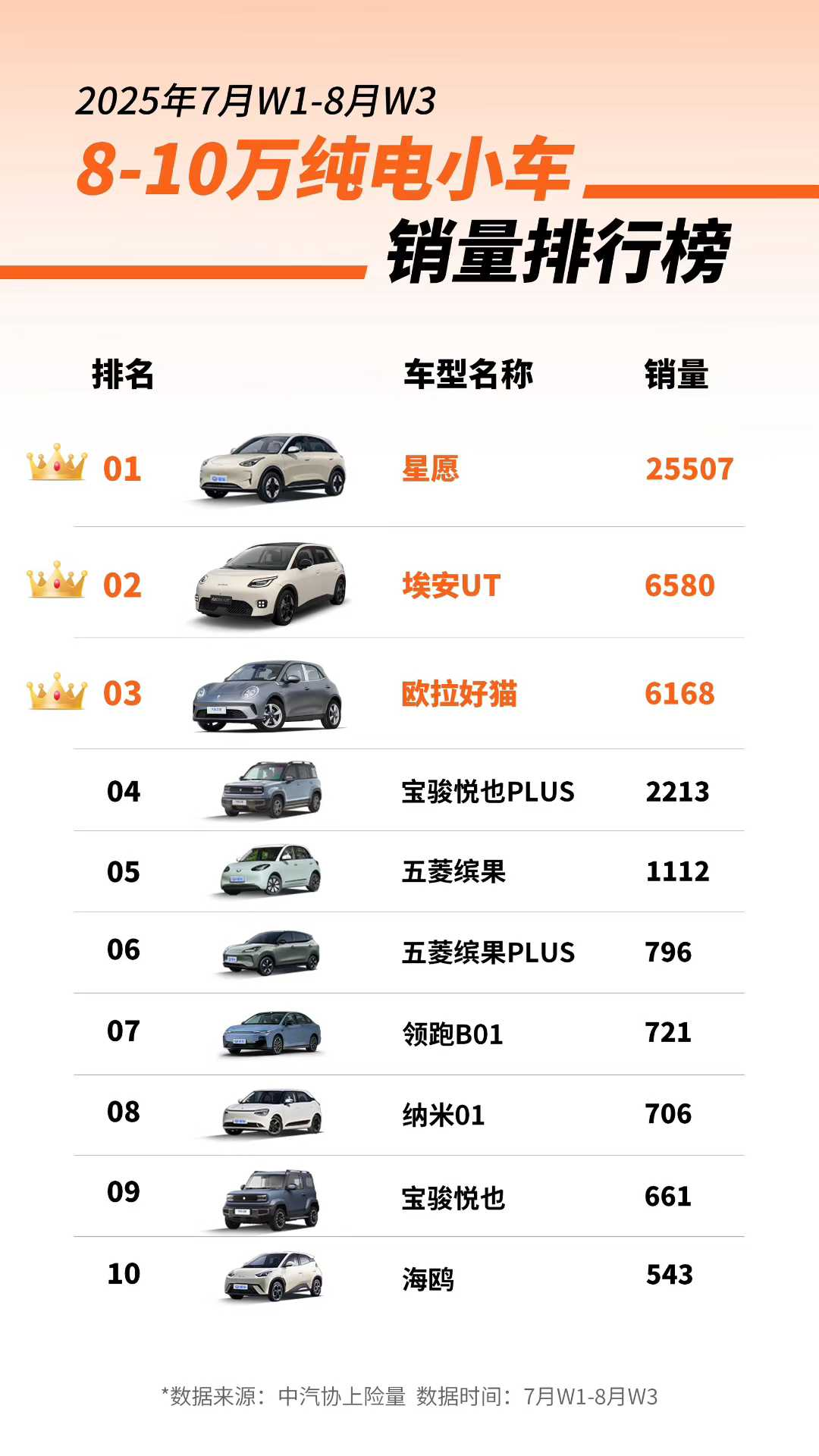
Core Insights - The market for small electric vehicles priced between 80,000 to 100,000 yuan is experiencing a significant decline in demand, with models like Geely Xingyuan and Ora Good Cat showing particularly low insurance registration numbers [1][7][34] - This price segment is becoming increasingly competitive, with a price war initiated by high-end brands like Audi, which is affecting lower-priced segments as well [9][10][11] - The traditional importance of the 80,000 to 100,000 yuan price range is diminishing as consumer preferences shift towards higher quality vehicles, leading to a saturation of the market [20][21][22] Market Dynamics - The small electric vehicle segment is facing pressure from both above and below, with higher-end brands lowering prices and micro electric vehicles gaining popularity due to their affordability [27][22] - The introduction of competitive models in the 10,000 to 20,000 yuan range is further complicating the landscape for vehicles priced at 80,000 to 100,000 yuan [13][14] - The overall market for electric vehicles is becoming crowded, leading to reduced profit margins and increased competition among manufacturers [28][29] Strategic Responses - Companies are exploring options to enhance vehicle configurations and extend their market reach to maintain sales in the face of declining demand [30][32] - Expanding into emerging markets where consumer purchasing power is increasing may provide a viable solution for manufacturers struggling in the saturated domestic market [32][33] - The need for internal restructuring and product line adjustments is becoming critical as manufacturers navigate the challenges of a shrinking market segment [29][35]