京滨城际铁路

Search documents
首迎春运大考 北京通州站身影忙碌
Xin Lang Cai Jing· 2026-02-27 22:33
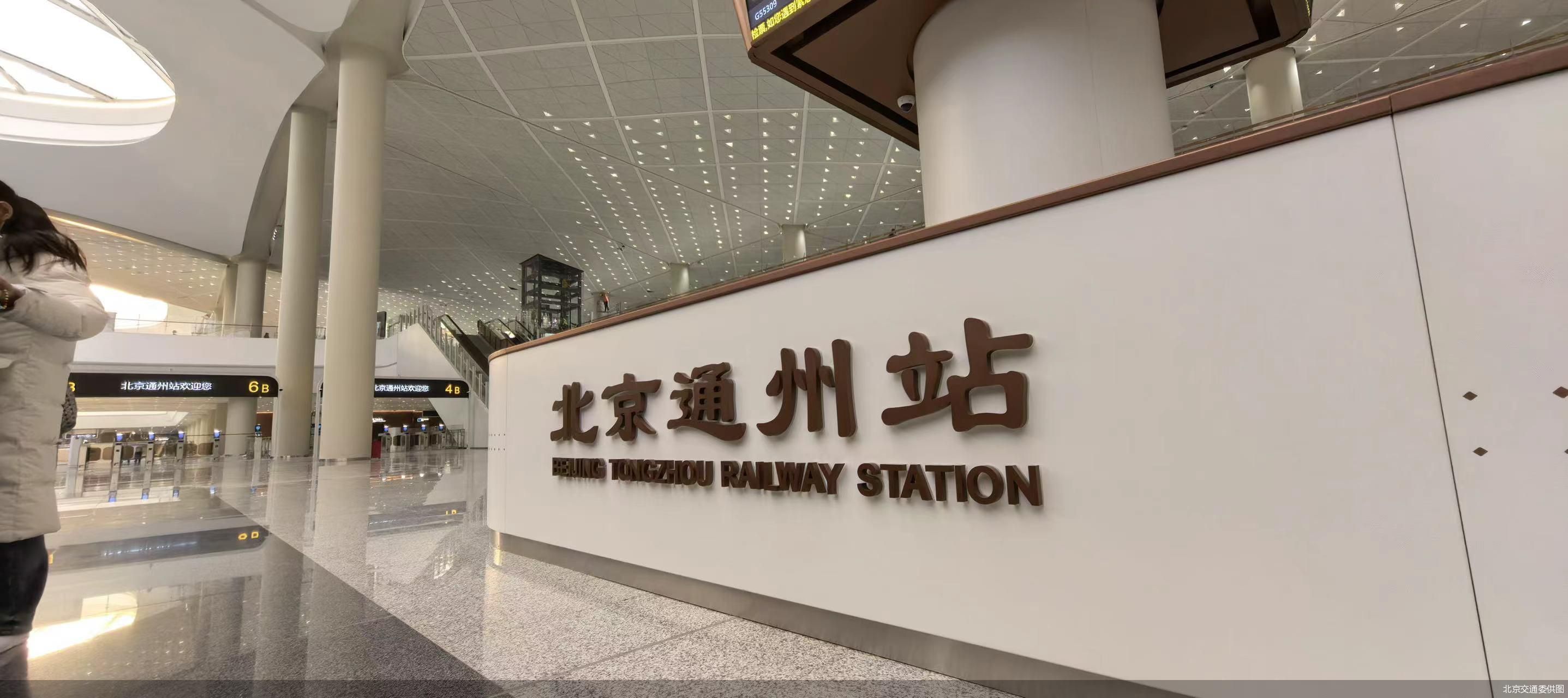
Core Viewpoint - The Beijing Tongzhou Station is undergoing its first major test during the Spring Festival travel rush, with a focus on managing passenger flow efficiently and ensuring a smooth travel experience for commuters [1][4]. Group 1: Passenger Flow Management - The station has implemented strategies to manage peak passenger flow, such as opening a rapid entrance when expected inflow exceeds 3,000 passengers [5]. - Staff members, including duty officer Shao Chenfei, guide passengers to the most efficient exits based on their familiarity with the station layout [5][6]. - The station experiences concentrated passenger flow during morning and evening peak hours, particularly with travelers heading to Tangshan and Qinhuangdao [4][10]. Group 2: Infrastructure and Operations - The Beijing Tongzhou Station, which opened on December 30, 2025, connects two intercity railways, enhancing travel convenience for residents in the Beijing-Tianjin-Hebei region [4][6]. - The communication system at the station is crucial for operational efficiency, ensuring that all commands and data are transmitted accurately [7][9]. - The station's underground location presents unique challenges, such as maintaining a clean electromagnetic environment to avoid communication interference [8][9]. Group 3: Staff Contributions and Innovations - Staff members, including train driver Li Yongqiang, have undergone extensive training and testing to ensure smooth operations, particularly in challenging conditions like steep descents [13][14]. - Innovations in operational procedures, such as the "three looks, two controls, and one confirmation" method developed by Li Yongqiang, have improved the accuracy of train stopping at the station [14][15]. - The dedication of staff members, who often work through the holiday period, reflects their commitment to passenger safety and service quality [9][10].

北京通州站明日开通运营
Xin Lang Cai Jing· 2025-12-29 11:01
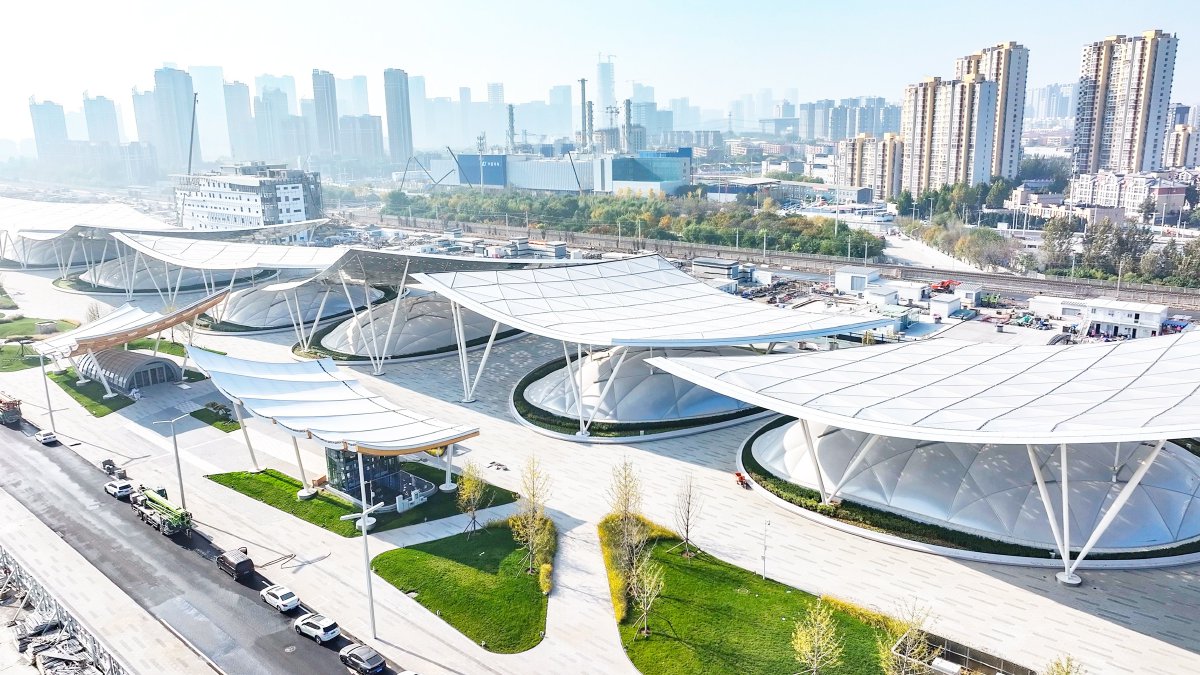
Core Viewpoint - Beijing Tongzhou Station is set to commence operations on December 30, facilitating the start and end of operations for the Beijing-Tangshan and Beijing-Binhai intercity railway trains [1] Group 1: Station Features - Beijing Tongzhou Station is located within the Beijing urban sub-center comprehensive transportation hub, featuring 7 arrival and departure tracks and 7 passenger platforms [1] - The station consists of three underground levels: the entrance hall, waiting area, and platform level, with the entrance hall serving as a comprehensive service center and ticketing area [1] Group 2: Operational Details - Initially, the station will handle the start and end operations for intercity trains on the Beijing-Tangshan and Beijing-Binhai railways [1] - Travel times from Beijing Tongzhou Station to Tangshan, Baodi, Beichen, and Qinhuangdao are approximately 55 minutes, 26 minutes, 56 minutes, and 90 minutes, respectively [1] Group 3: Regional Impact - The introduction of Beijing Tongzhou Station will create a parallel structure with the newly built stations of Zhongcang and Tongzhou West, enhancing the commuting efficiency within the Beijing-Tianjin-Hebei region [1] - This development is expected to support the formation of a one-hour commuting urban circle in the Beijing-Tianjin-Hebei area, accelerating the growth of "railway-based Beijing-Tianjin-Hebei" [1]
最快90分钟到秦皇岛站 北京通州站将于12月30日正式开通
Bei Jing Shang Bao· 2025-12-26 03:13
Core Points - Beijing Tongzhou Station will officially open on December 30, providing diverse and convenient travel options for routes to Tianjin, Tangshan, Qinhuangdao, Xianghe, Dachang, and Yanjiao, significantly contributing to the "Railway on the Beijing-Tianjin-Hebei" initiative and promoting high-quality economic and social development [2] Group 1: Transportation Infrastructure - The initial operation of Beijing Tongzhou Station will include the full opening of the Jing-Tang Intercity Railway and the Jing-Bin Intercity Railway, with plans to operate 12 pairs of trains, reducing travel times to Tangshan, Baodi, Beichen, and Qinhuangdao to 55 minutes, 26 minutes, 56 minutes, and 90 minutes respectively [3] - The station will facilitate a transfer to Metro Line 6 (Beiyunhe East Station) with a transfer distance of approximately 600 meters, and adjustments to 8 bus routes, including 2 new customized bus lines [4] Group 2: Future Developments - The Tongzhou Station is the first core facility to be operational within the larger vice-center hub, which will be gradually opened in phases, aligning with the Beijing Urban Master Plan (2016-2035) and promoting coordinated development in the Beijing-Tianjin-Hebei region [5] - The hub will feature an innovative underground design that integrates railway stations and transit systems, freeing up valuable surface space for urban development, with the first phase including various facilities such as underground layers and parking areas [5]
京滨城际铁路天津机场站全面开工
Bei Jing Ri Bao Ke Hu Duan· 2025-11-25 07:29
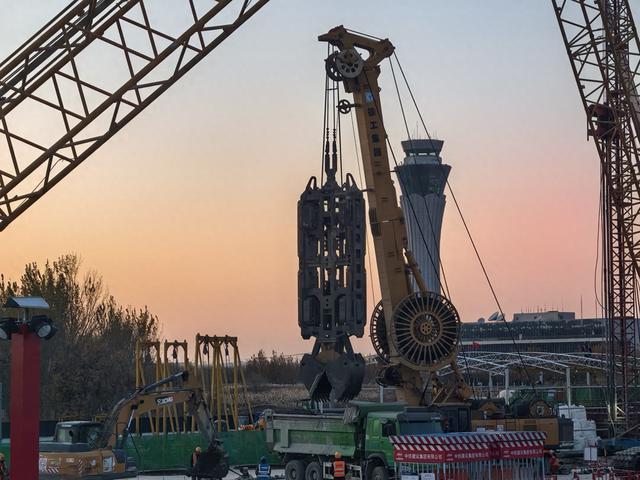
Group 1 - The construction of the Tianjin Airport Station of the Jingbin Intercity Railway has officially commenced with the completion of the first rebar cage installation for the underground continuous wall [1][3] - The Jingbin Intercity Railway is a crucial part of the "Railway on the Beijing-Tianjin-Hebei" initiative, with the first phase operational since December 2022, connecting Baodi to Beichen [2] - The second phase of the project, which includes the section from Beichen to Binhai New Area, is being accelerated by the Jingjinji Intercity Railway Investment Co., Ltd [2] Group 2 - The Tianjin Airport Station is strategically located east of the T2 terminal of Tianjin Airport and features a three-level underground structure [2] - The project is being jointly constructed by China Railway Construction Group and China Railway Engineering Group [2] - Once fully operational, the Jingbin Intercity Railway will create a large integrated transportation hub at Tianjin Binhai Airport, enhancing the regional transportation network and facilitating economic integration in the Beijing-Tianjin-Hebei area [5]
京滨城际铁路有新进展!
Bei Jing Ri Bao Ke Hu Duan· 2025-09-03 04:47
Core Viewpoint - The successful completion of the shield tunneling for the Tianjin Airport section of the Jingbin Intercity Railway marks a significant milestone in the development of a comprehensive transportation hub integrating rail, air, and metro services in the Tianjin Binhai International Airport area [1] Group 1: Project Overview - The Jingbin Intercity Railway is a crucial part of the "Railway on the Beijing-Tianjin-Hebei" initiative, with the first phase from Baodi to Beichen already operational since December 2022 [1] - The second phase, extending from Beichen to Binhai New Area, is currently under accelerated construction, featuring Tianjin Airport Station and Binhai West Station [1] Group 2: Transportation Integration - Once fully operational, the Jingbin Intercity Railway will create a large-scale integrated transportation hub at Tianjin Binhai International Airport, allowing seamless transfers between air and rail travel [1] - The railway will connect with other lines, such as the Jing-Tang Railway, enhancing the regional transportation network and supporting economic integration in the Beijing-Tianjin-Hebei area [1]
城市副中心站未来直通天津机场站
Bei Jing Wan Bao· 2025-08-29 10:17
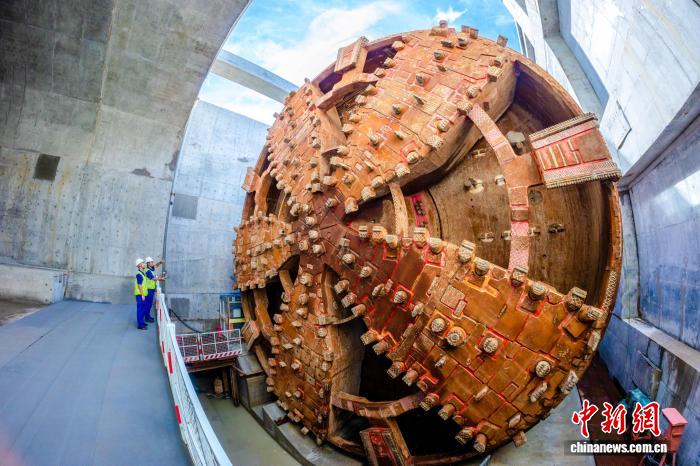
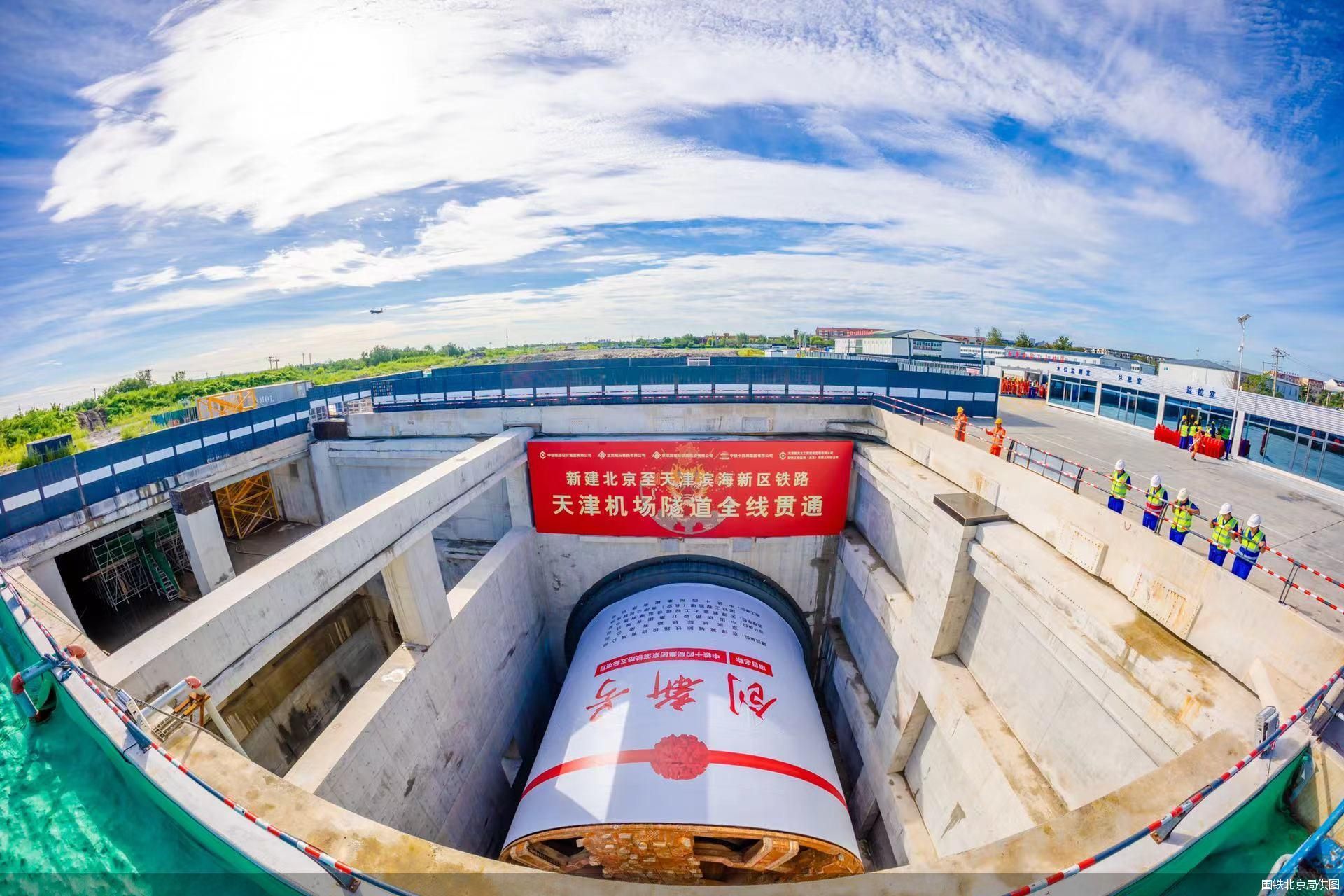
Core Points - The successful breakthrough of the "Jingbin Innovation" shield machine marks the completion of the shield tunneling for the Tianjin Airport section of the Jingbin Intercity Railway, indicating that all shield tunnels have been safely completed [1] - The Jingbin Intercity Railway is a crucial part of the "Railway on the Beijing-Tianjin-Hebei" initiative, with the first phase from Baodi to Beichen already operational since December 2022 [1] - The second phase of the project, connecting Beichen to the Binhai New Area, is currently under accelerated construction, featuring two stations: Tianjin Airport Station and Binhai West Station [1] Infrastructure Development - The Tianjin Airport section of the Jingbin Intercity Railway will create a large integrated transportation hub at Tianjin Binhai International Airport, combining rail, air, and metro services [2] - Tianjin Airport Station will be the first high-speed rail station in the region to achieve seamless connectivity between air and rail travel, enhancing travel convenience for passengers [2] - The railway will also connect with other lines such as the Jing-Tang Railway, improving the regional transportation network and supporting economic integration in the Beijing-Tianjin-Hebei area [2]
京滨城际铁路天津机场盾构隧道全部贯通 北京城市副中心直通天津机场工程加速
Bei Jing Shang Bao· 2025-08-28 08:56
Core Viewpoint - The successful completion of the shield tunneling for the Tianjin Airport section of the Jingbin Intercity Railway marks a significant milestone in the integration of transportation in the Beijing-Tianjin-Hebei region, enhancing connectivity and supporting regional economic development [2] Group 1: Project Overview - The Jingbin Intercity Railway connects Beijing and the Tianjin Binhai New Area, playing a crucial role in the national strategy for coordinated development in the Beijing-Tianjin-Hebei region [2] - The first phase of the project, from Baodi to Beichen, opened for operation in December 2022, with the railway sharing stations with the Beijing-Tangshan Intercity Railway [2] - The second phase, from Beichen to Binhai New Area, is currently under accelerated construction, featuring Tianjin Airport Station and Binhai West Station [2] Group 2: Transportation Integration - Once fully operational, the Jingbin Intercity Railway will create a large comprehensive transportation hub at Tianjin Binhai International Airport, integrating rail, air, and metro services [2] - Tianjin Airport Station will be the first high-speed railway station in the Tianjin area to achieve seamless connection and convenient transfer between air and rail travel [2] - The railway will also connect with other lines, such as the Beijing-Tangshan Railway, further improving the regional transportation network [2]
城市副中心铁路将直通天津机场
Bei Jing Ri Bao Ke Hu Duan· 2025-08-28 08:16
Core Viewpoint - The successful completion of the shield tunneling for the Tianjin Airport section of the Jingbin Intercity Railway marks a significant milestone in enhancing connectivity between Beijing, Tianjin, and surrounding regions, facilitating direct rail access to Tianjin Airport from the Beijing urban sub-center [1] Group 1: Project Overview - The Jingbin Intercity Railway is a crucial component of the "Railway on the Beijing-Tianjin-Hebei" initiative [1] - The first phase of the project, from Baodi to Beichen, and the associated stations, have been operational since December 2022 [1] - The second phase, extending from Beichen to Binhai New Area, is currently under accelerated construction, featuring Tianjin Airport Station and Binhai West Station [1] Group 2: Future Implications - The completion of the shield tunneling indicates that the urban sub-center station will have direct rail access to Tianjin Airport Station in the future [1]
京滨城际铁路有新进展!北京城市副中心未来直通天津机场
Bei Jing Ri Bao Ke Hu Duan· 2025-08-28 07:32
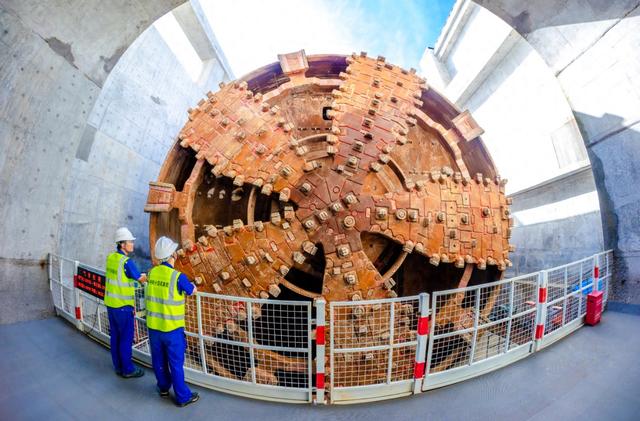
Core Points - The successful breakthrough of the "Jingbin Innovation" shield machine marks the completion of the shield tunneling for the Tianjin Airport section of the Jingbin Intercity Railway, indicating that all shield tunnels have been safely completed [1][3]. Group 1 - The Jingbin Intercity Railway is a crucial part of the "Railway on the Beijing-Tianjin-Hebei" initiative, with the first phase from Baodi to Beichen already operational since December 2022 [3]. - The second phase, which connects Beichen to the Binhai New Area, is currently under accelerated construction and will include Tianjin Airport Station and Binhai West Station [3]. - Once fully operational, the railway will create a large integrated transportation hub at Tianjin Binhai International Airport, facilitating seamless transfers between air and rail travel [5]. Group 2 - The Tianjin Airport Station will be the first high-speed rail station in the Tianjin area to achieve seamless connectivity between aviation and rail services, enhancing travel convenience for passengers [5]. - The railway will also connect with other lines such as the Jing-Tang Railway, improving the overall network structure in the Beijing-Tianjin-Hebei region and supporting regional economic integration [5].
京滨城际铁路天津机场盾构隧道安全贯通
Zhong Guo Xin Wen Wang· 2025-08-28 06:50
Core Points - The successful completion of the shield tunnel for the Beijing-Tianjin intercity railway at Tianjin Airport marks a significant milestone in the project [1][3] - The tunnel, measuring 8,663 meters in length, is a key control project designed for dual tracks, with a shield section of 7,510 meters [1] - The project utilizes two large-diameter shield machines, "Jingbin Xie Tong Hao" and "Jingbin Chuang Xin Hao," which are the largest of their kind in Tianjin [1] Summary by Sections Project Overview - The shield tunnel for the Beijing-Tianjin intercity railway at Tianjin Airport has been successfully completed, indicating the full safety completion of the tunnel [1][3] - The project is led by the Beijing-Tianjin-Hebei Intercity Railway Investment Co., Ltd. and constructed by China Railway 14th Bureau [1] Technical Details - The Tianjin Airport shield tunnel is 8,663 meters long, designed as a single tunnel with dual tracks [1] - The shield section spans 7,510 meters and is divided into two construction segments [1] - The first segment, 2,628 meters long, was completed by "Jingbin Xie Tong Hao," while the second segment, 4,882 meters long, was completed by "Jingbin Chuang Xin Hao" over a period of 15 months starting from June 2024 [1] Future Implications - Once fully operational, the Beijing-Tianjin intercity railway will create a large integrated transportation hub at Tianjin Binhai International Airport, connecting rail, air, and metro services [3] - The Tianjin Airport station will be the first in the region to provide seamless connections between air and rail travel, enhancing travel convenience for passengers [3] - The railway will also connect with other lines, such as the Jing-Tang railway, further improving the transportation network in the Beijing-Tianjin-Hebei region and supporting regional economic integration [3]