人工智能量化交易

Search documents
AI+金融如何落地?深圳香蜜湖金融年会详解融合路径与治理挑战
2 1 Shi Ji Jing Ji Bao Dao· 2025-12-23 13:24
Group 1: Financial Conference Insights - The second "Shenzhen Xiangmi Lake Financial Annual Conference" was successfully held, focusing on promoting a virtuous cycle of technology, industry, and finance in the Guangdong-Hong Kong-Macao Greater Bay Area [1] - Keynote speakers emphasized the need for financial reforms based on rule of law and innovation to support high-quality development, with three main goals: risk prevention, wealth management market construction, and building an international financial center [1] Group 2: Macroeconomic Trends - China's GDP grew by 5.2% year-on-year in the first three quarters of 2025, showing an acceleration of 0.4 percentage points compared to the previous year [2] - Experts discussed the challenges of insufficient domestic demand and overcapacity, while highlighting the need for reforms and technological advancements to drive economic recovery [2] Group 3: Manufacturing and Export Strategies - China's manufacturing sector has achieved significant high-quality development, with industrial added value accounting for 32% globally [3] - Recommendations for optimizing export structures include promoting reasonable appreciation of the RMB and enhancing labor productivity [3] Group 4: Technology-Finance Integration - The integration of artificial intelligence (AI) into the financial sector is transforming service models and enhancing operational efficiency [5][7] - The "Xiangmi Lake Intelligent Finance Development Report (2025)" outlines the current state and challenges of AI in finance, emphasizing the need for a supportive financial ecosystem [6] Group 5: Future of Intelligent Finance - The upcoming "15th Five-Year Plan" is expected to focus on the integration of AI technology with financial industry transformation, presenting new opportunities for intelligent finance [9][10] - Experts suggest that the financial sector must enhance its operational efficiency and adapt to market demands while expanding internationally [10][11]
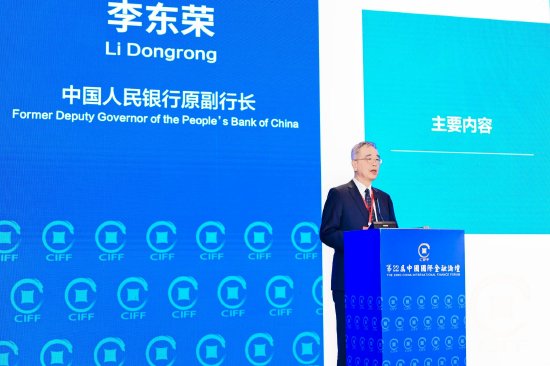
中国人民银行原副行长李东荣:智能金融必将成为数字金融发展的重要方向
Xin Lang Cai Jing· 2025-12-19 02:39
Core Viewpoint - The development of intelligent finance in China is positioned as a crucial direction for digital finance during the 14th Five-Year Plan period, supported by robust policy backing, rapid investment growth, and significant advancements in AI applications within the financial sector [3][6][9]. Group 1: AI Technology and Investment - AI technology in China has a solid foundation for large-scale application, driven by increasing policy support and rapid growth in related investments, with AI investment projected to reach $252.3 billion in 2024, a 25.5% increase from 2023 [6][21]. - The number of AI enterprises in China has surpassed 5,300, accounting for 15% of the global total, indicating a comprehensive industrial system covering foundational infrastructure, model frameworks, and industry applications [6][22]. - The cost and barriers to AI technology and applications are continuously decreasing, facilitating broader adoption across various sectors [6][21]. Group 2: Progress in Financial Sector AI Applications - The financial industry has been a strong advocate for information technology and intelligent applications, with a history of evolving through technological advancements [7][22]. - Policies from the People's Bank of China have consistently supported the gradual application of AI in finance, with significant investments from major state-owned banks reaching approximately 125.5 billion yuan in 2024, marking a 2.15% increase from 2023 [7][22]. - AI applications in finance are transforming traditional business models and service methods, enhancing customer experience and operational efficiency through intelligent customer service, investment advisory, and risk management [7][22]. Group 3: Considerations for Intelligent Finance Development - Emphasis on information security in intelligent finance applications is critical, as the rapid development of financial technology introduces new risks alongside efficiency gains [10][24]. - Accelerating the construction of an intelligent finance ecosystem is essential, focusing on better serving public needs through collaboration and breaking down data silos [11][25]. - Regulatory frameworks must adapt to the evolving landscape of intelligent finance, ensuring that standards support high-quality development while addressing challenges such as algorithm transparency and fairness [12][26].