人民币“点心债”

Search documents
西方硬炒 “货币战争”,人民币却被多国疯抢,谎话掩盖不了事实
Sou Hu Cai Jing· 2025-12-03 23:16
Group 1 - The issuance of the first RMB-denominated sovereign bonds in Moscow by Russia is seen as a significant event in the internationalization of the RMB, reflecting a broader trend of countries adopting the currency for settlement, reserves, and financing [1][2] - Over 80 countries and regions have included RMB in their foreign exchange reserves, totaling $247 billion, with its share rising to 2.18%, an increase of 1.1 percentage points since its inclusion in the SDR in 2016 [2] - Countries like Kazakhstan, Kenya, Slovenia, and Pakistan are increasingly issuing RMB-denominated bonds or converting debts to RMB, indicating a recognition of the stability of RMB assets [5][7] Group 2 - The global preference for RMB is a rational response to the imbalances in the current international monetary system, particularly in light of the politicization of the SWIFT system and financial sanctions by the U.S. [9][11] - The stability of RMB assets is highlighted by China's 10-year government bond yield at around 2.8%, which offers a clear advantage over negative-yielding assets in the Eurozone and Japan [13] - The internationalization of RMB is driven by market forces, with the IMF indicating that this trend will continue as China's role in the global economy and trade strengthens [15] Group 3 - China maintains a calm and steady approach to RMB internationalization, emphasizing market-driven principles and avoiding the pursuit of currency hegemony [16][17] - The Chinese government is actively enhancing the convenience of cross-border RMB usage through financial opening and institutional improvements, including the issuance of RMB bonds in Hong Kong [19] - The central bank plans to continue developing policies for cross-border RMB use and increasing risk hedging tools to support various market participants in conducting trade financing and overseas loans in RMB [19]


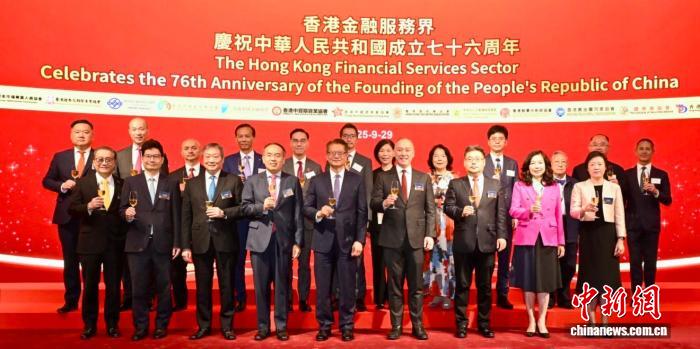
香港财政司司长:香港股市、债市、资产及财富管理“三市齐旺”
Zhong Guo Xin Wen Wang· 2025-09-30 03:43
Core Insights - Hong Kong's financial markets, including the stock market, bond market, and asset and wealth management, are experiencing robust growth, with the Hang Seng Index showing exceptional performance this year [1][3] Stock Market - The Hang Seng Index has risen over 30% this year, following an 18% increase last year [3] - The Hang Seng Technology Index has increased by over 40%, while the biotechnology index has more than doubled [3] - Average daily trading volume in Hong Kong stocks for the first eight months was approximately HKD 250 billion, a 1.3 times increase compared to the same period last year [3] - The total amount raised through initial public offerings (IPOs) has exceeded HKD 150 billion, marking a nearly sixfold increase year-on-year [3] - The total market capitalization of Hong Kong stocks has surpassed HKD 48 trillion, significantly outperforming many other major global markets [3] Bond Market - The bond market is also showing strong growth, with the issuance of RMB "dim sum bonds" and green bonds experiencing steady increases [3] - In the first half of this year, the issuance of green bonds in Hong Kong is expected to exceed USD 34 billion, representing a 15% year-on-year increase [3] Asset and Wealth Management - The asset and wealth management sector recorded significant growth last year, with net inflows reaching HKD 705 billion, an increase of over 80% year-on-year [3]