人民币主权债

Search documents
美承认中美实力持平后,央行狂囤黄金,俄也主动发行人民币主权债
Sou Hu Cai Jing· 2025-12-08 16:11
Group 1 - The U.S. has publicly acknowledged that its strength is now on par with China's, marking a significant shift in strategic perception and prompting global financial market reactions [2][4][8] - The International Monetary Fund's report for 2024 indicates that China's economy, measured by purchasing power parity, has maintained its position as the largest in the world for several consecutive years [4] - In key indicators such as manufacturing output and total goods trade, China continues to lead, while the U.S. is losing its traditional economic advantages [6] Group 2 - Following the U.S. statement, global central banks have accelerated their gold purchases, with the World Gold Council reporting a net purchase of 337 tons in Q3 2024, a 28% increase from the same period in 2023 [10][12] - China's central bank has notably increased its gold reserves by over 200 tons from November 2023 to September 2024, reaching a total of 2,367 tons [10] - Other emerging markets, including India and Brazil, are also increasing their gold reserves significantly, with India's total reaching 895 tons by Q3 2024 [12] Group 3 - Russia has initiated the issuance of its first sovereign bonds denominated in RMB, with a total issuance planned for December 2025, marking a strategic financial move in the context of U.S.-China power balance [17][20] - The share of RMB in bilateral trade between Russia and China has surpassed 45% in the first half of 2024, providing a solid foundation for the issuance of RMB-denominated bonds [20][22] - The issuance has attracted significant interest, with over 300 billion yuan in subscriptions for 15 billion yuan of bonds, indicating a growing demand for RMB assets [22][25] Group 4 - The interplay of the U.S. acknowledgment of power parity, the gold accumulation by central banks, and Russia's issuance of RMB bonds is driving a shift towards a more diversified international financial order [27][29] - The dominance of the U.S. dollar is weakening, as countries diversify their reserve assets and the internationalization of the RMB progresses [27][29] - Gold is regaining its core reserve status, with predictions of over 1,000 tons of net gold purchases by central banks in 2025, highlighting its importance for financial security [29][31]

金融珍珠港?俄打响第一枪,首发人民币主权债,RMB要回归6时代?
Sou Hu Cai Jing· 2025-12-07 02:43
Group 1 - The core point of the article highlights Russia's issuance of its first sovereign bond in RMB, signaling a move towards de-dollarization amid Western sanctions and a growing reliance on the Chinese currency [1][7][10] - The bond has a maturity of 3.2 years with an interest rate between 6.25% and 6.5%, and a 7.5-year option with a maximum rate of 7.5%, aiming to raise approximately 12.3 billion USD [7][9] - The issuance is a response to the blockade of dollar and euro channels due to sanctions, with Russia's trade with China reaching 183.2 billion USD in the first ten months of the year, predominantly settled in RMB [7][9] Group 2 - The article discusses the implications of the Federal Reserve's independence under Jerome Powell, who has resisted political pressure from former President Trump, leading to market volatility and rising gold prices [3][5] - Trump's team is reportedly planning to replace Powell with a more compliant candidate, which could further undermine the credibility of the dollar [5][10] - The article notes that the issuance of RMB-denominated bonds by Russia could serve as a precedent for other countries, potentially accelerating the trend of de-dollarization globally [9][10] Group 3 - The article mentions that the share of RMB in global trade financing has increased to 8.5%, second only to the USD, indicating a shift in the global financial landscape [9][10] - The issuance of the bond is expected to strengthen financial ties between China and Russia, reflecting a broader shift in global economic power dynamics [10][13] - The article concludes that if the RMB can establish itself as a credible alternative to the dollar, it may lead to a significant change in the international monetary system [10][13]

西方硬炒 “货币战争”,人民币却被多国疯抢,谎话掩盖不了事实
Sou Hu Cai Jing· 2025-12-03 23:16
Group 1 - The issuance of the first RMB-denominated sovereign bonds in Moscow by Russia is seen as a significant event in the internationalization of the RMB, reflecting a broader trend of countries adopting the currency for settlement, reserves, and financing [1][2] - Over 80 countries and regions have included RMB in their foreign exchange reserves, totaling $247 billion, with its share rising to 2.18%, an increase of 1.1 percentage points since its inclusion in the SDR in 2016 [2] - Countries like Kazakhstan, Kenya, Slovenia, and Pakistan are increasingly issuing RMB-denominated bonds or converting debts to RMB, indicating a recognition of the stability of RMB assets [5][7] Group 2 - The global preference for RMB is a rational response to the imbalances in the current international monetary system, particularly in light of the politicization of the SWIFT system and financial sanctions by the U.S. [9][11] - The stability of RMB assets is highlighted by China's 10-year government bond yield at around 2.8%, which offers a clear advantage over negative-yielding assets in the Eurozone and Japan [13] - The internationalization of RMB is driven by market forces, with the IMF indicating that this trend will continue as China's role in the global economy and trade strengthens [15] Group 3 - China maintains a calm and steady approach to RMB internationalization, emphasizing market-driven principles and avoiding the pursuit of currency hegemony [16][17] - The Chinese government is actively enhancing the convenience of cross-border RMB usage through financial opening and institutional improvements, including the issuance of RMB bonds in Hong Kong [19] - The central bank plans to continue developing policies for cross-border RMB use and increasing risk hedging tools to support various market participants in conducting trade financing and overseas loans in RMB [19]

债市早报:资金面稳中偏松,债市偏强震荡
Sou Hu Cai Jing· 2025-12-02 04:19
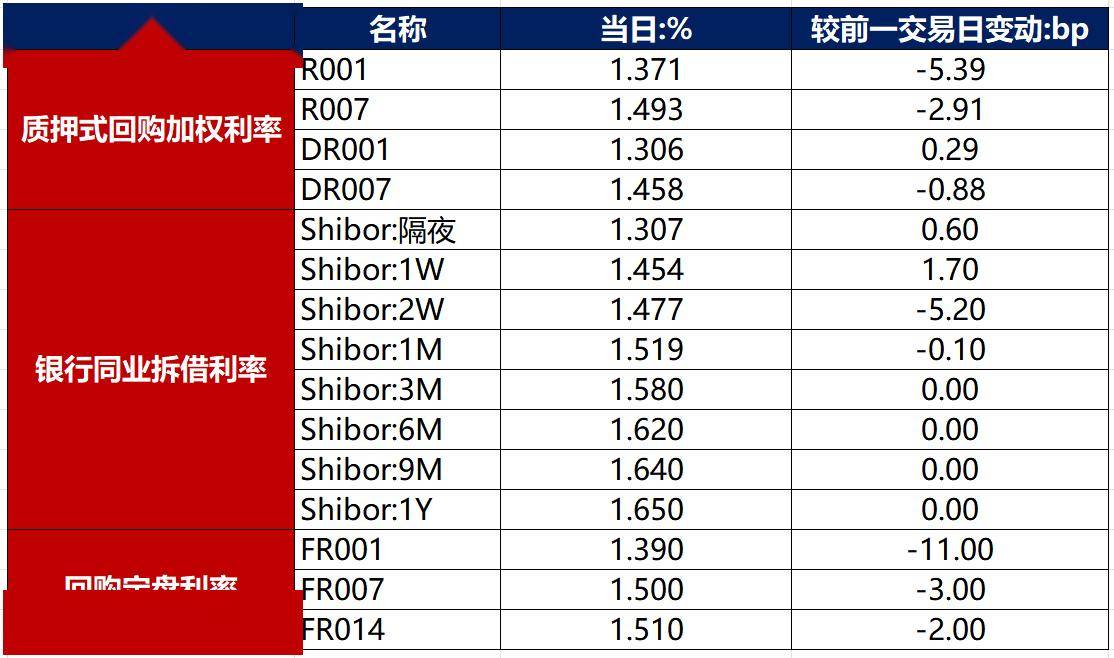
Group 1: Domestic News - The National Development and Reform Commission has expanded the scope of infrastructure REITs, including commercial office facilities and urban renewal facilities as independent asset categories [2] - The Ministry of Finance and the Ministry of Science and Technology issued guidelines to prevent illegal funding practices and ensure timely debt settlement [2] Group 2: International News - Russia will issue its first sovereign bonds denominated in RMB, starting on December 2, with a target coupon rate of 6.25%-6.5% for the 3.2-year portion and up to 7.5% for the 7.5-year portion [3] - The US ISM Manufacturing PMI for November fell to 48.2, indicating continued contraction in the manufacturing sector, with new orders and employment indices also declining [4] - The Bank of Japan's Governor hinted at a potential interest rate hike in December, leading to declines in both Japanese stocks and bonds [5] Group 3: Commodity Market - International crude oil prices increased, with WTI rising by 1.31% to $59.32 per barrel and Brent up by 1.26% to $63.17 per barrel [6] Group 4: Financial Market - On December 1, the central bank conducted a 7-day reverse repurchase operation of 107.6 billion yuan at a rate of 1.40%, resulting in a net withdrawal of 231.1 billion yuan [7] - The funding environment remained stable, with major repo rates showing slight fluctuations [8][9] Group 5: Bond Market Dynamics - The bond market showed strong fluctuations, with the 10-year government bond yield slightly decreasing to 1.8275% while the 10-year policy bank bond yield increased to 1.9000% [11] - In the secondary market, several corporate bonds experienced significant price deviations, with some bonds from Vanke dropping over 75% [14] Group 6: Credit Bond Events - Vanke's equity stake in Shenzhen Vanke Development was frozen for three years, and the company faced scrutiny over its financial practices [15] - Aoyuan Group announced it failed to pay interest on its bonds, accumulating a total of 6.44 billion yuan in unpaid principal and interest [15] Group 7: Convertible Bonds - The convertible bond market saw mixed performance, with the China Securities Convertible Bond Index and the Shanghai Stock Exchange Convertible Bond Index rising by 0.10% and 0.19% respectively [18] - The total trading volume in the convertible bond market was 55.329 billion yuan, a decrease of 9.851 billion yuan from the previous trading day [18] Group 8: Overseas Bond Market - US Treasury yields rose across all maturities, with the 2-year yield increasing by 7 basis points to 3.54% and the 10-year yield rising by 7 basis points to 4.09% [20] - Major European economies also saw an increase in 10-year government bond yields, with Germany's yield rising by 6 basis points to 2.75% [23]

很好!俄罗斯发行“人民币主权债”,激活沉睡资金,全球第一次
Sou Hu Cai Jing· 2025-11-07 10:58
Core Insights - Russia plans to issue RMB bonds domestically for the first time to activate dormant RMB reserves and supplement government finances [1][5] - This move is significant as it marks a shift from traditional offshore RMB bond issuance to onshore issuance, reflecting Russia's pivot away from Western currencies [5][8] Group 1: RMB Bond Issuance - Other countries issue RMB bonds as "Panda bonds" in mainland China or "Dim Sum bonds" in offshore markets, primarily in Hong Kong [3][5] - Indonesia's recent issuance of RMB Dim Sum bonds indicates a growing acceptance of RMB assets in international markets [5][6] Group 2: Strategic Implications for Russia - Russia's decision to issue RMB bonds domestically is a strategic response to its economic isolation from Western nations post-Ukraine conflict, aiming to utilize the substantial RMB reserves accumulated through trade with China [5][8] - The planned issuance includes up to four bonds totaling 400 billion rubles (approximately 35 billion RMB), with maturities ranging from 3 to 10 years, addressing both short-term liquidity and long-term development needs [6][9] Group 3: Impact on RMB Internationalization - The issuance of RMB bonds in Russia signifies a qualitative leap in the international status of the RMB, transitioning from a trade settlement currency to an investment and reserve currency [8][9] - This initiative may encourage other countries with close trade ties to China to adopt similar practices, contributing to a more diversified and resilient international financial ecosystem [9][11] Group 4: Broader Financial Trends - The diversification of RMB bond issuance models, including Panda bonds, Dim Sum bonds, and now domestic RMB sovereign bonds, reflects a trend towards a more flexible and multi-faceted integration of the RMB into global finance [9][11] - Russia's pioneering move not only provides an outlet for dormant funds but also offers a new strategy for other nations to mitigate single currency risks in a multipolar economic landscape [11]