
人民币现金支付

Search documents
经济日报:充分尊重公众支付选择权
Xin Lang Cai Jing· 2026-02-12 23:43
Core Viewpoint - The implementation of the "Regulations on Cash Payment and Services" aims to address the increasing incidents of cash refusal, reinforcing the authority of the legal currency, the Renminbi, in China [1][2]. Group 1: Regulations and Legal Framework - The People's Bank of China, along with the National Development and Reform Commission and the Financial Regulatory Bureau, has established clear standards for cash usage in circulation, emphasizing that cash cannot be refused except in specific legal circumstances [1]. - The law states that the Renminbi is the legal currency of the People's Republic of China, and all debts, public and private, must be paid in Renminbi, prohibiting any refusal of cash payments [1]. Group 2: Current Payment Trends - The popularity of mobile payment in China has reached 86%, leading to a decline in the number of cash users, transaction frequency, and cash transaction amounts [1]. - Issues related to cash payments, such as carrying change, counting amounts, verifying authenticity, and storage, are decreasing as digital payment methods become more prevalent [1]. Group 3: Implications of Cash Refusal - The refusal to accept cash is seen as a form of discrimination in the digital age, undermining market fairness and exacerbating the digital divide [2]. - The new regulations are intended to uphold the legal status of the Renminbi and eliminate barriers to cash payments, promoting a more inclusive payment system [2]. - The regulations do not negate non-cash payments but rather ensure that cash and non-cash payment methods can coexist and complement each other, enhancing the overall financial service coverage [2].
中国人民银行通告全国:2月1日起,人民币现金收付新规正式施行
Sou Hu Cai Jing· 2026-02-12 13:13
Core Viewpoint - The new regulation on cash payment, effective from February 1, 2026, aims to address the increasing incidents of cash refusal and establish clear standards for cash usage in circulation, particularly benefiting marginalized groups such as the elderly who rely heavily on cash [1][4][17]. Group 1: Regulation Details - The "Regulations on Cash Payment and Services" will create a comprehensive protection system for cash payments, mandating that face-to-face services and manual payment methods must accept cash [6][17]. - Unattended service locations must clearly display cash conversion methods and contact information, prohibiting additional fees for cash transactions [6][8]. - All transactions completed online must publicly disclose payment methods in advance, respecting the public's right to know and choose [8]. Group 2: Impact on Vulnerable Groups - Over 75% of elderly individuals frequently use cash, with the figure rising to 80.4% among those in rural areas, highlighting the importance of cash for these demographics [1][4]. - The regulation emphasizes the need for financial institutions to facilitate cash transactions for elderly and disabled individuals, ensuring their needs and habits are considered in service layouts [11][13]. Group 3: Market Dynamics - The refusal of cash payments by some merchants is seen as a form of "exclusionary discrimination," undermining market fairness and exacerbating the digital divide [4][18]. - The new regulation aims to curb improper business practices that may arise from merchants' compliance with payment platforms, promoting healthy competition in the payment market [18][20]. Group 4: Societal Significance - The regulation reinforces the legal status of the Renminbi and ensures that cash remains a fundamental payment method, especially in extreme situations such as power outages or network failures [17][20]. - The surge in cash demand during the pre-Spring Festival period illustrates that cash serves not only as a payment tool but also carries emotional and social significance [15][20].

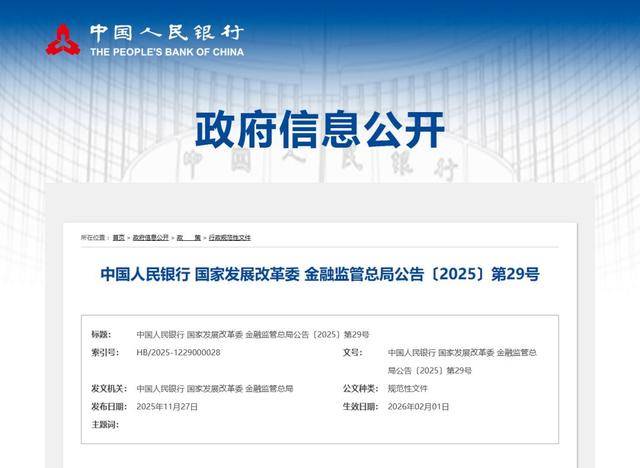
人民币新规落地,已正式施行!
Xin Lang Cai Jing· 2026-02-02 09:30
Core Viewpoint - The People's Bank of China, along with the National Development and Reform Commission and the Financial Regulatory Administration, has implemented the "Regulations on Cash Payment and Services" to address the increasing refusal to accept cash, thereby safeguarding the authority of legal tender and ensuring a clear standard for cash usage in circulation [1][7]. Group 1: Background and Context - The rapid adoption of mobile payments has greatly facilitated daily life, but instances of businesses refusing cash payments have become common, undermining consumer choice, particularly affecting groups heavily reliant on cash, such as the elderly and rural residents [2][8]. - A survey indicated that over 75% of elderly individuals frequently use cash, with this figure rising to 80.4% among elderly residents in rural areas, highlighting the importance of cash as a fundamental payment tool [2][8]. Group 2: Significance of the Regulations - The new regulations aim to uphold the authority of the renminbi as legal tender, reinforcing its role in supporting the real economy and maintaining financial stability, especially in extreme situations like network failures [3][9]. - The regulations promote inclusive finance by addressing the payment needs of vulnerable groups, ensuring that financial services reach everyone and embodying the principle of not leaving anyone behind [3][9]. - By clarifying obligations for all parties involved, the regulations seek to prevent unfair business practices and potential monopolistic risks in the payment sector, fostering a healthy payment market [3][9]. Group 3: Implementation and Enforcement - Regulatory bodies are tasked with strengthening enforcement and accountability, ensuring that consumers can easily report cash refusal incidents and that violators face strict penalties, including fines for both the business and responsible individuals [4][10]. - Businesses must comply with the regulations by respecting consumer payment choices, actively supporting cash payments, and clearly communicating cash acceptance policies in various service scenarios [5][11]. - Financial institutions are required to enhance service delivery, ensuring that cash transactions are accessible and that emergency mechanisms are in place to meet cash demands during unexpected situations [5][12]. Group 4: Collaborative Efforts - The successful implementation of the regulations relies on a collaborative effort among regulatory authorities, businesses, financial institutions, and the public, emphasizing the need for a unified approach to create a diverse and secure payment environment [6][12].
让现金支付不再“碰壁”
Jin Rong Shi Bao· 2025-12-22 03:47
Core Viewpoint - The People's Bank of China, along with other regulatory bodies, has established the "Regulations on Cash Payment and Service" to enhance the cash circulation environment amidst the rise of digital payment methods, ensuring that cash remains a viable payment option for all demographics [1][2]. Group 1: Regulations Overview - The regulations aim to clarify the cash service obligations of various charging units, operating entities, and banking institutions, promoting a collaborative effort to maintain a cash-friendly environment [1][2]. - The regulations are based on five fundamental principles: serving the public, problem orientation, comprehensive measures, collaborative governance, and legal accountability [2]. Group 2: Payment Scenarios - The regulations specify that cash payments must be supported in scenarios involving face-to-face services and transactions that can be completed in person, ensuring reasonable cash availability [3]. - For self-service models and areas with unified management, operators must clearly indicate accepted payment methods and cash conversion options [3][4]. Group 3: Banking Sector Requirements - Banking institutions are required to provide cash deposit and withdrawal services, ensuring that their network and self-service machines meet the needs of various customer groups [5]. - In cases of cash payment difficulties, the public is encouraged to negotiate with the service provider and report any refusal or discriminatory practices through appropriate channels [5].