仰韶彩陶坊红9

Search documents
2026年迎新春·促消费河南美食榜发布 | 榜单
Sou Hu Cai Jing· 2026-01-30 13:26
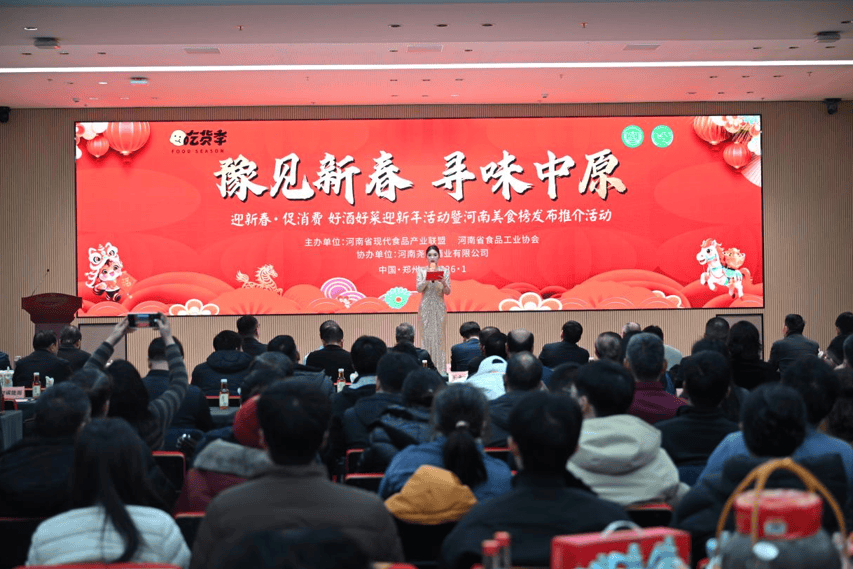
Core Insights - The event on January 30, 2026, aimed to promote consumption of local food and beverages in Henan, featuring a variety of products including traditional dishes and alcoholic beverages [1][3]. Group 1: Event Overview - The event was organized by the Henan Modern Food Industry Alliance and the Henan Food Industry Association, showcasing nearly 50 food companies and their star products [3]. - A dual-mode approach of "online live streaming + offline display" was introduced to enhance product promotion and brand communication [3]. - The event is part of the 2026 "15th Five-Year Plan" and aims to establish a "Henan Food Brand Display Center" to integrate product showcasing, sales connections, e-commerce operations, and cultural promotion [3]. Group 2: Featured Products - A total of 99 products from 45 companies were recognized in the 2026 New Year Consumption Henan Food List, including notable companies like Henan Shuanghui Investment Development Co., Ltd. and Henan Yangshao Liquor Co., Ltd. [4]. - The featured products include a variety of traditional Henan foods such as "Huimian" and "Hula Soup," as well as innovative food items like "Black Gold Spicy Noodles" and "Tea Oil" [6][8]. Group 3: Alcoholic Beverages - The event highlighted various alcoholic beverages categorized into staple and festive wines, featuring brands like Henan Yangshao Liquor Co., Ltd. and Shaodian Laojiu Co., Ltd. [9]. - Specific products included "Yangshao Color Pot Red" and "Du Kang Mellow M3," showcasing the diversity of local liquor offerings [9].


透过双节酒市窥见行业的“三重变革”时代:价格带分化、区域重构与渠
Sou Hu Cai Jing· 2025-10-12 00:42
Core Insights - The dual festival period of National Day and Mid-Autumn Festival in 2025 did not yield the expected sales peak for the liquor industry, with retail and catering sales only growing by 3.3% year-on-year, indicating a significant slowdown compared to the May Day holiday [1][3] - The liquor market is experiencing a structural transformation driven by rational consumption, channel revolution, and brand resilience, highlighting both challenges and opportunities for the industry [3] Market Performance - High-end liquor brands showed stable sales during the dual festival period, benefiting from effective volume control and price maintenance strategies, which helped stabilize core product pricing [3][4] - In contrast, mid-range and lower mid-range liquors faced significant challenges, with many products seeing price drops from the 400 yuan range to 200-300 yuan, and sales volumes declining by over 30% for most brands [4][6] - Low-end liquor performed relatively well, with some star products experiencing over 20% year-on-year sales growth, reflecting a shift towards value-for-money consumption [6][8] Regional Variations - The overall liquor market in Sichuan saw a year-on-year sales decline of approximately 20%, with significant drops in the Chengdu market [9][11] - In Guangdong, liquor sales also fell by 20-30% year-on-year, with a notable reduction in corporate group orders and a shift towards lower-priced products [9][11] - The Anhui market saw an increase in banquet events, but the average spending per table decreased, indicating a shift in consumer behavior [11][12] - The Henan market displayed structural opportunities, with some brands achieving growth through product innovation and cultural marketing [12] - Northern provinces like Shandong and Hebei showed signs of recovery, benefiting from a faster rebound in banquet markets [12] Channel Evolution - The liquor industry is undergoing a digital transformation in its channel ecosystem, with major brands adopting instant retail strategies to enhance consumer access [13][15] - Instant retail channels saw significant growth during the dual festival period, with sales on platforms like Meituan increasing by 8 times year-on-year [13][15] - The rise of instant retail reflects a shift in consumer habits towards immediate satisfaction, with younger consumers (aged 25-35) making up over 45% of buyers on these platforms [15][16] Future Trends - The liquor industry's competition is shifting from traditional brand and channel advantages to a more comprehensive competition based on digital capabilities, including data insights and supply chain efficiency [16] - The future of liquor consumption is expected to be characterized by rational, diverse, and instant purchasing behaviors, necessitating a reevaluation of product positioning and marketing strategies by companies [16]