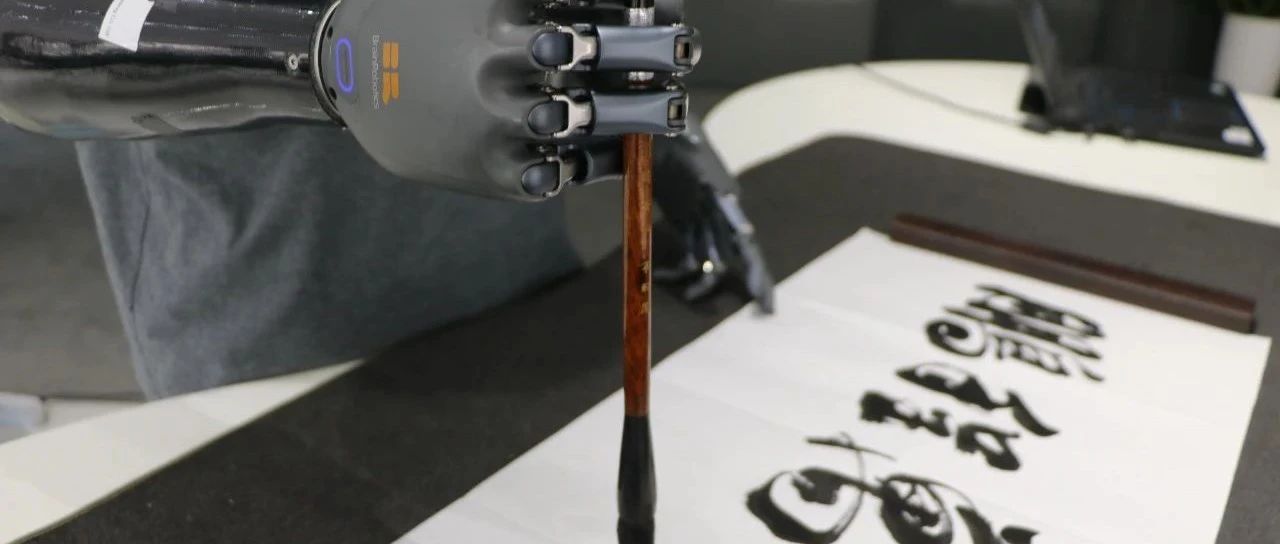
仿生灵巧手Revo 2

Search documents
20亿!强脑科技完成全球第二大单笔融资,锚定机器人的终极交互
机器人大讲堂· 2026-01-08 14:53
Core Viewpoint - The article highlights the advancements in brain-computer interface technology through the example of Qiangnao Technology, which has developed a smart bionic hand that enables users to perform complex tasks, showcasing the potential for human-robot coexistence in the future [1][3]. Group 1: Company Overview - Qiangnao Technology, founded in 2015, is the first unicorn in the brain-computer interface sector in China, focusing on non-invasive brain-computer interface technology for nearly a decade [5]. - The company recently completed a financing round of approximately 2 billion yuan, making it the second-largest in the global brain-computer interface field after Neuralink [3]. Group 2: Product Development - Qiangnao Technology has launched several products, including smart bionic hands and legs, as well as brain-machine intelligent sleep devices, creating a product matrix that spans medical rehabilitation, consumer health, and advanced robotics [8]. - The smart bionic hand has been successfully used in major events such as the Beijing Winter Paralympics and the Hangzhou Asian Para Games, indicating its practical application and recognition [10]. Group 3: Technological Advancements - The company has developed a solid gel electrode that allows for convenient brain signal acquisition without the need for conductive paste, overcoming a significant barrier in non-invasive technology [7]. - Qiangnao's Revo 2 bionic hand, weighing only 383 grams, can exert a grip force of 50N and carry weights of up to 20kg, showcasing its advanced multi-modal tactile sensing capabilities [12]. Group 4: Competitive Advantage - Qiangnao Technology has established a unique technological and commercial moat through large-scale production and cost control, managing to reduce the cost of its smart bionic hand to one-fifth to one-seventh of similar products in Europe and the U.S. [15]. - The company has achieved mass production of 100,000 units of high-precision brain-computer interface products, demonstrating its capability for industrial-scale production [15]. Group 5: Future Vision - With the recent funding, Qiangnao Technology aims to accelerate technological iterations, expand into global markets, and deepen its product offerings in rehabilitation, health, and human-machine interaction [16]. - The company's strategic direction is evolving from addressing rigid medical needs to broader applications in health, targeting to assist 1 million individuals with physical disabilities and 10 million patients with Alzheimer's, autism, and sleep disorders within the next 5 to 10 years [18].


杭州六小龙首次齐聚,今年数贸会怎么玩?
Di Yi Cai Jing· 2025-09-15 04:25
Group 1 - The fourth Global Digital Trade Expo will be held from September 25 to 29 in Hangzhou, featuring over 1,700 exhibitors, marking a record high in scale [1][4] - The exhibition covers five cutting-edge fields: digital ordering trade, digital technology trade, digital service trade, digital product trade, and data trade, with a total exhibition area of 155,000 square meters [1] - The theme of this year's expo is "Seeing the Innovative Future at the Digital Trade Expo" [1] Group 2 - The "Six Little Dragons" of Hangzhou will showcase their technological achievements and innovative applications in a scenario-based manner at the expo [2] - Notable exhibits include the bionic dexterous hand Revo 2, capable of lifting 20 kg while weighing only six eggs, and the humanoid robot G1, which features advanced agility and speed [2] - Other companies like Deepseek, Yunshen, and Qunke Technology will also present new content at the expo [2] Group 3 - The expo will feature significant contributions from local tech giants, including the Zhijiang Laboratory's "Three-body Computing Constellation" and Zhejiang University's record-breaking quadruped robot [3] - The world's first mass-produced consumer-grade AI+AR smart glasses, Rokid G1, will be showcased, weighing only 49 grams [3] - Major players like Alibaba, Huawei, and Turing Institute will present their latest innovations and solutions in the digital trade sector [3] Group 4 - The expo will highlight various industry-specific exhibition areas, showcasing cutting-edge technologies and innovative products [4] - The theme pavilion will feature a digital trade bridge between China and Russia, providing new opportunities for Chinese sellers [4] - Neat and Zoom will introduce an "invisible meeting assistant" to enhance global business communication and collaboration [4] Group 5 - The digital healthcare exhibition area will demonstrate real-world applications driven by digital technology, including AI-based traditional Chinese medicine assessments [5] - The Silk Road e-commerce exhibition area will gather over 50 well-known platforms, including Amazon and Alibaba International Station, from five continents [5]

杭州六小龙集结,2025年全球数贸会将呈现哪些新技术?
Mei Ri Jing Ji Xin Wen· 2025-09-15 03:06
Group 1 - The fourth Global Digital Trade Expo will be held from September 25 to 29, showcasing the "Six Little Dragons" of Hangzhou in the "Smart Future" theme area [1] - Game Science will present a preview of its new game "Black Myth: Zhong Kui" at the expo, while Strong Brain Technology will showcase its bionic dexterous hand "Revo 2" [1] - Yushutech will host a G1 robot competition at the expo, and other companies like Deepseek, Yundongchu, and Qunhuo Technology will also present their latest achievements [1] Group 2 - Zhijiang Laboratory will focus on "sending artificial intelligence into space," creating an interactive experience with a "Three-Body Computing Constellation" and satellite flight videos [1] - Zhejiang University Hangzhou International Innovation Center will introduce the "Black Panther 2," the world's fastest quadruped robot, which holds a speed record of 8.89 meters per second [1] - Lingban Technology will unveil the world's first mass-produced consumer-grade AI + AR smart glasses, "Rokid G1asses" [1] Group 3 - Alibaba, Huawei, and Turing Research Institute will also present their latest achievements, cutting-edge technologies, and innovative solutions in the digital trade sector at the expo [2]
比肩马斯克Neuralink,揭秘“杭州六小龙”中最神秘的一家
华尔街见闻· 2025-04-14 10:01
Core Viewpoint - The article discusses the significant advancements in brain-computer interface (BCI) technology, particularly focusing on the Chinese company BrainCo, which is positioned as a leading player in the non-invasive BCI sector, competing with Elon Musk's Neuralink in the invasive sector. The narrative emphasizes the potential of BCI technology to transform the lives of millions suffering from disabilities and neurological disorders, highlighting the importance of innovation and collaboration in this emerging field [1][2][59]. Group 1: Global Market Context - Recent global market fluctuations have been influenced by Trump's "reciprocal tariffs," leading to declines in the dollar and U.S. Treasury bonds, raising questions about the "American exceptionalism" narrative [1]. - The latest Stanford AI Index Report indicates a significant narrowing of performance gaps between top AI models from China and the U.S., with Chinese companies like Alibaba making notable contributions [1]. Group 2: BrainCo's Development Journey - BrainCo, founded by Han Bicheng, has made substantial progress in the BCI field, focusing on non-invasive technology that avoids the risks associated with invasive procedures [21][42]. - The company has successfully developed a smart prosthetic hand that allows users to control each finger independently, marking a significant milestone in BCI applications [38][39]. Group 3: Technological Innovations and Challenges - BrainCo's initial challenges included developing sensitive sensors capable of accurately capturing weak brain signals without the need for conductive gel, which was a significant barrier to user adoption [15][16][20]. - The company overcame these challenges by innovating new electrode materials and algorithms, enabling the production of portable brainwave devices with professional-grade accuracy [21][24]. Group 4: Market Position and Future Goals - BrainCo aims to help 1 million individuals with physical disabilities and 10 million patients with neurological disorders over the next decade, leveraging its innovative products to improve lives [46][55]. - The company is also focused on reducing the costs of its products to make them accessible to a larger population, addressing the low penetration of advanced prosthetics in the Chinese market [48][49]. Group 5: Competitive Landscape - The article positions BrainCo and Neuralink as leading competitors in the BCI space, each pursuing different technological pathways—non-invasive versus invasive—while acknowledging the potential for both approaches to coexist and benefit patients [42][44]. - BrainCo's strategy emphasizes broad applicability across various conditions, contrasting with Neuralink's focus on severe cases requiring surgical intervention [42][44].