伐地那非

Search documents
2023年中国抗ED药行业调研简报:Q1:现阶段中国抗ED药市场的竞争格局如何?-20251119
Tou Bao Yan Jiu Yuan· 2025-11-19 12:43
Investment Rating - The report does not explicitly provide an investment rating for the erectile dysfunction (ED) drug industry in China [1]. Core Insights - The Chinese ED drug market is experiencing strong demand and continuous growth, with a shift from traditional medical needs to broader sexual function enhancement [21]. - The market is characterized by increasing competition from domestic generic drugs and new drug developments, which are expected to intensify in the future [21]. - The leading products in the market, such as Sildenafil (Viagra) and Tadalafil (Cialis), have established strong brand recognition and market presence, making it challenging for new entrants to compete [16]. Summary by Sections Current Competitive Landscape - The competitive landscape of the Chinese ED drug market includes several key players with established products such as Sildenafil, Tadalafil, and others, with varying market entry dates and approval statuses [2]. - As of August 2025, the number of approved drug applications and suppliers for various ED drugs is as follows: Sildenafil (92 approvals, 53 suppliers), Tadalafil (172 approvals, 81 suppliers), and others [2]. Differentiation of New Drugs - New drugs like Sumenafil and Tonafadil are positioned with unique advantages, including lower effective doses, safety profiles, and potential for treating pulmonary arterial hypertension [7][9]. - Sumenafils' clinical trials indicate a lower incidence of adverse reactions compared to existing drugs, enhancing its market appeal [9]. Research Progress of PDE5 Inhibitors - The report highlights the ongoing research and development of PDE5 inhibitors, noting that the market is exploring new structural variants and indications beyond traditional uses [11]. - Traditional Chinese medicine is also recognized for its historical role in treating ED, with various herbal ingredients showing PDE5 inhibitory activity [11]. Market Demand and Future Trends - The demand for ED drugs is driven by both medical needs and psychological factors, with a growing acceptance of sexual health discussions in society [21]. - The market is expected to see an increase in competition from domestic companies entering through generics and innovative formulations, leading to a more dynamic market environment [21].




揭秘「伟哥」背后,多数人不知道的商业故事
36氪· 2025-10-30 13:37
Core Viewpoint - The article discusses the confusion and risks associated with the purchase of erectile dysfunction (ED) medications, particularly focusing on the brand name "Viagra" and its misuse in the market, leading to consumer deception and health risks [2][9][50]. Group 1: Market Confusion - The term "伟哥" (Weige) has become a generic term for ED medications in China, leading to a proliferation of misleading products and advertisements [21][32]. - A significant portion of complaints related to "伟哥" includes false advertising (28%), product mismatches (20%), and counterfeit or unregulated products (19%) [9][45]. - The commercialization of "伟哥" has resulted in a disconnect between the original drug, Viagra, and the various products marketed under the same name, creating a chaotic marketplace [20][40]. Group 2: Historical Context - Viagra, originally approved by the FDA in 1998 as a cardiovascular drug, became the first oral PDE-5 inhibitor for ED treatment, significantly impacting both medical and cultural perceptions [15][18]. - The introduction of Viagra to the Chinese market in 2000 marked the beginning of a complex relationship between the drug's medical use and its cultural symbolism [19][20]. - The brand name "万艾可" (Wan Aike) was established for Viagra in China, while "伟哥" became a separate trademark owned by a domestic company, leading to brand confusion [25][36]. Group 3: Regulatory and Legal Issues - Legal disputes have arisen over whether "伟哥" should be considered a generic term, with the National Intellectual Property Administration ruling that it retains its trademark status [38]. - Pfizer has attempted to assert that "伟哥" is a well-known trademark, but courts have not consistently supported this claim [39][40]. - The fragmentation of trademark rights has contributed to ongoing brand confusion and legal challenges in the market [37]. Group 4: Consumer Risks - Consumers face significant risks when purchasing ED medications online, including exposure to counterfeit products and unregulated substances that may contain harmful ingredients [46][59]. - The lack of clear labeling and the prevalence of misleading marketing tactics complicate the consumer's ability to make informed choices [44][45]. - The article emphasizes the importance of purchasing medications through legitimate channels and verifying product authenticity to mitigate health risks [54][60].


超三成中老年男性受早泄困扰,如何破解“男言之隐”?
2 1 Shi Ji Jing Ji Bao Dao· 2025-08-20 14:18
Core Viewpoint - Male health issues, particularly erectile dysfunction (ED) and premature ejaculation (PE), significantly impact personal relationships and overall well-being, with a high prevalence among older men in China [1][2]. Group 1: Prevalence and Diagnosis - 41% of Chinese men over 40 experience varying degrees of ED, while 35% suffer from PE, with both conditions often co-occurring [1]. - The diagnosis rates for ED and PE are alarmingly low, at less than 10% and 7% respectively, indicating a gap in medical consultation and awareness [1][2]. Group 2: Treatment Approaches - ED and PE are treatable conditions, with various therapeutic options available, including medication and behavioral therapy [2][3]. - Treatment for ED includes lifestyle changes, oral medications, invasive treatments, and traditional Chinese medicine, while PE treatment encompasses psychological and behavioral therapy, medication, and surgery [3][6]. Group 3: Role of Partners in Treatment - Involving partners in the treatment process is crucial, as it enhances communication and emotional connection, which can lead to better treatment outcomes [3][4]. - The "Male Health and Partner Happiness Manual 2.0" emphasizes the importance of partner involvement in providing psychological support and assisting with lifestyle adjustments [4]. Group 4: Market Dynamics - The market for ED treatment is dominated by long-acting phosphodiesterase type 5 inhibitors, with tadalafil showing significant sales growth, reaching approximately 2.906 billion yuan in 2024 [6][7]. - For PE, dapoxetine is the primary treatment, with over 30 competitors in the market, and sales exceeding 1.3 billion yuan in 2023, primarily through online pharmacies [7][8]. Group 5: Competitive Landscape - The competition in the ED and PE treatment markets is characterized by a mix of original and generic drugs, with online pharmacies becoming a key sales channel [8]. - The market dynamics are shifting due to the inclusion of tadalafil in centralized procurement, impacting the previous dominance of original drugs [7][8].
国产“伟哥”递表港股,核心技术依赖外部授权,旺山旺水IPO前夕折价转让存疑云
Sou Hu Cai Jing· 2025-08-06 14:59
Core Viewpoint - The company Suzhou Wangshan Wangshui Biopharmaceutical Co., Ltd. is pushing for an IPO on the Hong Kong Stock Exchange amid financial struggles and a new product launch, with the success of its erectile dysfunction drug TPN171 (brand name: Angweida) uncertain in a competitive market [2][3][4]. Financial Performance - In the reporting period, the company reported revenues of approximately 200 million yuan, 11.83 million yuan, and 12.96 million yuan for the years 2023, 2024, and the first four months of 2025, respectively [4] - The company experienced a significant loss of nearly 330 million yuan during the reporting period, with profits of 6.43 million yuan in 2023 turning into losses of 218 million yuan and 112 million yuan in 2024 and the first four months of 2025, respectively [4] - Revenue from the COVID-19 drug VV116 sharply declined, leading to a 94% drop in overall revenue in 2024, despite an 86% increase in CRO service revenue, which amounted to only 5.25 million yuan [4] Product Pipeline and Market Competition - The company has developed nine innovative assets, with two nearing commercialization and four in clinical stages [2] - The erectile dysfunction drug market in China is highly competitive, with established products like sildenafil and tadalafil dominating the market, leading to price wars and declining sales for traditional leaders [3] Funding and Financial Obligations - The company has relied heavily on past financing, with a post-investment valuation of 4.45 billion yuan after its last financing round in 2024 [5] - A buyback agreement with investors could trigger financial liabilities of up to 51.25 million yuan if the IPO fails [5] Cash Flow and Operational Challenges - As of April 30, 2025, the company had cash and cash equivalents of 72.83 million yuan, down 49 million yuan from the end of 2024, sufficient for only about one quarter of operational expenses [5] - The company reported a negative operating cash flow of 43.73 million yuan for the first four months of 2025, indicating severe liquidity pressure [5] Management and Governance - The company’s core products are primarily based on externally licensed technologies, with no self-developed products on the market [6][7] - The founder retains significant control over the company, holding 54.97% of shares, while executive compensation has raised concerns due to its high levels compared to industry averages [8]

国产ED仿制药突围战打响,高质量竞争正当时
Sou Hu Wang· 2025-06-18 06:53
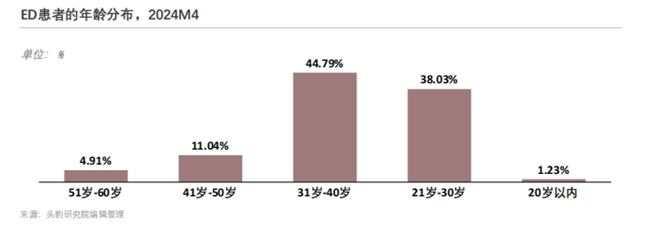
Core Insights - The domestic ED (erectile dysfunction) drug market is undergoing a significant transformation, moving from low-cost alternatives to value-based competition, driven by policy incentives, consumer awareness, and brand trust rebuilding [1][2][12] - The market for ED drugs is expected to exceed a scale of 100 billion yuan, with a notable increase in younger patients aged 21-40 [2][12] Group 1: Market Dynamics - The introduction of Viagra in 1998 established a high-end market dominated by imported original drugs, which are still priced above 100 yuan, creating a payment barrier [3] - Domestic brands have significantly reduced prices to single digits, enhancing drug accessibility and breaking the misconception that "domestic drugs equal low quality" [3][6] - Leading domestic brands, such as Guan Ai, have achieved nearly 1 billion yuan in revenue by leveraging online sales and direct-to-consumer models, with prices ranging from 2 to 5 yuan per tablet [3][12] Group 2: Policy Environment - Since 2015, the implementation of consistency evaluation for generic drugs has initiated a quality standard upgrade cycle in the domestic ED drug industry [7] - The "14th Five-Year Plan" for the pharmaceutical industry emphasizes the need for quality consistency and dynamic supervision post-evaluation, pushing companies to enhance their quality management systems [7] - Future competitiveness for domestic drugs will rely on achieving superior quality management and brand building, focusing on stability and efficacy [7][9] Group 3: Brand Development - Brand building is becoming a focal point in the competition among domestic ED generic drugs, with companies like Guan Ai utilizing F2C models and e-commerce to enhance user engagement and brand reputation [8] - Some leading brands are exploring "medical-education collaboration" promotional models to raise awareness of ED as a critical aspect of men's health management [8] - The integration of digital and AI technologies is enhancing quality control and brand transparency across the supply chain, providing new momentum for high-quality competition [8][12] Group 4: Future Outlook - The domestic ED drug industry has achieved a breakthrough in quality standards, with future competitiveness increasingly dependent on systematic quality management and brand development capabilities [9] - The capital market is showing strong interest in the high-quality drug sector, with expectations for long-term growth and potential for leading companies to expand globally [12] - The transition from price competition to brand differentiation marks a new phase of sustainable development for domestic ED drugs, setting a benchmark for the entire generic drug industry [12]
神药滞销,谁偷走了中年男人的“快乐”?
商业洞察· 2025-06-04 09:25
Core Viewpoint - The domestic "Viagra" (Sildenafil Citrate) market is facing unprecedented challenges due to intensified competition, changing consumer perceptions, and societal trends, leading to significant declines in sales and profits for major companies in the sector [2][15]. Group 1: Sales Performance - The sales of Sildenafil Citrate, once a leading product, have drastically declined, with major companies like Baiyunshan reporting a 50% increase in inventory, reaching 24.2 million tablets, equivalent to over a quarter's worth of sales [4][6]. - Baiyunshan's revenue decreased by 427 million yuan, a 2.06% year-on-year decline, while net profit also fell, contrasting with a 6.09% growth in the previous year [6]. - Other companies, such as Kelun Pharmaceutical and Tainkang, also reported significant revenue drops of 29.42% and 32.45%, respectively, with inventory surging by 25.41% [6][14]. Group 2: Market Dynamics - The decline in sales is attributed to a surge in competing products, with 91 different formulations of Sildenafil approved for sale in China, leading to a highly competitive market environment [8][9]. - The entry of numerous pharmaceutical companies has intensified price wars, with products like Qilu Pharmaceutical's "Qianwei" being sold at prices significantly lower than original brands, further eroding market share for established products like Jin Ge [10][12]. - The changing health consciousness among consumers is reshaping the market, with alternatives like Tadalafil and Avanafil gaining traction due to their longer-lasting effects and better safety profiles [14]. Group 3: Societal Trends - A decline in sexual activity among younger generations, with only 50% of those born after 1995 reporting weekly sexual activity, is impacting the demand for erectile dysfunction medications [14][15]. - The pharmaceutical industry is transitioning from a "patent protection period" to a "fully competitive era," where traditional market advantages are being challenged by rapid technological advancements and evolving consumer preferences [15].