伦敦金属交易所(LME)期锡

Search documents
沪锡期价一度突破44万元/吨,行业协会发文→
Qi Huo Ri Bao· 2026-01-15 01:12
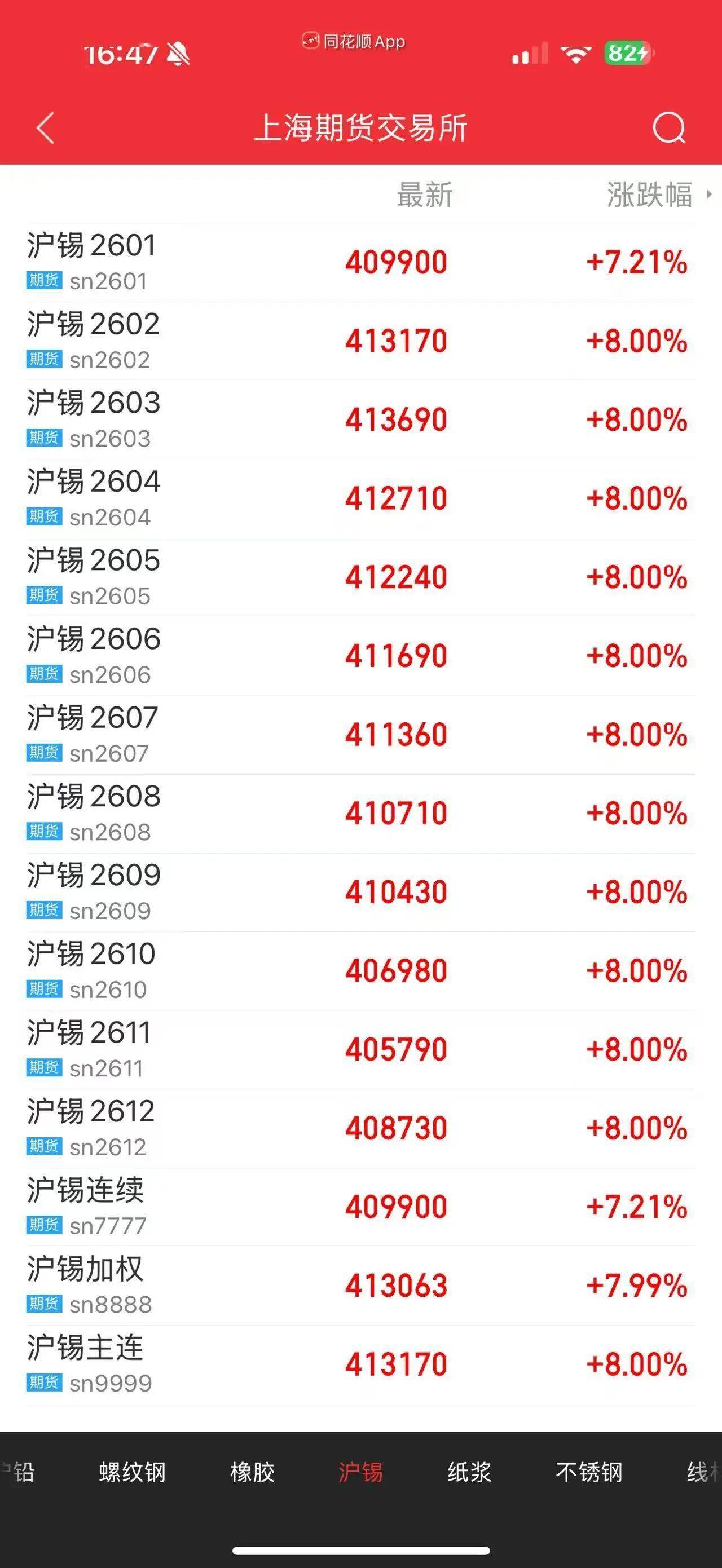
Core Viewpoint - The recent surge in tin prices is driven by optimistic macroeconomic sentiment and fundamental expectations, with significant demand from emerging industries such as electric vehicles, photovoltaics, and artificial intelligence [1][2]. Group 1: Market Dynamics - Tin futures on the Shanghai Futures Exchange (SHFE) have seen a strong increase, with the main contract reaching 413,170 yuan/ton and later surpassing 440,000 yuan/ton, marking an increase of over 9% [1]. - The London Metal Exchange (LME) also reported a rise in tin prices, peaking at 52,495 USD/ton [1]. - The market is experiencing a "rush for exports" due to the recent cancellation of export tax rebates on photovoltaic products, which is expected to significantly boost tin demand in the short term [1]. Group 2: Supply and Demand Factors - The supply side remains constrained, with expectations of a supply gap despite the resumption of tin mining in Myanmar [1][2]. - The demand for tin is being driven by strategic investments in sectors like semiconductor and AI technologies, which are anticipated to support consumption growth [2][3]. - Current market conditions indicate a low acceptance of high tin prices among downstream and end-user enterprises, leading to issues with price transmission [4]. Group 3: Regulatory and Industry Responses - The Shanghai Futures Exchange has implemented multiple risk warnings and control measures to guide rational market participation amid rising volatility in metal prices [2]. - Industry associations have issued initiatives to promote rational pricing and discourage speculative behavior, aiming to stabilize the market environment [3]. - Analysts suggest that while the current demand outlook is optimistic, there are concerns that the anticipated demand growth in the semiconductor sector may be overestimated, and traditional demand may be underestimated [3].
凌晨暴涨!沪锡期价一度突破44万元/吨,行业协会发文
Sou Hu Cai Jing· 2026-01-15 00:12
Core Viewpoint - The recent surge in tin futures prices on the Shanghai Futures Exchange (SHFE) is driven by optimistic macroeconomic sentiment and strong demand from emerging industries, despite potential supply concerns from Myanmar's tin mines [1][9]. Group 1: Price Movements - On January 14, the SHFE tin futures main contract (2602) surpassed 400,000 yuan/ton, closing at 413,170 yuan/ton, with the London Metal Exchange (LME) tin reaching a peak of 52,495 USD/ton [1]. - The SHFE tin futures contracts have shown consistent upward movement, with the main contract closing at 413,170 yuan/ton, reflecting an increase of 8 yuan [2][3]. - In the latest trading session, the SHFE tin futures main contract saw a significant rise, briefly exceeding 440,000 yuan/ton, closing up over 9% [3]. Group 2: Market Sentiment and Demand - Analysts attribute the strong performance of tin to a combination of macroeconomic factors, including expectations of U.S. fiscal and monetary easing, and a weaker dollar [9]. - The domestic market anticipates new policies as the "14th Five-Year Plan" begins, which could further stimulate demand for tin [9]. - Emerging industries such as electric vehicles, photovoltaics, and artificial intelligence are significantly driving demand for tin, with expectations of increased consumption [9][10]. Group 3: Supply Dynamics - Despite the anticipated recovery of tin supply from Myanmar, there remains a projected supply gap for the year [9]. - The recent cancellation of export tax rebates for photovoltaic products may lead to a short-term surge in tin demand as companies rush to export before the policy takes effect [9][10]. - Current market conditions indicate stable operations at domestic smelting plants, with minimal fluctuations in production levels, although there is a noticeable accumulation of inventory due to weaker consumption [11]. Group 4: Speculation and Risks - The market is experiencing a speculative atmosphere, with active trading in futures contracts, which could lead to rapid price fluctuations if bullish sentiment shifts [11]. - Analysts caution that while the current price increases reflect long-term demand expectations, there is a risk of overestimating demand in the semiconductor sector and underestimating declines in traditional sectors [11].