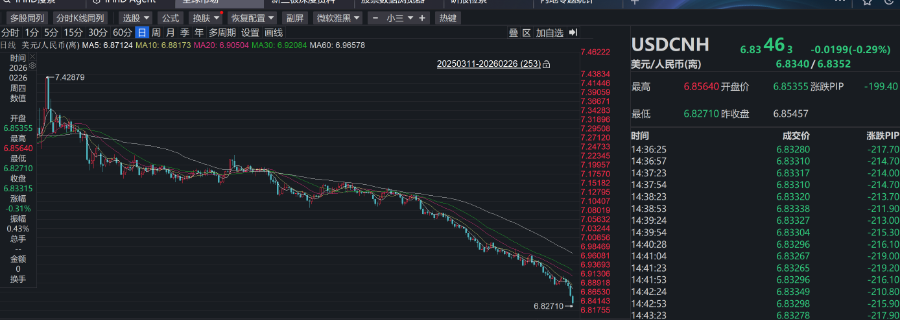
美元走弱

Search documents
第一太平(00142):增长持续,态度谨慎
citic securities· 2026-03-31 07:57
Investment Rating - The report maintains a cautious tone regarding the investment outlook for the company, First Pacific (FP), with a projected recurring profit growth of 9% year-on-year to $365 million for the second half of 2025, although this is lower than expected due to impacts from FPM Power and headquarters expenses [5][6]. Core Insights - First Pacific's growth in the second half of 2025 is primarily driven by contributions from Metro Pacific, Indofood, and Philex, while losses from FP Natural Resources have narrowed [5][6]. - The company announced a regular dividend of 1.79 cents per share (up 3% year-on-year) and a special dividend of 0.15 cents per share, leading to an estimated total dividend of 3.61 cents per share for the fiscal year 2025, reflecting a 10% year-on-year increase [6]. - The headquarters' interest coverage ratio remains healthy at 4.5 times, indicating strong financial stability [6]. Summary by Relevant Sections Financial Performance - Recurring profit for the second half of 2025 is expected to reach $365 million, a 9% increase year-on-year [5][6]. - Headquarters expenses exceeded expectations by $3 million, impacting overall profit growth [6]. - Total dividends for fiscal year 2025 are projected to grow by 10% to 3.61 cents per share, with a payout ratio of 20.4% [6]. Business Contributions - Indofood's profit contribution is expected to grow by 5% to $174 million in the second half of 2025 [6]. - Metro Pacific's core profit contribution is projected to increase by 22% to $120 million, driven by strong performance in power, water, and healthcare sectors [6]. - Philex's profit contribution is anticipated to surge by 393% to $7 million [6]. Debt and Financial Health - As of the end of 2025, net debt at headquarters is expected to slightly increase to $1.3 billion, primarily due to additional investments in FPM Power and subscriptions to Maynilad IPO shares [6]. - The interest coverage ratio is projected to remain stable at 4.5 times, indicating robust financial health [6].

多重风险压顶!瑞银下调美股市场评级,不再建议投资者加仓
Zhi Tong Cai Jing· 2026-02-28 00:03
Group 1 - UBS Group's Chief Global Equity Strategist Andrew Garthwaite has downgraded the investment rating for the US stock market from "overweight" to "benchmark allocation" due to rising risks of a weaker dollar, high valuations, and increased policy uncertainty in Washington [1] - UBS expects the euro to rise to $1.22 by the end of Q1 next year, indicating structural downside risks for the US dollar. Historical data shows that when the dollar trade-weighted index falls by 10%, US stocks typically lag by about 4 percentage points in unhedged terms [1] - Year-to-date, there has been a noticeable shift in capital flows from US stocks to overseas markets, with the MSCI Global (ex-US) index up approximately 8% and the S&P 500 index remaining flat [1] Group 2 - The long-term support for US stocks from corporate buybacks is weakening, with the current buyback yield for US stocks being roughly equivalent to global peers, and the combined shareholder return rate of dividends and buybacks for US stocks is about half that of Europe [2] - UBS calculates that the adjusted price-to-earnings ratio for US stocks is 35% higher than international markets, significantly above the average premium of about 4% since 2010 [2] - Policy uncertainties in the US, including tariff policies, credit card interest rate cap proposals, housing investment restrictions, drug pricing reviews, and discussions on regulations affecting military contractors' dividends and buybacks, are also exerting pressure [2] Group 3 - Despite the downgrade, Garthwaite does not adopt a fully bearish stance, noting that in the early stages of potential bubbles, the US economy and stock market often perform better. UBS anticipates that the advancement of artificial intelligence applications in the US will continue to support corporate profit growth [2] - UBS strategist Sean Simonds projects a year-end target of 7,500 points for the S&P 500 index, slightly below the average expectation of 7,629 points from mainstream strategists [2]

瑞银策略师下调美股评级:美元走弱+估值较高+白宫折腾
Feng Huang Wang· 2026-02-27 22:42
Group 1 - UBS has downgraded its outlook for US stocks, citing increased risks from a weakening dollar, high market valuations, and rising uncertainty from Washington's policy turbulence [1] - Andrew Garthwaite, UBS's global equity strategy head, has lowered the rating of US stocks in global equity portfolios to "benchmark," indicating that factors driving US stocks' outperformance are fading [1] - The firm predicts that the euro will rise to 1.22 against the dollar by the end of Q1, highlighting structural and asymmetric downside risks for the dollar [1] Group 2 - UBS notes that corporate buybacks, a key support for US stocks, are losing their edge, with US buyback yields now roughly on par with global peers, diminishing their impact on earnings per share (EPS) growth and capital inflows [2] - The "shareholder return yield" from dividends and buybacks in the US is now about half that of Europe, indicating a decline in the attractiveness of US stocks [2] - UBS estimates that the price-to-earnings (P/E) ratio of US stocks, adjusted for industry, is 35% higher than that of international peers, while the average premium since 2010 has been only about 4% [2] Group 3 - Concerns over high valuations are exacerbated by policy volatility under the Trump administration, with frequent changes in tariffs, credit card interest rate caps, and other regulations impacting the market [2] - Despite these concerns, Garthwaite does not fully turn bearish, suggesting that the US economy and stock market may benefit more than others in the early stages of a potential bubble [2] - UBS expects the pace of AI application in the US to outstrip that of most major regions, supporting earnings growth in key industries [2] - UBS sets a year-end target for the S&P 500 index at 7500 points [2]
多重风险压顶!瑞银下调美股市场评级 不再建议投资者加仓
智通财经网· 2026-02-27 15:57
Group 1 - UBS has downgraded the investment rating for the US stock market from "overweight" to "benchmark allocation" due to rising risks of a weaker dollar, high valuations, and increased policy uncertainty in Washington [1] - The firm expects the euro to rise to 1.22 USD by the end of Q1 next year, indicating structural downside risks for the USD [1] - Historical data shows that when the trade-weighted dollar index falls by 10%, US stocks typically lag by about 4 percentage points in unhedged terms [1] Group 2 - Corporate buybacks, a long-term support for US stocks, are weakening, with the buyback yield of US stocks now roughly equivalent to global peers, lacking a clear advantage [2] - The combined shareholder return rate of US stocks, including dividends and buybacks, is about half that of Europe [2] - Adjusted for industry, US stocks' price-to-earnings ratio is 35% higher than international markets, significantly above the average premium of 4% since 2010 [2] Group 3 - Policy uncertainties in the US include tariff policies, credit card interest rate cap proposals, housing investment restrictions, drug pricing reviews, and discussions on regulations affecting military contractors' dividends and buybacks [2] - Despite the downgrade, UBS does not adopt a fully bearish stance, noting that in early stages of potential bubbles, the US economy and stock market often perform better [2] - UBS expects the advancement of artificial intelligence applications in the US to remain ahead of most regions, supporting corporate profit growth [2] - UBS strategist Sean Simonds projects a year-end target of 7,500 points for the S&P 500, slightly below the average expectation of 7,629 points from mainstream strategists [2]
瑞银下调美国股票市场评级
Xin Lang Cai Jing· 2026-02-27 15:10
Core Viewpoint - UBS has downgraded the rating of U.S. stocks in a fully invested global equity portfolio to "benchmark" due to concerns over a weakening dollar, high valuations, and increasing risks from Washington's policy instability [1][2]. Group 1: Dollar Risks - The primary concern highlighted by UBS is the risk associated with the dollar [1][2]. - UBS forecasts that by the end of the first quarter, the euro will rise to 1 euro = 1.22 USD, indicating a significant shift in currency dynamics [1][2]. - The bank notes that historically, when the trade-weighted dollar index declines by 10%, U.S. equities tend to underperform by approximately 4% on a non-hedged basis [1][2]. Group 2: Market Performance - Due to the weakening dollar and lower valuations attracting capital overseas, foreign markets have significantly outperformed the U.S. this year [1][2]. - The MSCI World Excluding U.S. Index has increased by about 8% within 2026, while the S&P 500 Index has remained nearly flat [1][2].
外资涌入+美元走弱 菲律宾比索迎14年来最佳年度开局
Zhi Tong Cai Jing· 2026-02-27 04:45
Core Insights - The Philippine peso is experiencing its strongest annual start since 2012, appreciating nearly 2% year-to-date, driven by foreign capital inflows and a weakening US dollar [1] - After eight years of net capital outflows, foreign investments have returned to the Philippine stock market for two consecutive months, pushing the benchmark index close to bull market territory [1] - Analysts warn that the peso's strength may diminish towards the end of the year due to rising expectations of interest rate cuts, with BMI predicting a decline in the peso to 59.50 against the dollar by the end of 2026 [1] Group 1 - The Philippine peso's appreciation is primarily attributed to the weakening US dollar rather than improvements in domestic fundamentals [1] - BMI forecasts a 25 basis point interest rate cut by the Philippine central bank by the end of 2026, which could reduce the peso's attractiveness due to a narrowing interest rate differential with the US [1] Group 2 - A significant corruption scandal has led to the lowest economic growth rate in 14 years, excluding the pandemic period [2] - The Philippine central bank governor has stated that the bank will support the economy without triggering inflation [2]
锐财经|人民币汇率持续走强
Ren Min Ri Bao Hai Wai Ban· 2026-02-27 03:28
Core Viewpoint - The recent appreciation of the Renminbi (RMB) against the US dollar has garnered significant attention, with both offshore and onshore RMB surpassing 6.84, marking the highest level since April 2023 [1][3]. Group 1: Factors Supporting RMB Appreciation - The weakening of the US dollar has led to a collective strengthening of non-USD currencies, including the RMB, primarily due to market expectations of continued interest rate cuts by the Federal Reserve [3]. - Increased demand for currency settlement from domestic enterprises has contributed to RMB appreciation, as companies are moving away from holding large amounts of USD in response to the RMB's strengthening [3][4]. - China's economic resilience, characterized by a strong trade surplus and enhanced manufacturing competitiveness, provides a solid internal foundation for the RMB's strength [4]. Group 2: Impacts of RMB Appreciation - RMB appreciation is expected to lower import costs for companies reliant on imported raw materials, thereby enhancing their purchasing power and reducing production costs [5]. - The attractiveness of RMB-denominated assets is likely to increase, drawing more foreign investors to Chinese stocks and bonds, which could promote cross-border capital flows [6]. - While RMB appreciation can boost capital market confidence and enhance purchasing power for consumers, it poses challenges for export-oriented companies, particularly small and medium-sized enterprises, due to potential exchange rate losses [7]. Group 3: Outlook on RMB Exchange Rate - Experts predict that the RMB exchange rate will likely continue to exhibit two-way fluctuations and moderate appreciation, with the People's Bank of China emphasizing a managed floating exchange rate system to maintain stability [8]. - The central bank aims to guide market expectations and prevent excessive fluctuations in the RMB exchange rate, ensuring its credibility in the global monetary system [8].


人民币对美元汇率升破6.84
Zhong Guo Xin Wen Wang· 2026-02-26 12:15
Core Viewpoint - The offshore and onshore RMB against the USD have both surpassed 6.84, reaching a new high since April 2023, driven by a weakening USD and improving Sino-US economic relations [1][1]. Exchange Rate Summary - On February 26, the RMB to USD central parity rate was reported at 6.9228, an increase of 93 basis points from the previous day's rate of 6.9321 [1]. - Since the beginning of the year, the RMB to USD central parity rate has cumulatively increased by approximately 1000 basis points [1]. Economic Factors - Analysts attribute the recent RMB appreciation to the continuous weakening of the USD, with external factors such as the stabilization of Sino-US trade relations playing a significant role [1][1]. - The recent pressure on the USD is also linked to challenges faced by the Federal Reserve, which has contributed to the appreciation of non-USD currencies, including the RMB [1]. Market Dynamics - There has been a notable increase in demand for foreign exchange settlements due to high export growth, with banks reporting a surplus of USD 79.8 billion in foreign exchange settlements in January 2026 [1]. - The sentiment in the foreign exchange market has been positive, with the offshore RMB leading the appreciation trend, contributing to the RMB's strong performance [1]. Future Outlook - Analysts predict that while the RMB exchange rate may exhibit a more balanced trend in 2026, a slight appreciation is still expected throughout the year [1].
人民币汇率创三年新高,剑指6.3关口?单边升值背后有何隐患?
Sou Hu Cai Jing· 2026-02-26 08:43
Core Viewpoint - The recent strength of the Renminbi (RMB) against the US dollar is attributed to multiple factors, including a weaker dollar, improved external economic conditions, and increased domestic demand for currency exchange [1][3][5]. Group 1: Reasons for RMB Appreciation - The direct driver of RMB appreciation is the weakening of the US dollar, with the dollar index currently at 97.59, a low in recent years due to multiple interest rate cuts by the Federal Reserve [3]. - Improved external economic conditions, such as high-level visits to China and legal rulings against US tariffs, have contributed to stabilizing expectations for the RMB [3]. - Domestic enterprises are increasingly converting foreign currency to RMB, driven by narrowing interest rate differentials and expectations of RMB appreciation, leading to a surge in demand for RMB [3][5]. Group 2: Future Outlook and Risks - The factors supporting RMB strength are expected to persist, but there is uncertainty regarding whether it can break the 6.3 level reached in February 2022 [5]. - Rapid appreciation of the RMB may not benefit economic development, as it could act as a "double-edged sword" for an export-oriented economy, potentially reducing price competitiveness [5][8]. - Historical parallels are drawn with Japan's experience in the 1980s, where excessive currency appreciation led to prolonged economic stagnation [5][7]. Group 3: Policy Implications - Maintaining a stable exchange rate is a key policy goal, as unilateral appreciation or depreciation can disrupt market balance, with moderate fluctuations being ideal [8][10]. - The central bank previously intervened to curb rapid appreciation when the RMB reached 6.3, indicating that similar measures may be considered if the current appreciation accelerates [8][10]. - From a macro perspective, the exchange rate reflects the fundamental economic conditions of both countries, and a balanced approach is necessary to manage growth and currency stability [10][12].
人民币汇率三连涨 离岸价升破6.83
2 1 Shi Ji Jing Ji Bao Dao· 2026-02-26 08:12
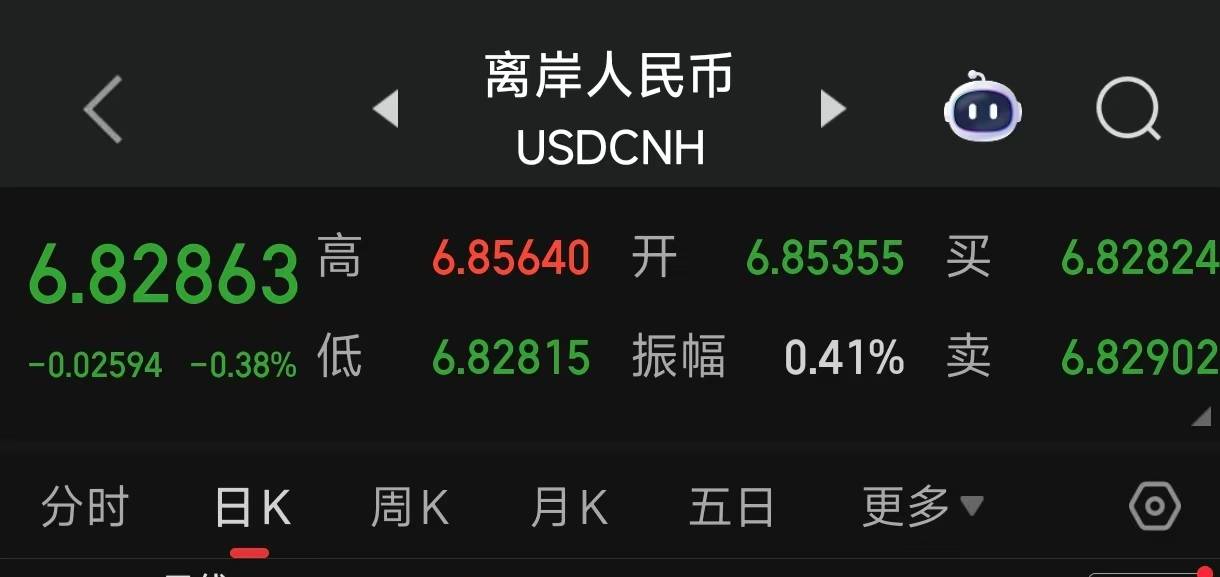
Core Viewpoint - The recent appreciation of the Renminbi (RMB) against the US dollar is attributed to a combination of factors, including a weakening US dollar and improved external economic conditions, leading to a significant increase in the RMB's value [3][4]. Group 1: RMB Exchange Rate Trends - The onshore and offshore RMB both surpassed the 6.84 mark against the US dollar, with the offshore RMB reaching a high of 6.8271, marking the highest level since April 2023 [1]. - The RMB's central parity rate against the US dollar was set at 6.9228, an increase of 93 basis points, marking the third consecutive day of upward adjustment [1]. - Since the beginning of February, the RMB has appreciated over 300 basis points against the US dollar, with both onshore and offshore rates showing an increase of more than 2% this year [3]. Group 2: Factors Influencing RMB Strength - The stabilization of China-US trade relations since late 2025 has contributed to the RMB's strong performance [3]. - The recent criminal investigation into Federal Reserve Chairman Jerome Powell has put pressure on the US dollar, leading to a general appreciation of non-USD currencies, including the RMB [3]. - The release of accumulated settlement demand from high export growth has accelerated the RMB's appreciation, with significant surpluses in bank settlement and sales recorded in December 2025 and January 2026 [4]. Group 3: Market Sentiment and Future Outlook - Analysts suggest that the current high market sentiment and the expectation of continued strong export growth in the first quarter will support the RMB's strength in the near term [4]. - The RMB's appreciation is viewed as a passive response to a weakening US dollar rather than a direct strengthening of the RMB itself [4]. - The People's Bank of China has emphasized the role of the exchange rate as a macroeconomic stabilizer, indicating a commitment to maintaining a stable RMB while allowing for flexibility [5].