低碳水泥

Search documents
脱碳以竞争:迈向巴西低碳水泥与钢铁工业
英国加速气候转型伙伴关系&气候债券倡议组织· 2026-03-02 09:20
Investment Rating - The report emphasizes the strategic opportunity for investment in the decarbonization of Brazil's cement and steel industries, highlighting their role as major greenhouse gas emitters and the necessity for transformation to enhance competitiveness and sustainability [9][11]. Core Insights - The decarbonization of the cement and steel industries in Brazil is not only an environmental necessity but also a key factor for the competitiveness and sustainability of these sectors [9][11]. - Brazil's renewable energy structure and historical use of biomass in the steel industry provide significant comparative advantages for accelerating the transition to low-carbon production [10][12]. - Emerging technologies such as electrification, low-carbon hydrogen (HBC), and carbon capture and storage (CCS) are crucial for deep decarbonization in both industries, despite requiring substantial investment and facing infrastructure and technological maturity challenges [10][13]. Summary by Sections Executive Summary - The report outlines the unprecedented strategic opportunity for Brazil in decarbonizing its cement and steel industries, which are foundational to civil construction and the national economy [9]. Industry Overview - The cement industry accounts for approximately 2.5% of Brazil's greenhouse gas emissions, while steel production contributes about 4% [16]. - The report highlights the need for strong support mechanisms, including green finance, carbon pricing, and tax incentives, to facilitate the transition [11]. Emission Sources - The primary sources of emissions in the cement industry stem from the calcination of limestone, which releases CO₂, while the steel industry faces emissions from the carbon reduction of iron ore [35][36]. Financing - The report discusses various financing sources available for supporting the transition, including climate funds, private financial instruments, and blended finance strategies [55][56]. Market Opportunities and Innovations - There is a growing demand for "green" products and international regulatory pressures, such as the EU's carbon border adjustment mechanism (CBAM), which expand market opportunities and enhance the competitive advantage of sustainably investing companies [11][12]. Conclusion and Recommendations - The report provides a comprehensive analysis of the current and future decarbonization scenarios for Brazil's cement and steel industries, emphasizing the importance of collaborative and multifaceted approaches to achieve climate goals while strengthening domestic industries [11][16].
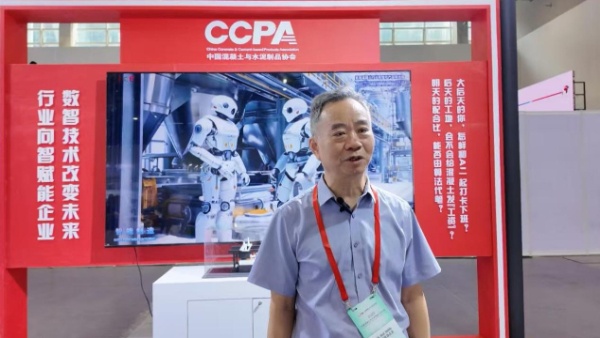
2025中国混凝土与水泥制品行业大会暨国际博览会在广州召开
Xin Hua Wang· 2025-09-10 09:05
Core Viewpoint - The "2025 China Concrete and Cement Products Industry Conference" and the "2025 China International Concrete Expo" held in Guangzhou mark a significant step towards the internationalization of the concrete and cement industry, emphasizing technological innovation, green development, and global integration [2][6][12]. Group 1: Event Overview - The conference took place from September 4 to 7, 2023, in Guangzhou, organized by the China Concrete and Cement Products Association [2]. - The theme of the conference was "Towards New, Green, International, and Intelligent Empowerment for a New Future," focusing on industry transformation through technology, environmental responsibility, and international standards [4]. Group 2: Industry Growth and Internationalization - Since its inception in 2018, the conference has grown significantly, with attendance increasing from hundreds to thousands and exhibition space expanding from 12,000 square meters to 40,000 square meters [5]. - The 2025 event marks the first time the conference has moved out of the Yangtze River Basin to the Guangdong-Hong Kong-Macao Greater Bay Area, indicating a strategic shift towards internationalization [6]. Group 3: Global Collaboration and Market Engagement - The expo attracted procurement teams from over 30 countries and regions, with specific interests from Southeast Asia, BRICS nations, and Middle Eastern companies in various concrete technologies and materials [7]. - Three international supply-demand matching sessions were held to connect Chinese companies with markets in Vietnam, Brazil, and Singapore, facilitating cross-border supply chain integration [7]. Group 4: Innovation and Technology Showcase - The expo featured a 40,000 square meter exhibition area divided into three main sections: raw materials and products, intelligent equipment, and comprehensive technology, showcasing cutting-edge industry advancements [8]. - Notable innovations included recycled concrete, carbon capture utilization technology (CCUS), and ultra-high-performance concrete (UHPC) components, demonstrating China's construction capabilities [9]. Group 5: Sustainable Development and Future Directions - The event highlighted the potential of Chinese green technologies and smart equipment in supporting infrastructure upgrades in Southeast Asia, with over 20 cooperation intentions established with delegations from Saudi Arabia, Brazil, and Singapore [10]. - The integration of industry discussions, technology displays, and trade connections aims to transform the industry from "product output" to "technology + standards + services" output, promoting sustainable development [10].

服务国家“双碳”战略 中国进出口银行北京分行赋能金隅集团低碳水泥新材料产业
Zhong Guo Jin Rong Xin Xi Wang· 2025-09-04 02:53
Core Viewpoint - Strategic emerging industries are becoming the core engine for promoting high-quality economic development under the national "dual carbon" goals, with Beijing Jinyu Group Co., Ltd. leading the way in low-carbon cement research and industrialization [1] Group 1: Company Initiatives - Beijing Jinyu Group is focusing on low-carbon cement development as a key measure to achieve the "dual carbon" goals, leveraging its technological accumulation and industrial foundation [1] - The company is increasing investment in scientific research to upgrade cement products towards low energy consumption, low emissions, and high performance [1] - As the largest green building materials supplier in the Beijing-Tianjin-Hebei region, Jinyu Group's low-carbon cement products support major national projects such as the Beijing-Xiong'an High-Speed Railway and the Beijing Urban Sub-center [1] Group 2: Financial Support and Collaboration - China Export-Import Bank's Beijing branch is providing targeted working capital loans to support Jinyu Group's low-carbon cement sector, facilitating the integration of finance and industry [1] - The bank plans to deepen cooperation with Jinyu Group to promote the cement industry towards high-end, intelligent, and green development, contributing to the national "dual carbon" goals [1]
致力于解决气候问题的创业公司最近开始谈论战斗机了
阿尔法工场研究院· 2025-03-25 10:23
Core Viewpoint - Climate startups are shifting their focus away from climate issues to align with changing economic and political landscapes, emphasizing national security and other market opportunities instead [2][3][5]. Group 1: Shift in Messaging - Companies developing climate-friendly metals, cement, and fuels are now highlighting how their products contribute to national security amid rising global trade tensions [4][5]. - Many climate startups have removed references to climate benefits from their messaging, instead focusing on how their technologies can address urgent national security concerns [11][16]. - The financial environment has become challenging, with equity financing for climate tech startups dropping by 40% in 2024 to $50.7 billion, marking the third consecutive year of decline [7]. Group 2: Company Examples - Magrathea Metals has shifted its narrative from climate benefits to emphasizing the urgency of domestic magnesium production for national security, particularly for military applications [11][14][33]. - Brimstone, a low-carbon cement startup, has repositioned itself as a proponent of domestic manufacturing, removing climate-related commitments from its messaging [15][17]. - VEIR, initially focused on electric vehicle charging solutions, has pivoted to serve the growing data center market, reflecting a broader trend of adapting to immediate market demands [25][29]. Group 3: Broader Industry Trends - Major companies like Dow and General Motors are also aligning their interests with national security, advocating for tax credits for low-carbon hydrogen production without mentioning climate change [20][21]. - The shift in focus among startups and established companies highlights the risks of relying on government subsidies and changing political priorities [23][24].