
光储充一体化方案

Search documents
从油价狂飙到闪充破局:比亚迪用技术作答国家能源安全的“必答题”
Jing Ji Guan Cha Bao· 2026-03-10 11:58
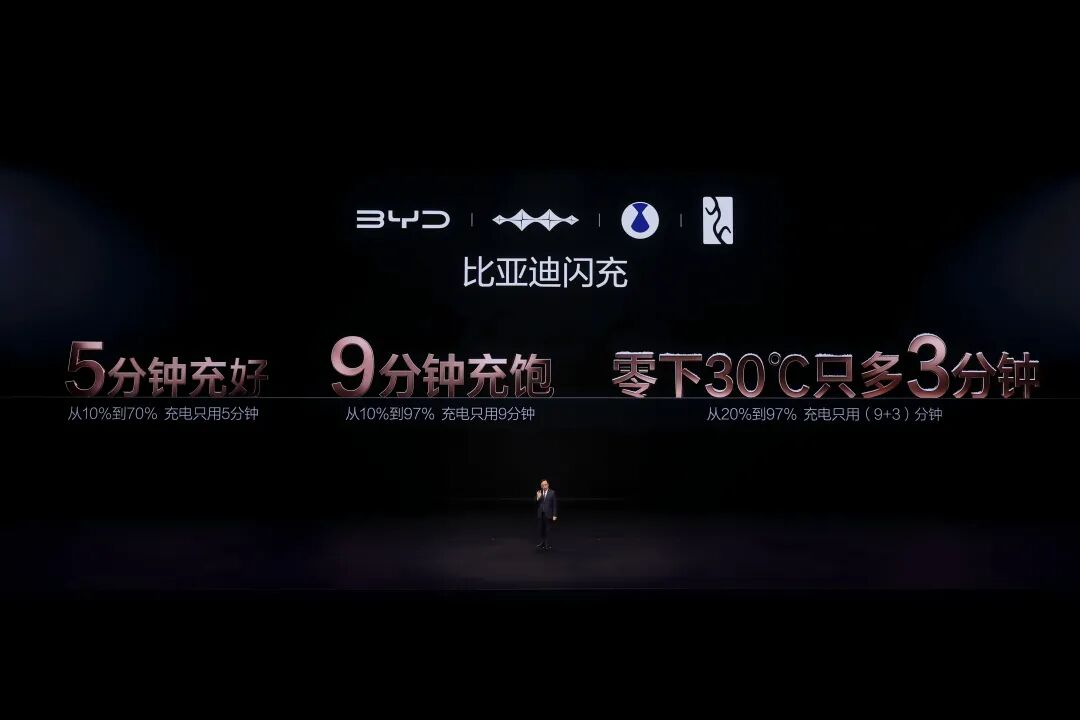
Core Viewpoint - The geopolitical tensions in the Middle East, particularly the closure of the Strait of Hormuz, have led to a significant disruption in global oil supply, causing international oil prices to surge above $100 per barrel. In response, BYD has introduced its second-generation blade battery and fast-charging technology as part of a "light-storage-charging integration" solution to enhance national energy security and promote energy independence [1][2]. Group 1: Impact of Geopolitical Events - The closure of the Strait of Hormuz has interrupted over one-third of global maritime oil supply, leading to a spike in oil prices, with predictions suggesting prices could reach $150 per barrel if the closure persists [1]. - The energy supply shortage has triggered systemic risks in the global energy market, causing stock market declines in Asia-Pacific countries and prompting emergency measures in nations like Turkey and France to manage fuel costs [1]. Group 2: China's Energy Strategy - China relies on imports for over 70% of its oil, with more than 60% passing through critical maritime routes, highlighting the urgency for the country to develop its electric vehicle (EV) sector to achieve energy independence [2]. - The push for EV development in China is rooted in a long-term strategy aimed at securing energy autonomy, with significant historical milestones marking the commitment to this goal [2]. Group 3: Technological Advancements by BYD - BYD's new technology addresses key consumer pain points related to charging experiences, significantly reducing charging times even in extreme cold conditions, thus alleviating "range anxiety" among potential EV users [5]. - The introduction of a comprehensive "light-storage-charging integration" solution by BYD includes a super-fast energy storage system, creating a closed-loop from solar energy acquisition to vehicle application, aligning with China's carbon neutrality goals [5][6]. Group 4: Resource Efficiency and Infrastructure - BYD's fast-charging technology aims to enhance the efficiency of energy supply infrastructure, addressing the current low utilization rates of public charging stations and reducing resource wastage [6]. - The innovative "station-in-station" model allows for the rapid deployment of charging stations without the need for extensive new infrastructure, thereby minimizing investment in land and materials [6]. Group 5: BYD's Commitment and Vision - BYD's approach reflects a deep commitment to national interests, showcasing a history of rapid technological responses to crises and a long-term vision for sustainable energy solutions [7]. - Despite the high costs associated with building fast-charging stations, BYD remains resolute in its strategic direction, having previously faced skepticism regarding its ambitious goals, which are now becoming integral to China's economic growth [7][8].


无锡发布“能碳未来”超级场景
Xin Hua Ri Bao· 2025-11-15 20:06
Core Insights - Wuxi has launched its third city-level super scene, "Infinite Wuxi, Carbon Future," focusing on green transformation, technological empowerment, and systematic carbon reduction [1][2] - The city has facilitated cooperation on 80 city-level super scene projects, with a total cooperation amount exceeding 4 billion yuan [1] - The initiative integrates advanced photovoltaic technology, new energy storage, zero-carbon parks, and near-zero carbon renovations across 15 independent scene directions [1] Group 1 - The "Infinite Wuxi, Carbon Future" super scene aims to explore urban green development practices through energy structure optimization, industrial green upgrades, and low-carbon lifestyle transitions [1] - Over 150 companies participated in the event, showcasing their green innovation capabilities and facilitating precise matching of low-carbon innovation demands with technological supply [1] - Wuxi has initiated a financial service model called "scene loan," with the first batch of signed agreements totaling 150 million yuan [2] Group 2 - Wuxi has opened 85 scene opportunities and 192 scene capabilities, conducting over 100 supply-demand matching activities throughout the year [2] - The city aims to create a first-class ecosystem driven by innovation and scene application, positioning itself as a benchmark city for scene innovation in the country [2] - Future plans include aligning with national and provincial policies to deepen scene application and foster a collaborative carbon reduction system [2]
变量下的工商业储能如何破局?
Zhong Guo Dian Li Bao· 2025-06-18 02:48
Core Insights - The recent policy changes in China regarding the commercialization of energy storage have created significant challenges for traditional business models that rely on peak-valley price differences [1] - Despite these challenges, the demand for commercial energy storage is surging, with an expected addition of 2.95 GW/7.02 GWh of new installations in 2024 and over 200,000 industry players [1][11] Group 1: Industry Trends - The industry is shifting from hardware price competition to a comprehensive competition model that emphasizes technology, services, and ecosystem integration [2] - Leading companies like Envision and CATL are leveraging software capabilities and innovative technologies to enhance revenue certainty despite narrowing price differentials [2][4] - The competitive landscape is increasingly focused on software capabilities, with companies like Envision connecting 324 million smart devices and 788 GW of energy assets through their EnOS platform [4] Group 2: Financial Innovations - Companies are addressing the high financing costs and long payback periods in the commercial energy storage sector through innovative financial models [5][6] - Envision's "Yiqi Storage" plan has successfully reduced financing rates from an industry average of 8% to 4.5% by collaborating with financial institutions [6] - CATL has increased its stake in the commercial energy storage company Xianyang New Energy to 99.5051%, enhancing its project development capabilities [6] Group 3: Ecosystem Development - The industry is moving towards a "platform + scenario" approach, with companies like Envision and Huawei developing integrated solutions that enhance efficiency across various energy systems [7] - The "Storage +" model is expanding from "Storage + PV" to include "Storage + Charging Stations" and "Storage + Building Loads," which can significantly improve project returns [7] Group 4: Global Expansion - Chinese companies are accelerating their international expansion, with Envision and Huawei entering high-end markets in Europe with integrated software and hardware solutions [8][9][10] - CATL is establishing a presence in North America, focusing on customized trading strategies and increasing production capacity in Germany [10] - The European market is becoming increasingly competitive, with a focus on technology, while emerging markets in Southeast Asia and Latin America are more price-sensitive [10] Group 5: Future Outlook - The commercial energy storage industry is transitioning from being policy-driven to market-driven, with predictions of over 5 GW of new installations by 2025 [11] - Companies that can build certainty amid uncertainty through core technologies, innovative models, and ecosystem integration are expected to thrive [11]

