光帆Lightwear AI全感穿戴设备

Search documents
光帆科技完成近3亿元种子轮系列融资:产业巨头集体押注「AI赛道稀缺标的」
IPO早知道· 2026-03-04 05:19
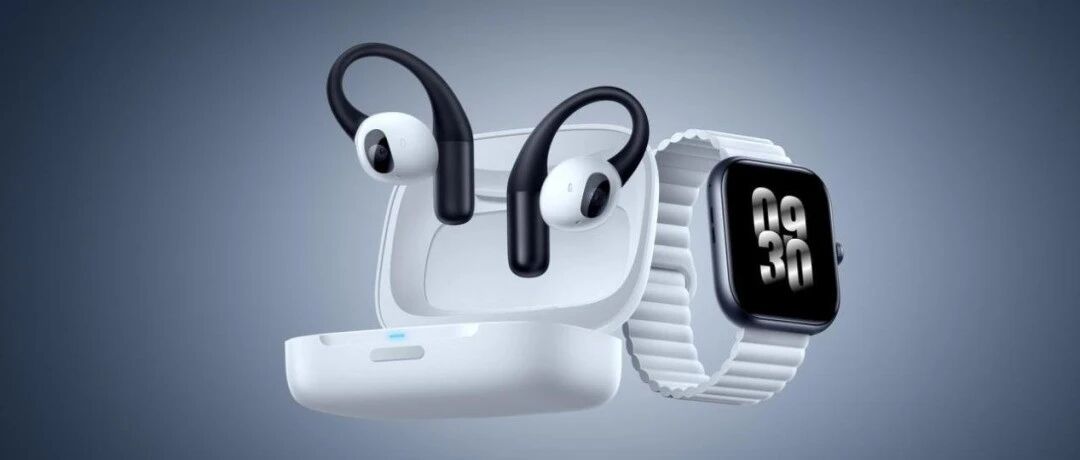
2025年12月23日,光帆科技正式推出全球首款具备视觉感知能力的主动式AI耳机及全感穿戴设备。 该产品由开放式耳挂AI耳机与智能手表协同构成,搭载自研原生AI操作系统Lightware OS,致力于 在AI时代重新定义人机交互体验。 具体而言,光帆Lightwear AI全感穿戴设备是一款具备"全感知、全天候、主动式AI"特点的"AI助 理"硬件。该产品在耳挂侧搭载了双目视觉感知模组,使AI能实时"看懂"周围环境、识别物体与场 景,并据此主动提供贴合用户状态的服务。通过内置eSIM卡与定制化AI通信协议,光帆Lightwear 可脱离手机独立联网工作,并结合高精度GPS模块,在运动、出行等场景中提供无缝便捷体验,让 全天候使用成为可能。 区别于传统的"被动指令式"AI硬件,光帆Lightwear AI全感穿戴设备希望成为AI时代中人人都可拥 有的"个人助理",能够实现日程管理、机酒预定、打车出行、餐厅推荐等工作生活场景中高频任务 的自主处理。 已推出全球首款具备视觉感知能力的主动式AI耳机及全感穿戴设备。 本文为IPO早知道原创 作者| Stone Jin 微信公众号|ipozaozhidao 据IPO早知 ...

黄仁勋到处赶场站台,中国军团角逐AI明日终端
Tai Mei Ti A P P· 2026-01-04 10:13
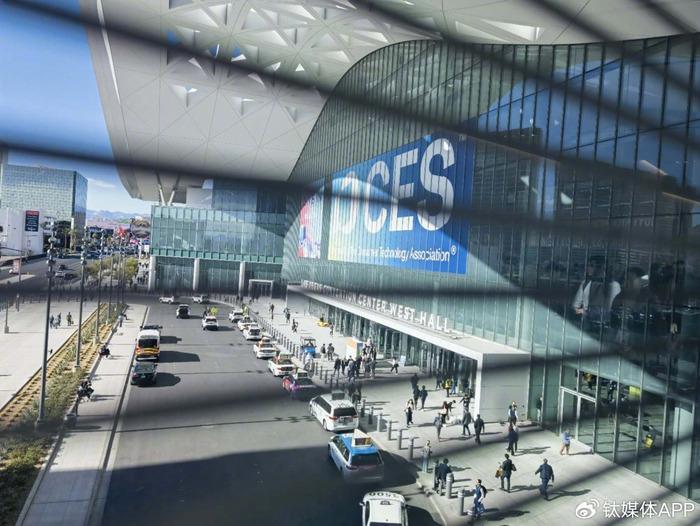
Group 1 - The CES 2026 will take place from January 6 to January 9, focusing on AI as it transitions into practical applications, marking the year as the beginning of AI technology integration and industrialization [2][9] - A total of 4,112 companies will participate in CES 2026, with major players like AMD, Lenovo, Hisense, and TCL showcasing innovations across various sectors, including chips, hardware, and vertical applications [2][3] - The event will highlight the integration of AI in various industries, including automotive and supply chains, demonstrating deep connections and applications across the entire industry chain [2][6] Group 2 - NVIDIA's CEO Jensen Huang will not deliver a keynote this year but will participate in discussions about AI's impact on consumer electronics and infrastructure [3][7] - AMD is expected to unveil its next-generation mobile processor, the Ryzen AI 400 series, featuring 12 Zen 5 cores and enhanced NPU capabilities [6][4] - Siemens' CEO will present advancements in industrial AI, showcasing how AI, digital twins, and automation are transforming manufacturing and infrastructure [6][9] Group 3 - The home appliance sector will see significant AI integration, with major companies like Hisense and TCL leading the charge in redefining the future of home electronics [10][11] - Hisense will introduce the world's first display technology upgraded to a "four-core architecture," along with a humanoid robot capable of multi-language interaction [10][11] - The cleaning appliance market, particularly robotic vacuums, is dominated by Chinese brands, while iRobot faces bankruptcy, highlighting a shift in market leadership [13][19] Group 4 - The CES 2026 will feature a strong presence of embodied intelligence products, with over 50% of exhibitors being Chinese companies, showcasing advancements in humanoid robots and smart assistants [20][22] - New AI-native devices, including AI glasses and AI headphones, will be introduced, indicating a shift towards AI as the next generation of consumer electronics [24][26] - The event will also host discussions on the future of technology, including topics like AI's role in industrial transformation and the commercialization of embodied intelligence [30][28]



光帆科技发布全球首款具备视觉感知能力的主动式AI耳机
Xin Lang Cai Jing· 2025-12-25 11:42
Core Insights - The article discusses the launch of the world's first active AI headphones with visual perception capabilities by Lightwave Technology, aiming to redefine human-computer interaction in the AI era [1][5]. Product Features - The Lightwear AI wearable device consists of an open-ear AI headphone and a smart watch, featuring a self-developed AI operating system called Lightware OS [1][3]. - The device includes a dual-vision perception module that allows the AI to understand the surrounding environment and provide context-aware services [2][6]. - The headphones utilize a low-power voice and image wake-up technology, offering a 9-hour talk time and weighing only 11 grams per ear [2][6]. - Made from medical-grade liquid silicone, the headphones are the first open-ear model to receive SGS comfort certification [2][6]. - The device can operate independently from a smartphone, thanks to an embedded eSIM card and high-precision GPS module, enhancing user experience during activities [2][6]. Integration and User Experience - The smart watch complements the headphones by providing a color display and touch capabilities, allowing users to access key information without diverting their gaze [2][7]. - The watch collects various health metrics, enabling the AI to adjust its services based on the user's physical state, such as providing reminders during high-stress situations [2][7]. - Lightwear is positioned as a synergistic system rather than a simple combination of headphones and a watch, aiming for an enhanced overall AI experience [3][7]. Market Position and Future Plans - Lightwave Technology plans to officially launch the Lightwear AI wearable device in the first quarter of the following year, with pre-orders already open and a user testing program set to begin in mid-January [3][7]. - The company has successfully completed multiple rounds of financing within its first year, attracting investments from major industry players such as Shokz, GoerTek, Lenovo, CATL, and GigaDevice [3][7].
摆脱智能手机,可穿戴设备是否存在另一条AI路线?
Tai Mei Ti A P P· 2025-12-25 08:29
Core Insights - The emergence of AI large models has led hardware manufacturers to believe that existing terminal devices can be reimagined, with AI glasses seen as a potential successor to smartphones [2] - Current AI glasses face limitations in terms of battery life, weight, and performance, making them unsuitable for all-day wear [2] - Lightyear Technology has launched its first active AI headphones with visual perception capabilities, aiming to transform user interactions by autonomously handling high-frequency tasks in daily life [2][4] Group 1: AI Hardware Development - The ideal AI hardware should not merely extend existing devices like smartphones or glasses, as stated by the founder of Lightyear Technology, who emphasizes the need for independence from mobile devices [3] - The founder's background at Xiaomi and his vision for AI hardware development highlight a shift towards more autonomous and user-friendly devices [3] Group 2: Lightwear AI Wearable Device - Lightyear Technology introduced the Lightwear AI wearable device, which combines headphones and a smartwatch, featuring dual-vision perception modules to understand the environment and provide tailored services [4] - The smartwatch works in tandem with the headphones to present key information without distracting the user, while also monitoring various health metrics [4] Group 3: Independent Operation and OS - The Lightwear AI device operates independently of smartphones, thanks to its native AI operating system, Lightware OS, which allows for autonomous task execution [6][5] - Lightware OS connects multiple large models and sensors, functioning as a smart hub that simplifies the development of AI hardware and applications [7] Group 4: Enhanced User Experience - The device can autonomously complete tasks based on user commands, such as restaurant recommendations and travel arrangements, without needing a smartphone [5][8] - The integration of eSIM and high-precision GPS enables the device to function independently, enhancing user experience in various scenarios [8] Group 5: Future of AI Hardware - The founder suggests that the future of AI hardware will move towards multi-device collaboration, with a cloud-based system controlling various devices to execute user commands [9]

前小米新生态总监入局,耳机会成为AI终端新入口吗?
Xin Lang Cai Jing· 2025-12-25 06:40
Core Viewpoint - The release of AI headphones by Guangfan Technology represents an exploration of AI terminal entry points, featuring voice interaction and visual perception capabilities, although the visual module lacks high pixel quality for photography [1][8]. Group 1: Product Features - The AI headphones are equipped with a dual-vision perception module that allows real-time environmental understanding and object recognition, but they do not support photography due to low pixel quality [1][8]. - The headphones are designed to work in conjunction with a smart watch, forming the Guangfan Lightwear AI all-sensory wearable device, rather than functioning as an independent terminal [3][11]. - The headphones offer a 9-hour talk time and weigh only 11 grams per ear, enabling a comfortable wearing experience [13][14]. Group 2: Market Positioning and Strategy - Guangfan Technology's founder, Dong Hongguang, emphasizes that the current stage is more suitable for multi-device setups, as AI terminals need to adapt to various complex scenarios [5][13]. - The Lightwear device aims to transform human-AI interaction from a mechanical experience to one resembling interaction with a person, leveraging the synergy between the headphones and the smart watch [14]. - The company has developed a proprietary AI operating system, Lightware OS, which integrates multiple large models and coordinates various sensors and hardware for enhanced user experience [14]. Group 3: Future Plans and Financing - Guangfan Technology has completed multiple rounds of financing, with investors including companies like Aiyin, GoerTek, Lenovo, CATL, and Zhaoyi Innovation [7][15]. - The Lightwear device is set to officially launch in the first quarter of next year, with user testing planned to begin in mid-January [14].

字节推出形式化数学推理专用模型Seed Prover 1.5;雷军介绍小米开源推理模型MiMo-V2-Flash丨AIGC日报
创业邦· 2025-12-25 00:12
Group 1 - The world's first active AI headphones with visual perception capabilities have been launched by Lightwave Technology, aiming to serve as a personal assistant for high-frequency tasks in daily life and work scenarios [2] - Xiaomi's founder Lei Jun introduced the self-developed open-source inference model MiMo-V2-Flash, which features 309 billion parameters and ranks among the top two global open-source models in multiple agent evaluation benchmarks [2] - ByteDance's Seed team announced the release of the formal mathematical reasoning model Seed Prover 1.5, which achieved a score of 35/42 in generating complete verifiable proof code for the first five problems of IMO 2025 [2] Group 2 - The South Korean government plans to invest 700 billion KRW (approximately 478 million USD) next year to support AI transformation projects in the manufacturing sector, including the development of AI chips and the export of AI factories [2]