
全医保

Search documents
普惠保险:供需失衡待解
Bei Jing Shang Bao· 2025-12-14 12:24
Core Insights - Inclusive finance is becoming a frequently mentioned term in China's financial sector, with inclusive insurance serving as a key pillar to promote social equity and address diverse needs [1] - The focus of inclusive insurance is shifting from broad coverage to quality enhancement, responding to various demands through policy support and product innovation [1] Group 1: Product Innovation and Coverage - Inclusive insurance is addressing the differentiated protection needs of various groups, including new citizens and the elderly, through innovative products [4] - Specific initiatives include comprehensive insurance plans for new economy workers in Fujian and the establishment of financial insurance service centers in Jiangsu [4] - Insurance companies are also innovating products for chronic disease patients, such as the first guaranteed renewal medical insurance for non-standard populations [5] Group 2: Challenges in the Market - Despite advancements, issues like supply-demand mismatch and structural imbalance remain prominent in inclusive insurance [6] - A significant 62% of risk protection needs are still unmet, with a lack of long-term insurance products for the elderly and chronic patients [6] - The existing products are primarily short-term, leading to a gap in coverage for specific demographics [6] Group 3: Solutions for Sustainability - Addressing the challenges in inclusive insurance requires collaboration among policy, market, and social sectors [8] - Government support through tax incentives and data sharing can help reduce operational costs for insurance companies [8] - Insurance companies need to focus on risk management, operational efficiency, and consumer education to enhance sustainability [8][9]

2025普惠金融报告|普惠保险:供需失衡待解
Bei Jing Shang Bao· 2025-12-14 12:18
Core Viewpoint - Inclusive insurance is becoming a key pillar in China's financial sector, aiming to enhance social equity and provide comprehensive risk protection across various demographics and sectors [1][4]. Group 1: Development and Innovation - Inclusive insurance is evolving from broad coverage to quality enhancement, responding to diverse demands through policy support and product innovation [1]. - New product innovations in inclusive insurance include comprehensive insurance plans for new economy workers in Fujian and financial service centers in Jiangsu, addressing specific needs such as medical coverage and accident insurance [4]. - The introduction of specialized products for vulnerable groups, such as high-coverage accident insurance for the elderly, has provided significant risk protection, with over 310 million elderly individuals covered by Taiping Insurance [4][5]. Group 2: Challenges and Issues - Despite advancements, challenges such as supply-demand mismatch and structural imbalance persist, with 62% of risk protection needs still unmet [6]. - The existing products are primarily short-term and do not adequately address the needs of the elderly and chronic illness patients, leading to a lack of long-term insurance options [6]. - The high risk of "insurance exhaustion" poses sustainability concerns for insurance companies, necessitating strategies to enhance the viability of inclusive insurance [7]. Group 3: Solutions and Recommendations - Addressing the supply-demand imbalance requires collaboration among policy, market, and social sectors, with government support through tax incentives and data sharing to improve actuarial precision [8]. - Insurance companies should focus on refining risk management, enhancing operational efficiency, and improving consumer awareness to ensure sustainable operations [8]. - Product design should emphasize modularity and standardization, allowing customers to tailor coverage to their needs, while risk management practices should be strengthened to reduce costs [8][9].
普惠保险 供需失衡待解
Bei Jing Shang Bao· 2025-12-10 12:00
Core Viewpoint - Inclusive insurance is becoming a key pillar in China's financial sector, aiming to provide broad coverage and quality upgrades in response to diverse social needs [1][3]. Group 1: Development and Innovation - Inclusive insurance is evolving from broad coverage to quality enhancement, addressing various demands through policy support and product innovation [1]. - New insurance products are being developed for different demographics, including new urban residents and the elderly, with specific coverage for health risks and accidents [3]. - Companies like Taiping Insurance have introduced high-coverage accident insurance for the elderly, providing over 27 trillion yuan in risk protection for more than 3.1 million elderly individuals by September 2025 [3]. Group 2: Challenges and Gaps - Despite advancements, there are significant challenges in supply-demand mismatches and structural imbalances in inclusive insurance [5]. - Research indicates that 62% of risk protection needs remain unmet, with a lack of long-term insurance products for the elderly and chronic disease patients [5]. - The existing products are primarily short-term, leading to a gap in coverage for specific groups, such as the elderly and those with chronic illnesses [5]. Group 3: Solutions and Recommendations - Addressing the challenges requires collaboration among policy, market, and social sectors, with government support through tax incentives and data sharing to enhance actuarial precision [7]. - Insurance companies should focus on refining risk management, improving operational efficiency, and enhancing consumer awareness to ensure sustainable operations [7]. - A modular and standardized product design approach is recommended to better meet the diverse needs of consumers [7].

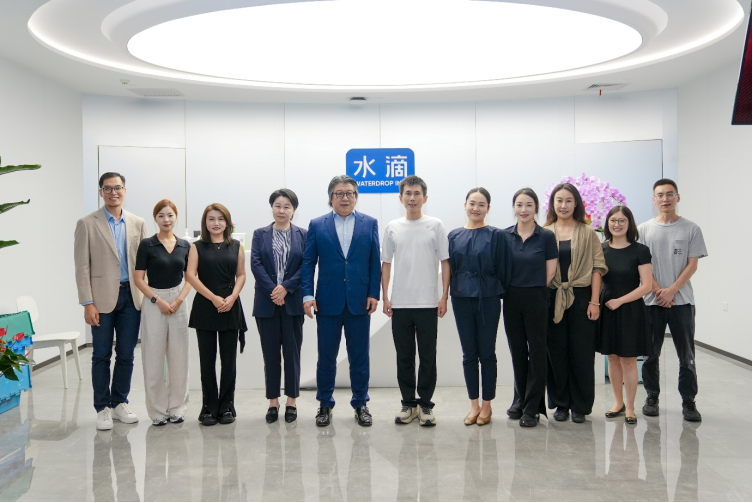
“共行·聚势”,德华安顾人寿拜访水滴公司,共启深化合作新篇章
Qi Lu Wan Bao· 2025-08-22 12:51
Core Insights - The strategic partnership between Waterdrop and Deutsche Bank AnGu Life has been fruitful since its inception in 2019, focusing on elderly insurance, disability insurance, and non-standard body insurance [3][4][9] - Both companies aim to deepen their collaboration and innovate in life insurance product supply-side reforms, addressing the significant market demand in the aging population and health insurance sectors [7][9] Company Achievements - Deutsche Bank AnGu Life has served 490,000 elderly clients, providing insurance coverage amounting to 60.962 billion yuan and total claims of 253 million yuan as of July 2025 [3] - The company leads the internet disability insurance sector, having provided 11.8 billion yuan in risk coverage to 64,000 clients as of June 2025 [3] - Waterdrop has launched 25 products in collaboration with Deutsche Bank AnGu Life, providing 360 billion yuan in disease insurance coverage to nearly 450,000 clients [4] Product Innovations - The "XiaoQinBao" series of products has evolved to cover 10 common severe diseases among the elderly, with "XiaoQinBao 2" recognized as a leading product in the elderly insurance market [6] - The "Wuyou Guardian" is the first long-term disability insurance available for clients aged 70 and above, offering comprehensive support and innovative features [6] - The "Yisheng Guardian" targets non-standard body individuals, providing tailored coverage for chronic diseases, particularly benefiting the elderly [6] Future Directions - Both companies plan to enhance their strategic collaboration by leveraging their strengths in risk control, health management services, AI applications, and joint marketing efforts [7][9] - The focus will be on expanding their market presence in the elderly, disability, and non-standard insurance sectors, aiming to create a comprehensive ecosystem of services [9]
水滴公司(WDH.US)2025年Q1营收7.54亿元 连续13个季度实现盈利
智通财经网· 2025-06-05 10:18
Core Insights - Waterdrop Inc. reported a net revenue of 754 million yuan for Q1 2025, representing a year-on-year growth of 7% [1] - The company achieved a net profit attributable to shareholders of 108 million yuan, marking a 34.2% increase year-on-year, and has maintained profitability for 13 consecutive quarters [1] - Operating expenses as a percentage of revenue decreased by 6.1 percentage points to 40.3% [1] Financial Performance - Insurance-related revenue reached 658 million yuan, up 8.4% year-on-year, with operating profit at 151 million yuan [1] - The first-year scale premium for the insurance business grew by 19.3% to 2.092 billion yuan [1] - Short-term insurance first-year scale premium increased by 30.1% [1] Product Development - The company upgraded its exclusive maternal and infant insurance product "Jie Hao Yun" to version 5.0, adding various disease coverages and introducing a medication subsidy [2] - Waterdrop launched the "All Insurance" million medical insurance, the first in the industry to offer guaranteed renewal for five years without health declarations, targeting chronic and sub-healthy individuals [2] AI and Technology Integration - Waterdrop has applied for 51 patents related to large model capabilities as of the end of Q1 [2] - AI applications have significantly improved efficiency across various business segments, with the "AI Quality Inspection Assistant" enhancing quality management efficiency by 83% [2] - The "Waterdrop AI Insurance Expert" contributed over 2 million yuan in premium assistance in a single month [2] Social Impact and Other Business Segments - Waterdrop Fund has facilitated donations of 68.8 billion yuan to approximately 3.47 million patients since its inception, with a Q1 operating loss of about 30.2 million yuan [3] - The digital clinical trial solution business generated a net revenue of 23 million yuan, reflecting an 11.5% year-on-year growth, with partnerships reaching 185 pharmaceutical and CRO companies [3]