
全液冷超充设备

Search documents
从“生产工具”到“智能生态”,商用车依靠新技术如何破局?
第一商用车网· 2025-11-23 13:23
Core Viewpoint - The global automotive industry is undergoing a significant supply chain restructuring, with China emerging as a central hub for the incremental automotive supply chain, particularly in core areas such as batteries, chips, and software [1] Group 1: Smart Commercial Vehicle Development - The smartization of commercial vehicles is not merely a transfer of passenger vehicle technology but involves a deep understanding and redefinition of their "production tool" attributes [3] - The development of smart commercial vehicles is driven by a dual-track system: low-level intelligent driving is mandated by regulations, while high-level intelligent driving must return to the essence of business by reducing logistics costs and improving operational efficiency [4] - By 2028, the configuration rate of L2+ intelligent driving systems is expected to exceed 50%, with costs dropping to one-third of current levels, transitioning from an "expensive option" to a "standard value" [4] Group 2: Strategic Innovations and Collaborations - Companies like Jianghuai are adopting an open cooperation approach, collaborating with platforms like Huawei's MDC to create a flexible and cost-effective intelligent driving hardware base [4] - Geely emphasizes that if intelligent driving does not reduce the need for human drivers, its value will diminish, focusing on either enhancing safety through assisted driving or fully replacing drivers with autonomous systems [8] - Yutong highlights the importance of integrating smart technology into customer business flows to address real pain points, demonstrating successful applications in various scenarios such as urban logistics and sanitation [9] Group 3: Ecosystem and Infrastructure Development - The rise of smart commercial vehicles necessitates innovations in the maintenance and energy supply sectors, with companies like Jieneng New Energy addressing challenges in charging networks [11][15] - Jieneng's solutions include fast-charging systems capable of high outputs and exploring integrated zero-carbon park models, transforming commercial vehicles into key nodes in smart energy networks [15] - The introduction of AI-driven maintenance systems aims to enhance repair efficiency and democratize technical knowledge, allowing ordinary technicians to handle complex issues [13] Group 4: Industry Transformation and Future Outlook - The intelligent development of commercial vehicles marks a shift from isolated mechanical products to interconnected, intelligent, and efficient digital transport cores [17] - China's complete industrial chain, diverse application scenarios, and agile innovation mechanisms position it as a vital contributor to the global transformation of the commercial vehicle industry [17]



国网山东电力完成120座高速服务区充电站升级,护航国庆出行
Qi Lu Wan Bao· 2025-09-29 07:59
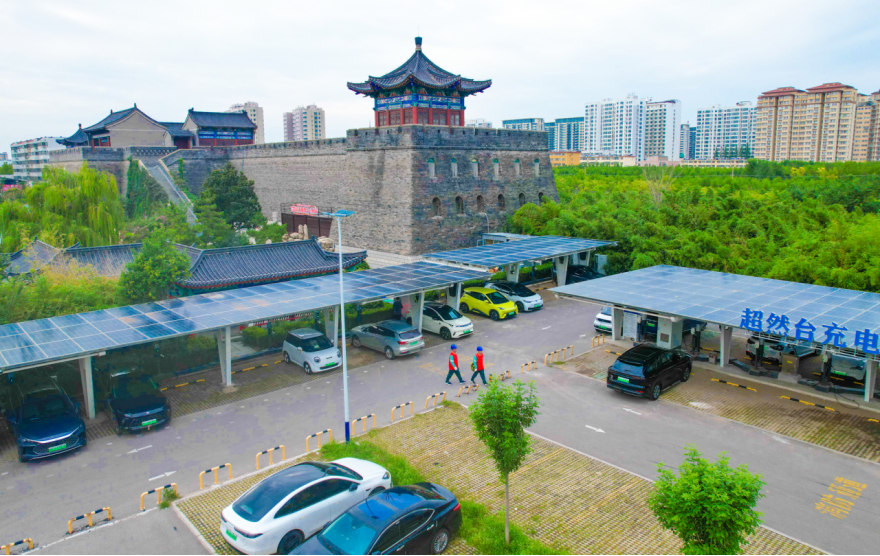
Core Points - The upgrade of charging stations at Jining service area on Jixu Expressway has been completed, with a total of 120 highway service area charging stations and 488 charging terminals upgraded by State Grid Shandong Electric Power this year [1] - The upgrade includes 123 high-power charging terminals, with a power increase of over 70% for single-gun charging, significantly reducing charging time [1] Group 1 - The Jinan pilot area has launched an interactive charging and swapping demonstration station featuring the largest full liquid-cooled supercharging cluster in the country, including the highest power single liquid-cooled supercharging pile and two sets of 1200 kW full liquid-cooled supercharging equipment [3] - The station has 20 single-gun charging guns with a power of 600 kW, capable of charging 100 kWh in just 10 minutes [3] - State Grid Shandong Electric Power has upgraded charging terminals from 60 kW to 120 kW, with a total of 294 charging stations built and put into operation in the first nine months of this year, representing a year-on-year growth of 14.4% [3] Group 2 - The total number of charging stations built and put into operation by State Grid Shandong Electric Power has reached 4,529, capable of serving 27,200 new energy vehicles simultaneously, achieving full coverage of public charging stations in towns [3] - The company has completed inspections and maintenance of charging equipment at highway service areas and urban core area charging stations to ensure stable operation [5] - Mobile emergency charging cabins have been deployed at 10 highway service area charging stations to address the peak charging demand during the holiday season [5]
多元场景点燃消费引擎
Jing Ji Ri Bao· 2025-03-27 07:04
Group 1: Government Initiatives - The government emphasizes boosting consumption and improving investment efficiency to expand domestic demand through the "Special Action Plan to Boost Consumption" [1] - Various regions are implementing innovative consumption scenarios and exploring new growth points to stimulate consumer spending [1] Group 2: Technological Innovations in Consumption - In Shandong, digital technologies are reshaping consumption experiences, such as VR technology in entertainment and personalized safety helmet design programs [2][3] - The integration of virtual reality with cultural tourism is being promoted, with plans to establish 20 innovative demonstration applications [3] Group 3: Retail and E-commerce Developments - In Linyi, a safety helmet customization program has increased order conversion rates by 30%, with sales reaching 1.5 million units, a 20% year-on-year growth [3] - Linyi is also developing a digital service platform to enhance the shopping experience, aiming to upgrade its commercial logistics big data platform [3] Group 4: Consumer Engagement and Events - In Hubei, the "Chinese Food Festival" and various promotional activities aim to stimulate service consumption across multiple sectors, with over 600 events planned [8] - Wuhan is attracting consumers through the introduction of new brands and cultural events, resulting in a 16% increase in daily foot traffic in major shopping areas [8] Group 5: Financial Incentives and Consumer Behavior - In Sichuan, a subsidy program for digital products has led to the sale of 301.2 million items, generating a consumption boost of 97.3 billion yuan [7] - The province is focusing on creating new consumption scenarios and enhancing consumer experiences through innovative retail strategies [7][9]