
公积金贷款利率

Search documents
政策协同发力 释放稳市场稳预期强信号
Xin Hua She· 2025-05-28 10:47
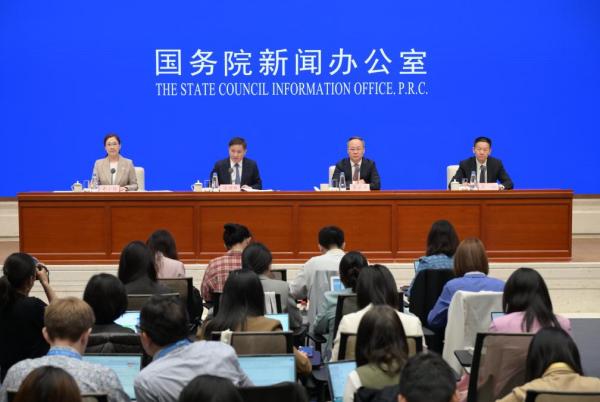
Group 1 - The central political bureau meeting on April 25 emphasized the importance of stabilizing employment, enterprises, markets, and expectations, with "stabilizing markets" and "stabilizing expectations" being key focuses [1] - On May 7, a press conference announced a comprehensive financial policy package aimed at supporting market stability and expectations, including a reduction in policy interest rates and structural monetary policy tool rates [3][4] - The People's Bank of China implemented a reserve requirement ratio (RRR) cut of 0.5 percentage points for financial institutions, effective May 15, to further support economic stability [3][4] Group 2 - The recent interest rate and RRR cuts reflect a moderately accommodative monetary policy stance, aimed at stimulating financing demand from businesses and households, thereby boosting investment and consumption [4] - A joint initiative by multiple departments aims to provide comprehensive financial services for technological innovation, indicating a shift towards supporting tech financing through both credit and equity investments [6][7] Group 3 - The National Financial Supervision Administration announced measures to support small and micro enterprises, focusing on increasing financing supply, reducing costs, and improving efficiency [10] - Since the launch of the financing coordination mechanism, over 67 million businesses have been visited, resulting in loans totaling 12.6 trillion yuan [10] Group 4 - The central government is accelerating the construction of a unified national market to enhance domestic circulation and promote high-quality economic development [14] - A special action to standardize administrative law enforcement related to enterprises has been initiated, addressing prominent issues raised by businesses and ensuring their legal rights [16] Group 5 - Recent reforms have streamlined market access by reducing the number of items on the market access negative list to 106, facilitating easier entry for private enterprises [18][21] - The implementation of the Private Economy Promotion Law aims to create a fairer and more predictable environment for business development [21]

LPR报价迎年内首降 五年期以上LPR下调为3.5%
Zhong Guo Jing Ying Bao· 2025-05-20 10:08
Group 1 - The People's Bank of China (PBOC) has lowered the Loan Prime Rate (LPR) for one year to 3.0% and for five years and above to 3.5%, both down by 10 basis points, marking a second reduction since October of the previous year [1] - The reduction in LPR is a response to the PBOC's announcement on May 7 to lower policy rates by 0.1 percentage points, indicating a shift in the pricing basis for LPR [1][2] - The LPR decrease is expected to significantly lower financing costs for enterprises and households, serving as a crucial measure to stimulate investment and consumption in the current economic climate [1][2] Group 2 - The LPR cut is seen as a necessary step to stabilize the real estate market, which is vital for economic growth, especially in light of recent external uncertainties due to U.S. tariff issues [2] - Analysts suggest that further reductions in LPR could lead to lower mortgage rates, addressing the high actual mortgage rates and supporting the stabilization of the real estate market [2][3] - The overall decline in bank funding costs, particularly the significant policy rate cut, is viewed as a precursor to further interest rate reductions [2] Group 3 - Despite signs of stabilization in the real estate market, the foundation for recovery remains weak, as evidenced by a decline in property sales in April [3] - The April data shows a 0.4% month-on-month drop in the second-hand housing price index across 70 cities, indicating a need for further interest rate cuts to stimulate demand [3][4] - The demand for credit has decreased in the second quarter following a surge in the first quarter, with April seeing a significant drop in both corporate and household loans [4] Group 4 - There is potential for further LPR reductions in the second half of the year, as external uncertainties persist and domestic growth policies remain necessary [5][6] - The recent LPR cut is expected to lead to a comprehensive reduction in deposit rates, with estimates suggesting an average decrease of around 0.1 percentage points across various deposit types [6] - Major banks, including Industrial and Commercial Bank of China and China Construction Bank, have already announced reductions in deposit rates, with the largest cut being 25 basis points [6] Group 5 - The PBOC's monetary policy report indicates a focus on supporting the real economy while maintaining the health of the banking system, highlighting the importance of stabilizing net interest margins [7] - The net interest margin for commercial banks has narrowed to 1.43%, down 9 basis points from the previous quarter, suggesting that the LPR cut may help alleviate this downward pressure [7] - Future policy adjustments may shift focus from merely reducing financing costs to addressing overall social financing costs, emphasizing the need for effective interest rate transmission [7]
房贷利率何时降?专家解读: 结合市场运行状况动态调整
Zhong Guo Jing Ying Bao· 2025-04-10 10:40
Core Viewpoint - The discussion around the potential reduction of mortgage interest rates is gaining traction, driven by expectations of monetary policy adjustments such as interest rate cuts and reserve requirement ratio reductions [1][2]. Group 1: Mortgage Rate Expectations - Analysts predict that despite current mortgage rates being at historical lows, there is still room for a decline in average mortgage rates for first and second homes, estimated to be between 25 to 50 basis points within the year [1]. - The market anticipates that the probability of adjustments to the Loan Prime Rate (LPR) by commercial banks is higher than changes to housing provident fund loan rates in the second quarter [4]. Group 2: Monetary Policy Context - The LPR has remained unchanged for five consecutive months, with the one-year LPR at 3.1% and the five-year LPR at 3.6% as of March 20 [2]. - The government has indicated a willingness to utilize monetary policy tools such as interest rate cuts and increased fiscal spending to stimulate domestic consumption and stabilize market confidence [2]. Group 3: Factors Influencing Rate Changes - International interest rate movements and the domestic real estate market's performance are critical factors that will influence the adjustment of mortgage rates [3]. - The overall trend suggests a long-term reduction in loan costs, with expectations for continued optimization of mortgage policies to better meet buyer needs [3]. Group 4: Government Policy and Market Impact - The government has emphasized the importance of stabilizing the real estate market in its work report, highlighting its role in boosting GDP growth and restoring market confidence [4]. - The adjustment of LPR is seen as crucial for reducing financing costs across the banking sector, which would have a broader positive impact on investment and consumer confidence [4]. Group 5: Provident Fund Loan Rate Considerations - There is a strong policy rationale for adjusting housing provident fund loan rates in line with commercial mortgage rates to maintain a suitable interest rate spread [5]. - The housing provident fund should better support residents in purchasing or renting homes, including simplifying withdrawal procedures [5].