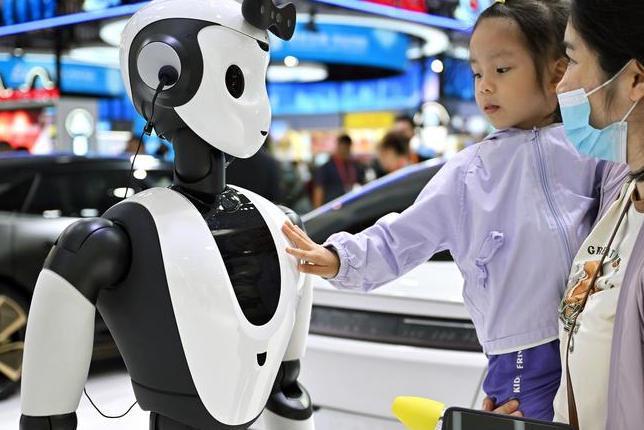
具身AI

Search documents
四点半观市 | 机构:看好具身AI的垂直应用领域
Sou Hu Cai Jing· 2026-02-27 08:32
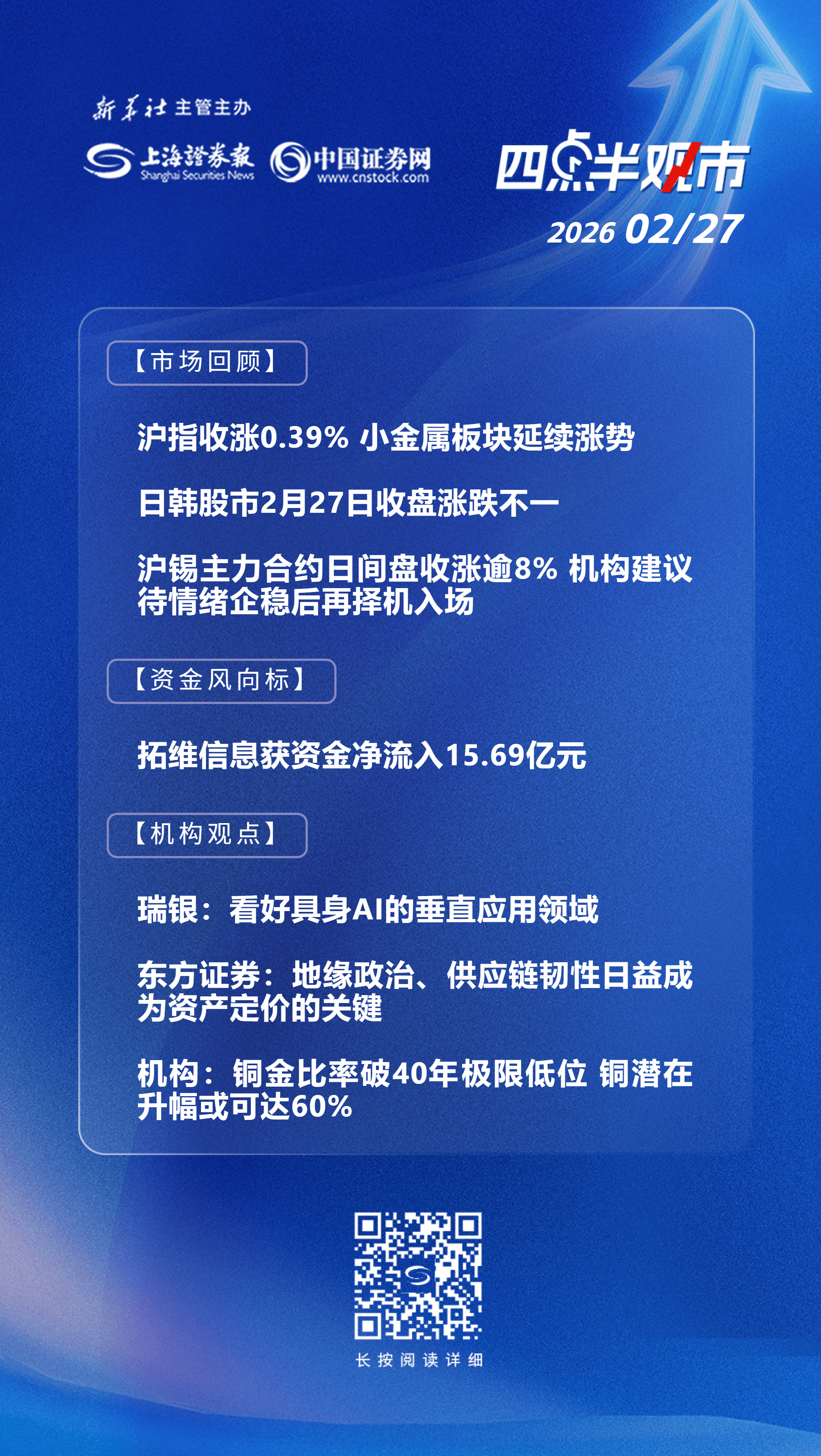
Market Overview - The Shanghai Composite Index closed up 0.39% at 4162.88 points, while the Shenzhen Component fell 0.06% and the ChiNext Index dropped 1.04% [6] - The trading volume in the Shanghai and Shenzhen markets was 250.55 billion yuan, a decrease of 51.2 billion yuan from the previous day [6] - Over 3200 stocks in the market experienced gains [6] Sector Performance - The small metals sector continued its upward trend, with the main contract for tin rising over 8% during the day [6] - The copper-to-gold ratio has reached a 40-year low, suggesting a potential increase in copper prices of up to 60% if the ratio normalizes [9] Institutional Insights - UBS expressed optimism about the vertical applications of embodied AI, including humanoid robots, advanced driver-assistance systems, and industrial automation, highlighting the growth potential in these sectors [9] - According to Oriental Securities, geopolitical factors and supply chain resilience are becoming key in asset pricing, shifting investment logic from growth efficiency to building resilience [9] Fund Flows - Top net inflow stocks on February 27 included Tuowei Information, which saw a net inflow of 1.569 billion yuan [8]


美媒焦虑了:美国再不重视,中国机器人“新惊喜”又来了
Xin Lang Cai Jing· 2026-01-31 10:22
Core Insights - DeepSeek represents a significant advancement in China's AI capabilities, particularly in embodied AI, which integrates AI into hardware systems like robots and drones, allowing for environmental awareness and autonomous decision-making [1][3] - The article emphasizes that China's long-term, comprehensive policy efforts have positioned it as a leader in AI development, with a focus on embodied AI potentially yielding substantial economic and geopolitical advantages [1][4] Industry Focus - China is prioritizing the development of AI-driven robots, aiming to integrate embodied AI into core industries to enhance productivity and military capabilities [4] - The country is leveraging its existing manufacturing strengths to become a global leader in embodied AI systems, which could automate physical tasks across multiple industries [4] - Chinese companies such as AgiBot, UBTech, and Unitree are already leading the global market in humanoid robot shipments, with AgiBot accounting for approximately 5,100 units (39% market share) [5] Challenges and Strategic Insights - Despite facing challenges such as limited access to advanced AI chips and reliance on Western suppliers for high-end sensors, the article warns against underestimating China's ability to overcome these obstacles [7] - The U.S. is criticized for its strategic neglect of embodied AI, focusing resources on a few private companies and lacking a cohesive government policy, which could hinder its competitive edge [7] - The article calls for the U.S. to enhance its analytical capabilities regarding China's AI policies and progress, suggesting that Silicon Valley must mobilize talent and capital to transition embodied AI from research to large-scale market applications [7]

“美国一次次错过,再不长脑子,中国新惊喜又来了”
Guan Cha Zhe Wang· 2026-01-31 04:33
Group 1 - DeepSeek represents a significant advancement in China's AI capabilities, particularly in robotics and autonomous systems, prompting concerns in the West about China's technological leadership [1] - The U.S. is warned to take China's AI advancements seriously, as experts note that China's systematic efforts in AI research have been underestimated [1] - The article emphasizes that the same pattern of underestimation is repeating, indicating a potential for future surprises from China in the AI sector [1] Group 2 - China is focusing on "embodied AI," which integrates AI into hardware systems like robots and drones, allowing them to learn from physical interactions rather than just executing pre-programmed instructions [3] - The long-term benefits of embodied AI could provide China with significant economic and geopolitical advantages, particularly in enhancing military capabilities [3] - China aims to leverage its manufacturing strengths to become a global leader in embodied AI systems, which could automate physical tasks across multiple industries [3] Group 3 - Local Chinese governments are investing in embodied AI companies, while private sector firms like AgiBot, UBTech, and Unitree are emerging as global leaders in humanoid robotics [4] - By 2025, China is projected to dominate the global humanoid robot market, with AgiBot leading with approximately 5,100 units (39% market share), followed by Unitree with about 4,200 units (32%), and UBTech with around 1,000 units [4] Group 4 - Despite challenges such as limited access to advanced AI chips and reliance on Western suppliers for high-end sensors, China's ability to overcome early obstacles has been underestimated [6] - The U.S. is criticized for its strategic neglect of embodied AI, focusing resources on a few private companies and lacking a comprehensive government policy [6] - The article calls for the U.S. to enhance its analytical capabilities regarding China's AI policies and progress, emphasizing the need for urgent action to avoid missing future industrial waves [6]