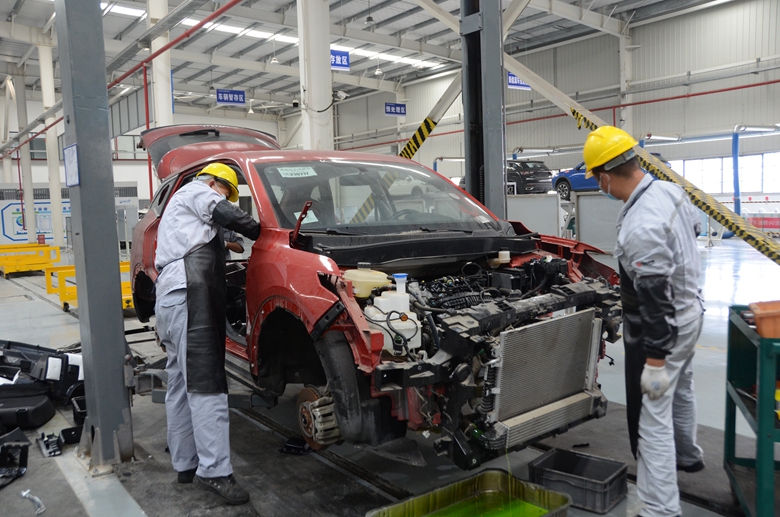
再制造变速箱

Search documents
对接全球高标准经贸规则 海南自贸港推进制度型开放
Zhong Guo Xin Wen Wang· 2025-11-22 10:20
Core Insights - Hainan Free Trade Port is focusing on institutional openness to align with global high-standard economic and trade rules, aiming to become a new high ground for reform and opening up in China [1] Group 1: Institutional Openness - Hainan is actively integrating into the international economic and trade rule system, implementing the Regional Comprehensive Economic Partnership (RCEP) with high quality [1] - The province has introduced over 30 institutional measures that have been effectively implemented, aligning its policies with RCEP rules [1] Group 2: Unique Pilot Measures - Hainan has two unique pilot measures: "temporary export repair" and "temporary import repair," which have shown significant results, including tax exemptions [1] - By September 2025, Hainan enterprises are expected to utilize the "temporary import repair" for over 100 aircraft, with a total value exceeding 67 billion yuan [2] Group 3: Open Innovation Trials - The "remanufactured product import pilot" has achieved breakthroughs, with Hainan enterprises importing two remanufactured gearboxes for the first time in 2024 [2] - Reforms to eliminate local certification service requirements have attracted seven foreign certification agencies, boosting exports of local specialty products [2] Group 4: Future Goals - Hainan aims to become a significant gateway for China's new era of opening up, aligning with international high-level economic and trade rules [2]
众多车企竞逐的“再制造”,究竟是什么“秘密武器”?
Zhong Guo Qi Che Bao Wang· 2025-10-09 08:22
Core Insights - Remanufacturing is emerging as a "secret weapon" for cost reduction and efficiency enhancement in the automotive industry, with companies like Scania integrating reusable components into their production lines [3][4] Group 1: Definition and Process of Remanufacturing - Remanufacturing involves a systematic process of "industrial rebirth" for used automotive parts, which includes disassembly, deep inspection, and technical reconstruction to restore and enhance performance [4][5] - The remanufactured engine can achieve over 95% of the performance of a new one, with the same warranty standards, showcasing the high quality of remanufacturing technology [4] Group 2: Comparison with Traditional Methods - Unlike traditional repairs that focus on fixing specific faults, remanufacturing aims for functional reuse of components, achieving higher resource utilization [5] - The remanufacturing process for gearboxes can recover over 80% of materials and reduce energy consumption by 60%, while cutting carbon emissions by 50% [5] Group 3: Global Market Trends - In the U.S., a market-driven approach has led to a complete remanufacturing industry chain, with around 12,000 dismantling companies and 20,000 remanufacturing firms, achieving an 80% reuse rate for entire vehicles [6] - Japan's regulatory framework mandates vehicle manufacturers to establish recycling channels, resulting in a 35% penetration rate of remanufactured parts in the aftermarket, with costs 40% lower than new parts [7] - Germany focuses on high-end remanufacturing technologies, achieving a 98% yield rate for remanufactured parts through advanced automation and AI [9] Group 4: Strategic Value for Companies - Remanufacturing is becoming a crucial profit growth point for automotive companies, contributing 15%-20% of after-sales profits, with remanufactured motors costing only 50% of new ones but yielding a 35% gross margin [11] - The remanufacturing sector is positioned as a solution to resource utilization challenges, significantly increasing material recovery rates and reducing reliance on natural resources [10][11] - As the automotive industry shifts from growth to sustainability, remanufacturing is seen as a key strategy for companies to enhance their competitive edge and contribute to a greener economy [11]


报废的汽车去哪儿了 可用零部件标注“出身”后进入售后市场
Chang Jiang Ri Bao· 2025-07-08 01:04
Core Insights - The article discusses the process of dismantling and recycling end-of-life vehicles at Dongfeng Hongtai, highlighting the importance of resource recovery in the automotive industry [1][2][3]. Group 1: Vehicle Dismantling Process - A 15-year-old Dongfeng Nissan SUV was dismantled, with all usable parts being removed and marked for reuse [2]. - Over 85% of the components and materials from a scrapped vehicle can be reused, with parts like engines and transmissions undergoing remanufacturing [3]. - The remanufactured parts are marked with a "Remanufactured Auto Parts" label and a traceable barcode for market entry [3]. Group 2: Economic Benefits and Market Impact - The cost savings for consumers can exceed 50% when opting for remanufactured parts instead of new ones, making it an attractive option for vehicle owners [3]. - Dongfeng Hongtai is the only circular economy business unit under Dongfeng Motor Corporation and is one of nine companies in Wuhan with scrapping qualifications [3]. Group 3: Expansion into Battery Recycling - In addition to vehicle dismantling, Dongfeng Hongtai has expanded into the recycling of new energy vehicle batteries, classifying battery cells into three grades based on remaining capacity [4]. - Batteries with 60% to 80% capacity can be repurposed for electric vehicles and energy storage, while those below 20% are dismantled for metal recovery [4]. Group 4: Regulatory and Market Developments - The company has seen an increase in scrapped vehicles due to government incentives, with over 2,400 vehicles processed in the first half of the year [6]. - New regulations in Hubei Province encourage detailed dismantling and digital transformation in the recycling industry, aiming to enhance profitability and expand the market for reused parts [6].