分布式储能系统

Search documents
分布式储能盈利模式向多元化演进
Ke Ji Ri Bao· 2026-02-25 01:00
Core Insights - The distributed energy storage sector in China is expected to experience significant growth, with installed capacity projected to increase from 570 MW in 2019 to 3,638 MW by the third quarter of 2025, representing over a fivefold increase [1] - The development of distributed energy storage is accelerating due to declining construction and operational costs, extensive development of distributed energy, and supportive policies [1][2] - Despite rapid growth, challenges such as limited application scenarios, imperfect market mechanisms, and immature business models hinder the large-scale development of distributed energy storage [1][4] Industry Trends - Distributed energy storage is transitioning from demonstration projects to large-scale applications, becoming a crucial element in energy transition and enhancing grid flexibility [2] - The six major application scenarios for distributed energy storage include industrial and commercial energy storage, distributed photovoltaic energy storage, green electricity direct connection, area storage, virtual power plants, and charging and swapping stations [2] - Industrial and commercial energy storage is the most mature application scenario, accounting for 68.7% of the cumulative installed capacity by September 2025 [2] Policy and Market Dynamics - Recent green electricity direct connection projects are vital for improving renewable energy consumption efficiency and reducing electricity costs [3] - The commercial model for distributed energy storage is still in the exploratory phase, facing challenges such as insufficient policy continuity and a lack of diverse revenue sources [4] - The profitability of industrial and commercial energy storage largely depends on peak and valley price differences, with regions like Zhejiang and Guangdong benefiting from higher price differentials [4] Future Outlook - The commercial viability of distributed energy storage is expected to improve with clearer market mechanisms and ongoing technological advancements that will lower storage costs [5] - Policies such as the 2024 guidelines for electricity market operations and various local initiatives are laying the groundwork for the high-quality development of distributed energy storage [5] - The revenue model is anticipated to evolve from a single price arbitrage approach to a more interactive model that includes market trading and auxiliary services [6] Recommendations - The report suggests that in the industrial and commercial energy storage scenario, short-term revenue can be generated through fixed peak and valley price differences, while long-term strategies should focus on dynamic pricing and capacity fee reductions [7] - For green electricity direct connection projects, short-term savings can be achieved through self-consumption, while long-term strategies should involve participation in grid balancing and exploring carbon reduction benefits [7] - Recommendations for other scenarios include enhancing fiscal and tax support, encouraging technological innovation, and improving mechanisms for market participation [7]
为智能化工厂提供一个“超级充电宝”
Xin Lang Cai Jing· 2026-01-05 20:49
Core Viewpoint - The largest customer-side energy storage project in Chengdu has officially commenced trial operations, providing a significant boost to the local manufacturing sector by ensuring stable power supply and supporting the "dual carbon" goals [3][5]. Group 1: Project Overview - The energy storage system, located in the Sichuan Jintang Economic Development Zone, has a total power capacity of 25 megawatts and a battery capacity of 50 megawatt-hours, capable of storing up to 50,000 kilowatt-hours of electricity, which can meet the company's power needs for 0.2 days [4]. - The project utilizes lithium iron phosphate battery storage technology, known for its high charge and discharge efficiency and stable operation [4]. Group 2: Economic Impact - The energy storage system is expected to achieve an annual charging capacity of up to 30 million kilowatt-hours, potentially saving the company nearly 10 million yuan in electricity costs each year [4]. - The project adopts an intelligent operation strategy of "two charges and two discharges," charging during off-peak hours and discharging during peak hours, thus optimizing energy costs [4]. Group 3: Industry Development - The successful implementation of this energy storage project expands the application scenarios for user-side energy storage in Chengdu and injects new momentum into the exploration of the "source-network-load-storage" collaborative development model [5]. - The Jintang Economic Development Zone has already seen three energy storage projects operational, with plans for a 100MW/200MWh shared energy storage project to further support local enterprises [7].

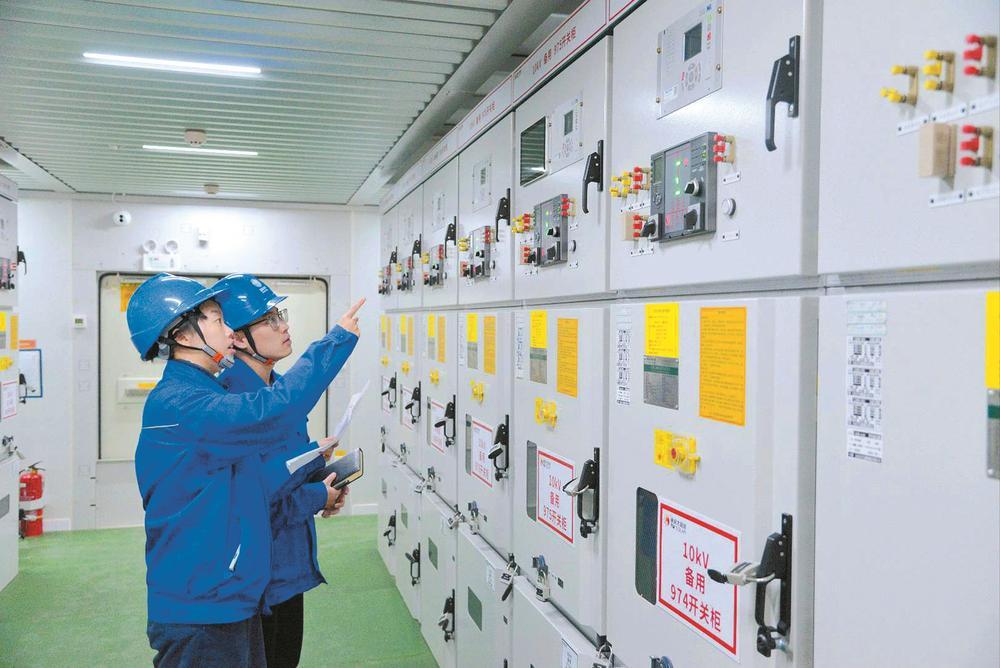
分布式储能遭遇成长烦恼:盈利模式单一与安全隐忧何解?
Zhong Guo Neng Yuan Wang· 2025-12-29 09:11
Core Insights - The report indicates that China's distributed energy storage capacity is expected to grow from 570 MW in 2019 to over 3638 MW by Q3 2025, representing a growth of more than five times, showcasing a strong development momentum [1] Group 1: Market Dynamics - Distributed energy storage has six main application scenarios, with commercial and industrial storage being the most mature, primarily benefiting from time-of-use electricity price arbitrage [1] - The rapid development of distributed energy storage is driven by both policy guidance and market mechanisms, with new applications like zero-carbon parks creating a strong demand for stable green electricity [2] - Distributed energy storage can alleviate local network congestion and enhance the self-consumption rate of local renewable energy, with expectations for broader application during the 14th Five-Year Plan period [3] Group 2: Challenges and Risks - The commercial viability of distributed energy storage is currently heavily reliant on time-of-use electricity price arbitrage, making it vulnerable to policy changes [4] - High development costs, safety issues, and low-quality competition are significant structural challenges facing the commercial storage sector [5][6] - The industry needs to transition from being a "price arbitrage tool" to a flexible resource with multiple values in the electricity market [7] Group 3: Future Outlook and Recommendations - The future of distributed energy storage will depend on policy support and technological advancements, with expectations for clearer market mechanisms in the next three years [7] - Recommendations include widening the time-of-use price gap, improving demand response mechanisms, and establishing safety standards to ensure basic profitability and safe operation of projects in the short term [8] - Long-term goals involve deepening electricity market reforms, exploring capacity value, and enhancing the economic viability and market competitiveness of distributed energy storage [8]
趋势研判!2025年中国分布式储能行业政策、产业链全景、发展现状、细分市场及未来发展趋势分析:市场驱动开启新篇,光储融合迈向主流[图]
Chan Ye Xin Xi Wang· 2025-11-21 01:07
Core Insights - The distributed energy storage industry is experiencing explosive growth driven by national policy support and increasing demand for renewable energy, with projections indicating that by 2024, new energy storage installations will account for over 40% of the global total [1][6] - The industry is transitioning from policy-driven growth to market-driven and economic viability, with a clear delineation of the supply chain from upstream materials to downstream applications [1][5] Industry Overview - Distributed energy storage systems are deployed close to energy consumption points, enabling local production, storage, and consumption of electricity, which helps stabilize the output fluctuations of renewable energy sources [2][4] - The industry is characterized by various technologies, including lithium-ion batteries and mechanical storage systems, and is categorized based on application scenarios such as user-side, grid-side, and power-side storage [2][3] Policy Landscape - A series of national policies have been introduced to support the development of distributed energy storage, including guidelines for enhancing grid peak-shaving capabilities and plans for high-quality development of new energy storage manufacturing [5][6] Supply Chain Structure - The supply chain of the distributed energy storage industry is well-defined, with upstream focusing on core materials and components, midstream on system integration and EPC services, and downstream covering applications across generation, grid, and user sides [5][6] Current Market Dynamics - The industry has seen a significant increase in installations, with projections for 2024 indicating a cumulative installed capacity of 73.76 million kilowatts, representing an annual growth rate exceeding 130% [6][7] - The market is dominated by lithium iron phosphate batteries, which hold nearly 90% market share due to their mature technology and cost advantages [6][7] Application Scenarios - The application landscape is evolving, with grid-side storage becoming the main contributor to new installations, expected to account for 60% of the market by 2025 [7][8] - Distributed photovoltaic systems are also gaining traction, with cumulative installed capacity reaching 370 million kilowatts by the end of 2024, significantly enhancing the energy structure transition [7][8] Competitive Landscape - The industry is characterized by leading companies such as CATL and BYD dominating the manufacturing sector, while others like Sungrow and Huawei lead in PCS technology [8][9] - The competitive landscape features a mix of large enterprises and smaller firms focusing on niche markets, with significant clusters in regions like the Yangtze River Delta and the Pearl River Delta [8][9] Future Trends - The industry is moving towards diversified, market-driven, and intelligent development, with applications expanding beyond simple energy storage to integrated solutions that enhance energy efficiency and reliability [9][10] - Technological advancements are expected to shift from a lithium-dominated landscape to a more diversified approach, incorporating long-duration storage technologies [10][11] - The business model is transitioning from policy-driven to market-oriented, with distributed energy storage expected to participate more actively in electricity markets and auxiliary services [11]






多国买家急寻合作!ESIE 2026 储能展首批国际采购需求发布
中关村储能产业技术联盟· 2025-11-09 13:09
Core Insights - The article emphasizes India's emergence as a focal point in the global energy storage market due to its vast market potential and supportive policies, aiming for a 50 GW renewable energy generation target by 2030 [2] Group 1: Market Opportunities - India, with a population exceeding 1.4 billion, is experiencing a steady increase in electricity demand, providing significant collaboration opportunities for global energy storage companies [2] - The ESIE 2026 International Business Matching Conference aims to connect Chinese energy storage companies with over 50 countries, including Australia, the USA, Germany, India, Brazil, and regions in the Middle East and Africa [3] Group 2: Buyer Procurement Needs - Various buyers are seeking distributed energy storage systems (BESS) ranging from 100 kWh to 1 MWh for commercial users and microgrid projects [5] - Specific procurement needs include electric vehicle components, battery management systems (BMS), and high-efficiency bidirectional inverters for solar energy storage systems [6] - Buyers are also interested in energy management systems (EMS) for industrial parks and standalone projects, as well as components for distributed energy storage systems suitable for small and medium enterprises [7][13] Group 3: Event Details - The ESIE 2026 conference will focus on popular markets in Europe, America, Australia, the Middle East, and Asia-Pacific, inviting energy authorities, enterprises, and industry associations to participate [11] - The event will provide a comprehensive support chain for Chinese energy storage companies, including demand matching, technical exchanges, and project implementation [11]

定调2025!储能开年大会释放这些重要信号
行家说储能· 2025-02-26 09:57
Core Viewpoint - The conference highlighted the emerging opportunities in the commercial energy storage sector, with a focus on trends leading up to 2025 and the integration of energy storage with photovoltaic systems [1][3][29]. Industry Development - The global energy storage market is projected to add 100GW by 2025, with 2024 expected to see 77GW/183GWh of new installations, driven by energy transition, technological innovation, and supportive policies [4][5]. - China is leading the charge with a cumulative installed capacity of 73.76GW by 2024, surpassing pumped storage for the first time [5]. Technological Trends - Energy storage has transitioned from a supplementary role to a necessity, particularly with the rise of distributed photovoltaic systems, which reached a cumulative capacity of 370 million kW by the end of 2024 [6][7]. - Innovations in long-duration storage technologies, such as flow batteries and compressed air storage, are expected to enhance the capabilities of energy systems [7]. Regional Market Insights - The Southeast Asian energy storage market is estimated to reach $2.85 billion (approximately 206.733 billion RMB) in 2024, with a growth rate of 6.77%, focusing on industrial applications [8]. Investment Opportunities - The commercial energy storage sector is experiencing a shift towards higher value propositions, with investment returns becoming increasingly attractive in regions like Zhejiang, Shanghai, and Guangdong, where payback periods are under four years [12][13]. - The integration of financing solutions is seen as a way to mitigate risks and enhance cash flow for energy storage projects [21]. Market Dynamics - The commercial energy storage landscape is evolving, with new entrants gaining market share and competition intensifying among top players [18]. - The trend towards integrated solutions combining energy storage with photovoltaic systems is expected to dominate the market, driven by cost reductions and technological advancements [19][22]. Future Outlook - The industry anticipates a significant market shift due to new energy policies, which will create both challenges and opportunities for energy storage providers [29]. - The consensus among industry leaders is that only companies with core competencies in safety and operational services will thrive in the evolving market landscape [29].