分布式新能源

Search documents
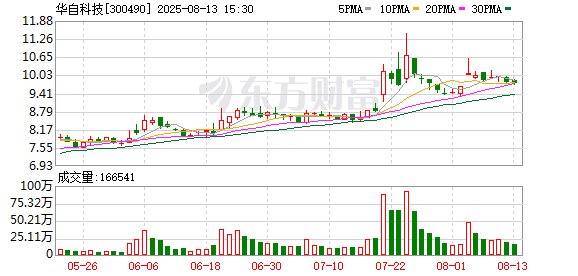
华自科技:公司具备为数据中心在内的工商业园区提供分布式新能源、储能及智能配电产品及系统方案的能力
Zheng Quan Ri Bao Wang· 2026-01-13 09:09
Core Viewpoint - The company, Huazi Technology (300490), is actively expanding its business capabilities to provide distributed renewable energy, energy storage, and intelligent distribution products and system solutions for data centers and commercial parks [1] Group 1 - The company has the capability to offer solutions for distributed renewable energy and energy storage [1] - The company is focusing on the development of intelligent distribution products and systems [1] - The company is currently in the process of actively expanding its related business [1]

《电力中长期市场基本规则》解读之五︱积极推动新型主体入市机制建设
国家能源局· 2026-01-02 09:25
Core Viewpoint - The article discusses the recent release of the "Basic Rules for the Electric Power Medium and Long-term Market," which establishes a framework for the entry of new types of entities into the market, aiming to optimize the coordination of various regulatory resources and promote energy transition and electric power market development [3]. Group 1: Practice Exploration and Achievements of New Entities in the Market - The types of market participants have been clarified, leading to a diversified participation structure centered around new energy storage, virtual power plants, distributed energy, and integrated source-grid-load-storage projects [4]. - Various provinces have developed differentiated market participation mechanisms based on their resource endowments and system needs, with new energy storage in Shandong and Guangdong participating directly in the spot market, while Gansu and Shanxi have adopted different participation models [5]. - The scale of participation by new entities is steadily increasing, with Zhejiang registering 145 new entities in 2024, and Gansu's new energy storage capacity reaching 442 MW / 1153 MWh [6]. Group 2: Importance of the Basic Rules in Guiding New Entities - The Basic Rules define the market position and responsibilities of new entities, providing a basis for the standardized entry of various regulatory resources into the market [7]. - New entities are granted rights such as signing medium and long-term contracts and receiving fair access to grid services, ensuring fair competition in the market [8]. Group 3: Suggestions for Further Promoting the Entry Mechanism of New Entities - Establish technical requirements and standardized entry mechanisms for new entities to participate in flexible regulation markets, enhancing their capabilities through tailored training [11]. - Promote reasonable market price signals to effectively connect medium and long-term markets with spot markets, ensuring that new entities can cover their adjustment costs [12]. - Expand revenue channels for new entities by encouraging participation in various market segments and establishing a performance-based compensation mechanism [13]. - Classify resource aggregation entities based on operational characteristics and regulation capabilities, improving registration and management mechanisms [14].


华自科技:可为包括数据中心在内的工商业园区提供分布式新能源等产品及系统方案
Mei Ri Jing Ji Xin Wen· 2025-11-24 00:50
Core Viewpoint - The company has confirmed its capability to provide distributed renewable energy, energy storage, and intelligent distribution solutions for commercial and industrial parks, including data centers [1] Group 1 - Investors inquired about the company's involvement in energy storage or distribution solutions for Artificial Intelligence Data Centers (AIDC) [1] - The company stated that its existing energy storage products, such as PCS and EMS, are technically capable of adapting to AIDC scenarios [1]
协鑫能科20251030
2025-10-30 15:21
Summary of GCL-Poly Energy Conference Call Company Overview - **Company**: GCL-Poly Energy - **Industry**: Renewable Energy and Energy Services Key Financial Metrics - **Revenue**: 7 billion CNY for the first three quarters, a year-on-year increase of 46.39% [2][3] - **Net Profit**: 7.62 billion CNY, up 25.78% year-on-year [3] - **Earnings Per Share**: 0.4819 CNY, a 25.76% increase [2][3] - **Total Assets**: 409.62 billion CNY, a growth of 1.24% [2][3] - **Net Assets**: 123.38 billion CNY, up 5.1% [2][3] - **Return on Equity**: 5.62%, an increase of 0.48% year-on-year [2][3] Business Development and Performance - **Distributed Energy and Storage Projects**: Significant expansion in distributed energy and storage projects, with a focus on energy services like electricity sales and virtual power plants [2][4] - **Virtual Power Plant Load**: Managed adjustable load reached 850,000 kW, representing a significant share of the national virtual power plant load [2][8] - **Commercial Solar Power**: New commercial solar installations of 850,000 kW, a 28% increase [9] - **Electricity Sales Volume**: 241 billion kWh in electricity sales transactions [9] - **Carbon Neutral Projects**: 12 carbon-neutral projects operational, providing comprehensive solutions for major clients [9] Market Position and Strategy - **Energy Center Operations**: Stable operation of regional energy centers with electricity generation of 6.82 billion kWh and gas consumption of 7.73 million tons [10] - **Installed Capacity**: Total installed capacity of 6.4 million kW, with wind and solar accounting for 60% [10] - **User Capacity Management**: Managed user capacity reached 20 GW, with 850,000 kW in adjustable load market testing [11] Technological Integration - **AI Utilization**: Leveraging over 30 years of energy experience and 13 years of user data to enhance predictive capabilities in energy supply and demand [11][26] - **Collaboration with Ant Group**: Partnership to integrate energy management experience with machine learning algorithms for optimizing energy asset aggregation [5][13] Regulatory and Market Challenges - **Policy Impact**: Existing projects are less affected by policy changes, while new projects face market competition [7] - **Market Opportunities**: Despite challenges, the company remains optimistic about future growth opportunities [6] Future Outlook - **Investment in Renewable Energy**: Continued investment in wind, solar, and storage to achieve carbon neutrality goals [22] - **Strategic Partnerships**: Plans to enhance collaboration with leading technology companies to improve market competitiveness [19] - **Response to Market Changes**: Strategies in place to manage risks associated with market fluctuations and regulatory changes [35] Conclusion GCL-Poly Energy is positioned for growth in the renewable energy sector, with strong financial performance and strategic initiatives aimed at expanding its market presence and technological capabilities. The company is optimistic about future opportunities despite facing regulatory challenges and market competition.

华自科技:可为包括数据中心在内的工商业园区提供分布式新能源、储能及智能配电等产品及系统方案
Zheng Quan Ri Bao· 2025-08-13 11:40
(文章来源:证券日报) 证券日报网讯华自科技8月13日在互动平台回答投资者提问时表示,公司可为包括数据中心在内的工商 业园区提供分布式新能源、储能及智能配电等产品及系统方案。 ...
央企新兴产业故事:已出现供需失衡、增量不增效
经济观察报· 2025-05-17 12:41
Core Viewpoint - The article discusses the challenges faced by central enterprises in the new materials and new energy sectors, particularly the issues of "supply-demand imbalance" and "incremental growth without efficiency" as they expand their investments in strategic emerging industries [1][3][4]. Group 1: Supply-Demand Imbalance - Central enterprises in sectors like new materials and new energy are experiencing a mismatch between supply and demand, leading to overcapacity and underutilization of resources [3][4]. - The investment in strategic emerging industries has increased significantly, with a reported investment of 2.18 trillion yuan in 2023, marking a 32.1% year-on-year growth [12]. - Despite the push for expansion, many enterprises are struggling with low capacity utilization rates, with some reporting rates below 30% [9][22]. Group 2: Incremental Growth Challenges - Companies are facing difficulties in achieving expected returns on their investments, leading to a situation where increased production does not translate into proportional revenue growth [21][23]. - The carbonates industry, for example, saw a projected gross margin of less than 10% in 2024, significantly below the industry average, due to falling prices and excess inventory [22]. - The construction sector is also experiencing similar issues, with rapid capacity expansion in offshore wind projects leading to market saturation and reduced profit margins [24][25]. Group 3: Strategic Direction and Policy Alignment - The State-owned Assets Supervision and Administration Commission (SASAC) has set clear quantitative targets for central enterprises, aiming for 35% of their revenue to come from strategic emerging industries by 2025 [4][28]. - Enterprises are encouraged to balance policy directives with market realities, as they face challenges in aligning their operational capabilities with ambitious targets set by SASAC [27][29]. - There is a concern among enterprises about the potential risks of investing in new materials and technologies, particularly if market demand does not meet expectations [28][30].

央企新兴产业故事:已出现供需失衡、增量不增效
Jing Ji Guan Cha Wang· 2025-05-17 12:16
Core Insights - The article discusses the challenges faced by state-owned enterprises (SOEs) in the strategic emerging industries, particularly in new materials and renewable energy sectors, highlighting issues of supply-demand imbalance and ineffective growth despite increased investments [2][6][30]. Group 1: Industry Challenges - SOEs in the strategic emerging industries are experiencing a common issue of "supply-demand imbalance and ineffective growth," as noted by Liu Bing, a project leader in a new materials SOE [2]. - Many SOEs are still in the early stages of capital investment or output, with significant revenue opportunities yet to materialize [2]. - The National State-owned Assets Supervision and Administration Commission (SASAC) has set a target for SOEs to achieve a 35% revenue share from strategic emerging industries by 2025 [5][32]. Group 2: Investment and Market Dynamics - Since 2025, SASAC has focused on key industries such as new energy vehicles and new materials, which are crucial for the transformation and upgrading of China's manufacturing sector [3]. - In 2023, central enterprises invested 2.18 trillion yuan in strategic emerging industries, marking a 32.1% year-on-year increase [14]. - Despite the optimistic market outlook for carbonates, the industry faces significant challenges, including low capacity utilization rates and inconsistent product quality [10][25]. Group 3: Financial Implications - The rapid expansion of production capacity has not been matched by market demand, leading to a decline in product prices and a significant drop in profitability for enterprises [23][27]. - In 2024, the overall operating rate of the carbonate industry was less than 40%, with profit margins expected to fall below 10%, significantly lower than the industry average [21][25]. - To address inventory buildup, companies have resorted to price reductions, but this strategy has not yielded the desired results, further exacerbating the industry's profitability issues [28][29]. Group 4: Strategic Considerations - SOEs must balance policy directives with market realities, as highlighted by concerns over potential market demand shortfalls impacting investment returns [32][34]. - The SASAC's push for SOEs to enter emerging industries aims to align with national strategies, but companies face challenges in meeting ambitious targets while ensuring economic viability [32][34]. - Liu Bing's team emphasizes the need to focus on quality and effectiveness in addition to meeting quantitative targets set by SASAC [34].