分红年金险

Search documents
受益投资 五大上市险企前三季度净利创新高
Zhong Guo Jing Ying Bao· 2025-11-08 01:21
Core Viewpoint - The five major listed insurance companies in A-shares reported better-than-expected performance for the first three quarters of 2025, with a total net profit of 426.04 billion yuan, a year-on-year increase of 33.5%, surpassing the total net profit for the entire previous year [1][2] Financial Performance - China Life reported a net profit of 167.80 billion yuan, up 60.5% year-on-year, while Ping An achieved a net profit of 132.86 billion yuan, an increase of 11.5% [2] - China Pacific and China Property & Casualty reported net profits of 45.70 billion yuan and 46.82 billion yuan, with year-on-year growth of 19.3% and 28.9% respectively [2] - New China Life's net profit reached 32.86 billion yuan, with a growth rate of 58.9% [2] - In Q3 2025, the total net profit of the five listed insurance companies was 247.85 billion yuan, a significant year-on-year increase of 68.3% [3] Investment Performance - As of the end of Q3 2025, the total investment assets of the five listed insurance companies exceeded 20 trillion yuan, showing steady growth compared to the beginning of the year [1] - China Life's total investment income for the first three quarters was 368.55 billion yuan, an increase of 107.13 billion yuan year-on-year, with an investment return rate of 6.42% [3] - New China Life's investment assets amounted to 1.77 trillion yuan, with an annualized total investment return rate of 8.6% [3] - China Property & Casualty reported total investment income of 86.25 billion yuan, a year-on-year increase of 35.3% [3] Asset Allocation Strategies - Insurance companies have optimized asset allocation in response to market conditions, increasing equity investments and focusing on undervalued, high-dividend, and growth-oriented targets [4] - China Ping An emphasized proactive allocation of interest rate bonds and increasing equity investments to ensure stable long-term investment returns [4] - China Life has significantly increased its equity investment efforts, taking advantage of market opportunities [4] Premium Income and Business Performance - The five major listed insurance companies achieved strong performance in premium income, with new business value growth exceeding 30% year-on-year [6] - China Life, Ping An, China Pacific, New China Life, and China Property & Casualty reported new business value growth rates of 41.8%, 46.2%, 31.2%, 50.8%, and 76.6% respectively [6] - The shift towards dividend-type products has been noted, with companies focusing on developing floating income-type businesses [6][7] Underwriting Profitability - China Property & Casualty achieved an underwriting profit of 14.87 billion yuan, a year-on-year increase of 130.7%, with a combined cost ratio of 96.1% [7] - Ping An's property insurance division reported a combined cost ratio of 97%, showing a year-on-year improvement of 0.8 percentage points [7] - China Pacific's property insurance division had a combined cost ratio of 97.6%, with a year-on-year optimization of 1 percentage point [7]





2220亿险资入市,大象起舞,蚂蚁寻缝
Hu Xiu· 2025-07-09 00:43
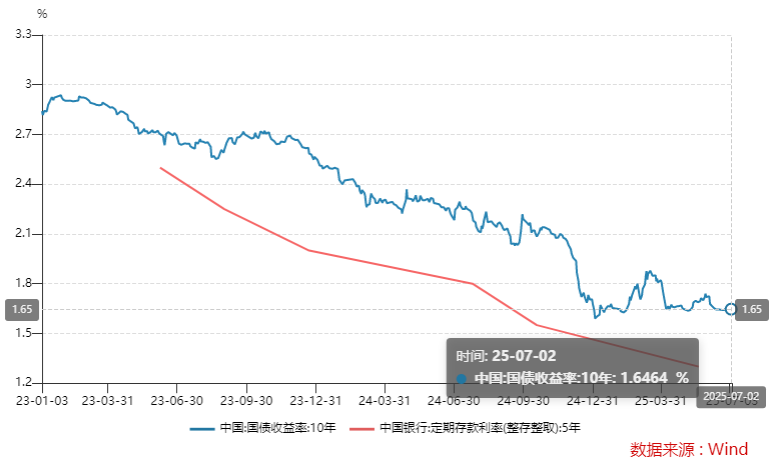
Core Viewpoint - The influx of 222 billion insurance funds into the capital market through long-term stock investment trials is a self-rescue action by the insurance industry in the context of declining interest rates and increasing risks of interest spread losses [1][29]. Group 1: Long-term Investment Trials - The long-term investment reform trial for insurance funds involves setting up private equity investment funds primarily targeting the secondary stock market, with a total approved scale of 222 billion yuan across three batches [1][9]. - The first batch includes China Life and New China Life with a combined scale of 50 billion yuan, while the second batch consists of eight companies totaling 112 billion yuan, and the third batch is expected to reach 60 billion yuan [1][9]. - The increase in long-term funds is expected to enhance the proportion of equity assets in insurance companies' investment portfolios, potentially improving investment returns [1]. Group 2: Impact on Insurance Products - The rise in equity investment returns may encourage insurance companies to promote floating yield products, which could drive innovation and sales growth in liability-side insurance products [2]. - Insurance companies are expected to actively adjust their product structures to reduce reliance on interest spreads, with a focus on increasing the proportion of dividend-type products [24][27]. - Companies like China Life and New China Life are shifting their investment strategies towards high-dividend stocks to counteract the profit decline caused by traditional insurance spread losses [8][19]. Group 3: Policy Support - The central government has issued guidelines to promote long-term capital market investments by insurance institutions, aiming to establish them as stable long-term investors [9]. - By 2025, it is targeted that 30% of new premiums from large state-owned insurance companies will be allocated to A-share investments [9]. - Regulatory adjustments have increased the allowable proportion of equity assets for insurance funds, providing additional capital market space [9][10]. Group 4: Investment Preferences - The first batch of trial funds, such as Honghu Zhiyuan, has shown a preference for high-dividend assets, achieving returns above benchmarks [13][15]. - The second and third batches are also focusing on high-dividend assets while incorporating investments in emerging industries aligned with national development strategies, such as high-end manufacturing and artificial intelligence [17][18]. - The investment strategies of various insurance companies indicate a shift towards stable, high-dividend stocks to mitigate risks associated with low interest rates [15][19]. Group 5: Competitive Landscape - The influx of long-term funds is likely to exacerbate the "Matthew Effect" in the insurance industry, favoring larger companies with stronger financial and research capabilities [28][29]. - Smaller insurance companies may struggle to compete effectively, facing challenges in product sales and investment outcomes due to limited resources and expertise [29]. - The overall competitive advantage and risk resilience of companies participating in the long-term investment trials are expected to strengthen, leading to a more pronounced market share expansion for leading firms [27][29].